The battle fought on 16th August 1777 that did much to raise the morale of the American colonists and made Brigadier Stark an American hero
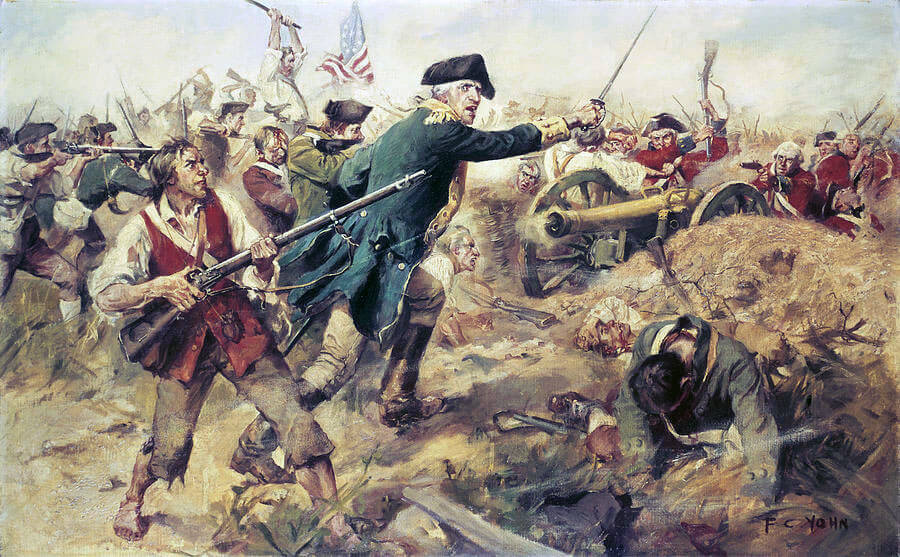
Brigadier-General John Stark at the Battle of Bennington on 16th August 1777 in the American Revolutionary War: picture by Frederick Coffay Yohn
The previous battle of the American Revolutionary War is the Battle of Hubbardton
The next battle of the American Revolutionary War is the Battle of Brandywine Creek
To the American Revolutionary War index
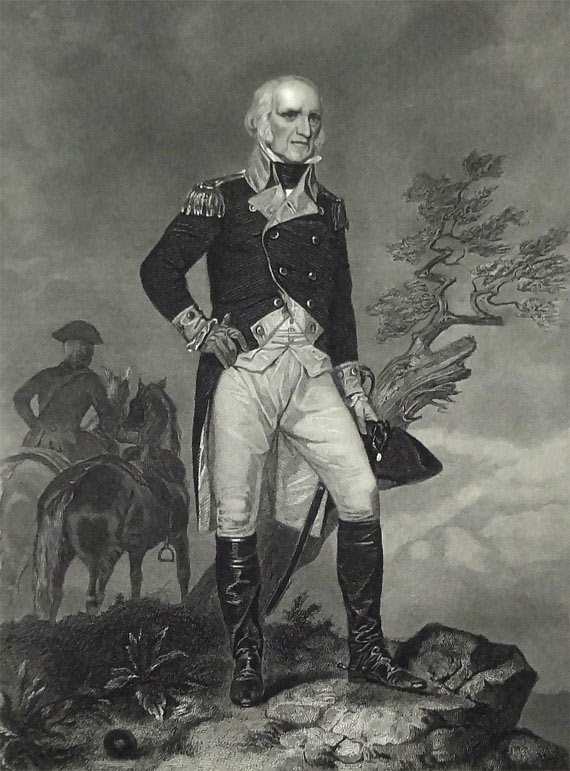
Brigadier John Stark at the Battle of Bennington on 16th August 1777 in the American Revolutionary War: picture by Alonzo Chapell
War: American Revolutionary War
Date of the Battle of Bennington: 16th August 1777.
Place of the Battle of Bennington: New York State on the road east of the Hudson River towards Vermont.
Combatants at the Battle of Bennington: Germans, British, Canadians, Indians and loyalist Americans from Major-General John Burgoyne’s British Army against American Colonists, largely New England militia.
Commanders at the Battle of Bennington: Colonels Baum and Breyman commanded the Germans. Brigadier John Stark commanded the Americans troops.
Size of the armies at the Battle of Bennington:
Baum’s force numbered 650. Stark lead around 2,000 Americans. Breyman came up with 600 men. Baum and Breyman each had two 3-pounder guns.
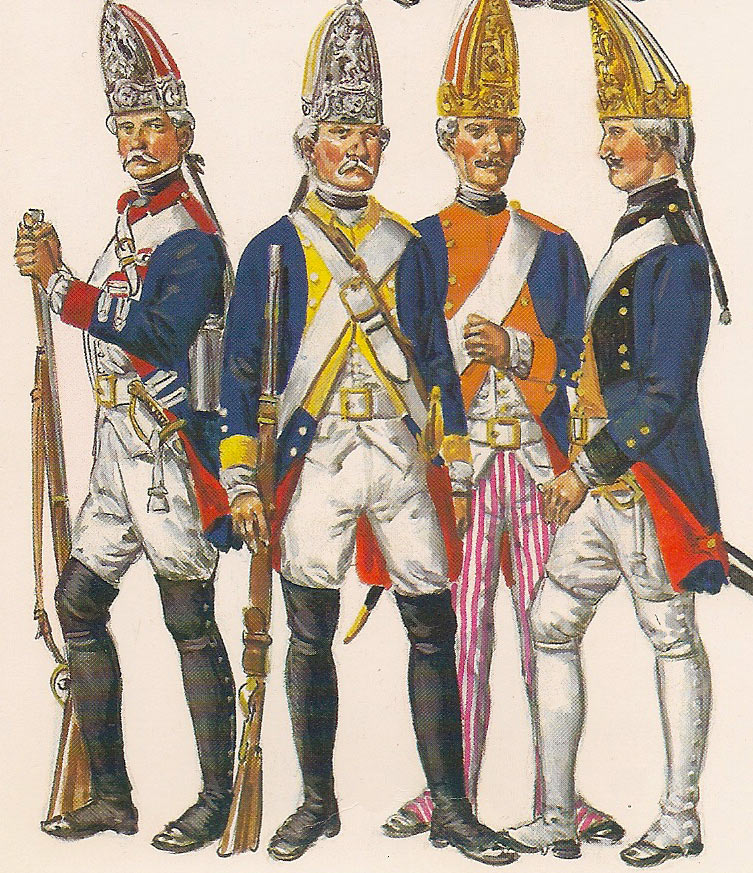
German Grenadiers: Battle of Bennington on 16th August 1777 in the American Revolutionary War
Uniforms, arms and equipment at the Battle of Bennington: The British wore red coats, with bearskin caps for the grenadiers, tricorne hats for the battalion companies and caps for the light infantry.
The German infantry wore blue coats and retained the Prussian style grenadier mitre cap with brass front plate.
The Americans dressed as best they could. Increasingly as the war progressed regular infantry regiments of the Continental Army wore blue uniform coats, but the militia continued in rough clothing.
The British and German troops were armed with muskets and bayonets. The Americans carried muskets, largely without bayonets. The Pennsylvania regiments and other men of the woods carried long, small calibre, rifled weapons. cannons, mostly of small calibre.
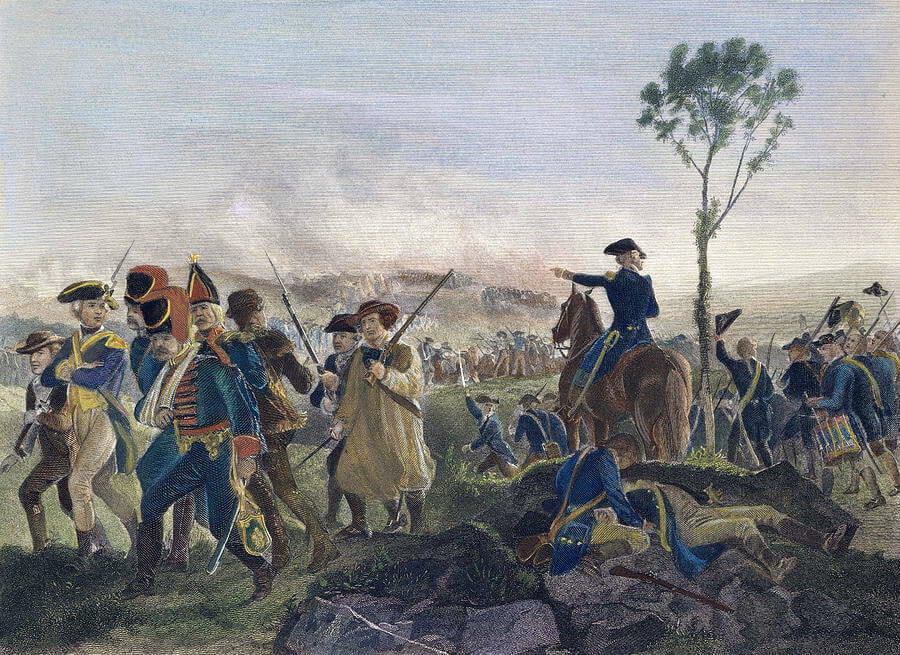
German prisoners pass the attacking American column at the Battle of Bennington on 16th August 1777 in the American Revolutionary War: picture by Charles Henry Granger
Winner of the Battle of Bennington: Resoundingly, the Americans.
Background to the Battle of Bennington:
By August 1777, Major-General John Burgoyne’s army of British, German and Canadian troops was forcing its way south from Canada, down Lake Champlain, and on to Fort Edward on the Hudson River.
General Schuyler lay with the American Army to the south of the Mohawk River junction on the Hudson, covering the New York State capital, Albany. The rebel colonists’ affairs in the North seemed at a low ebb, after the abject abandoning of Fort Ticonderoga and the hurried retreat south.
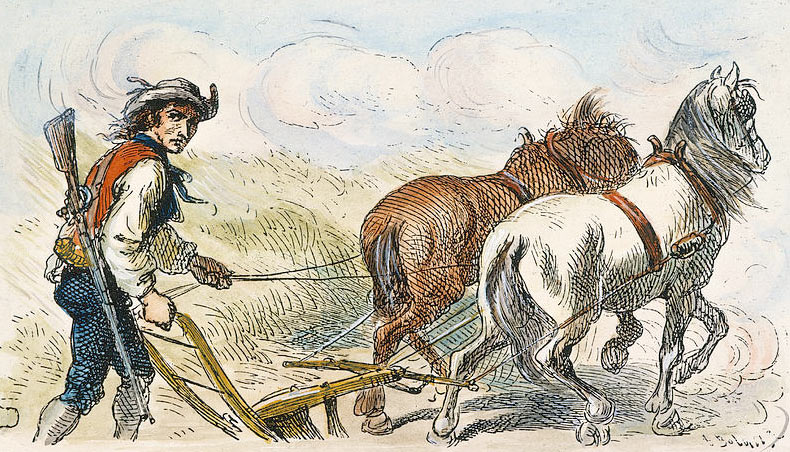
American Militiaman: Battle of Bennington on 16th August 1777 in the American Revolutionary War
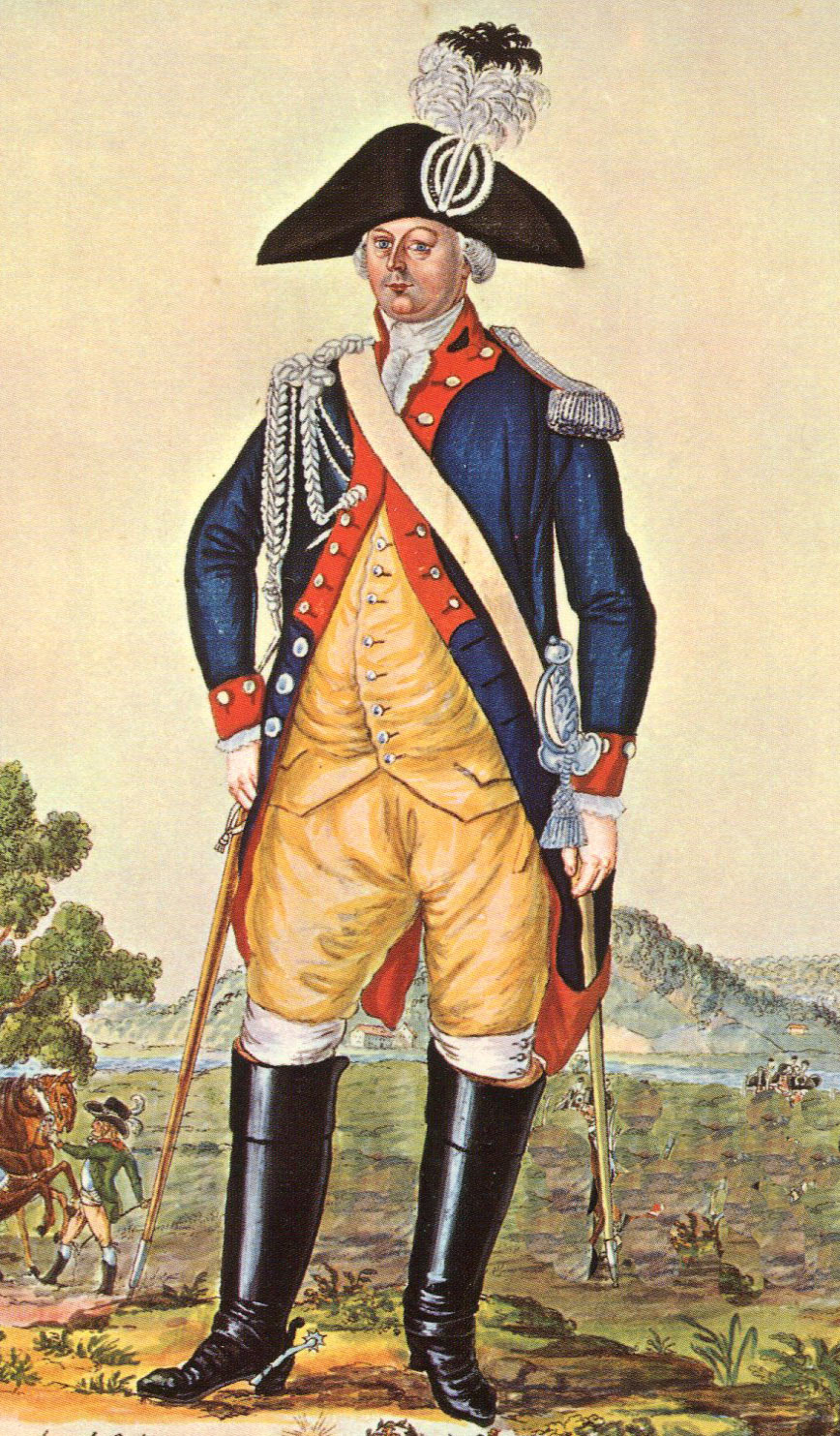
Brunswick Dragoon Officer: Battle of Bennington on 16th August 1777 in the American Revolutionary War
But Burgoyne’s circumstances were far from promising. His army struggled through the heavy forest from Ticonderoga, building a road to carry the artillery and carts. The Americans systematically wasted the country, leaving Burgoyne’s army short of supplies and reliable transport. Burgoyne’s troops had so few horses that the Brunswick dragoons were still on foot. The difficulties proved yet another reminder of the problems of campaigning in the vast forests of North America, experienced by every British general since General Braddock in 1755.
The final blow was a letter from General Howe at New York, informing Burgoyne that the main British Army was leaving to invade Pennsylvania, rather than advancing up the Hudson River to meet him, as envisaged in the original plan for Burgoyne’s campaign devised by Lord Germaine, the minister in London.
Burgoyne directed Colonel Baum to take a force to Manchester in Vermont, to the East of Fort Edward, to find horses for his dragoons and for the army’s transport, to collect supplies of food and to overawe the area’s rebellious colonists.
At the last moment, Baum’s objective was changed to the town of Bennington, based on reports of supplies being available there.
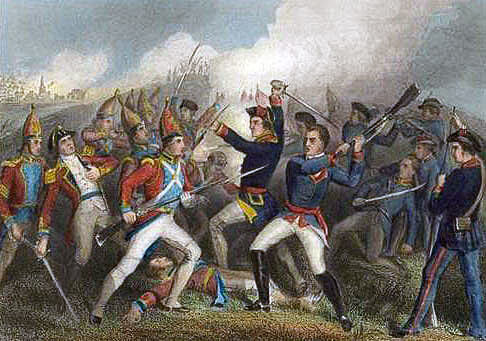
Battle of Bennington on 16th August 1777 in the American Revolutionary War
The retreat of the American Continental Army from Fort Ticonderoga and the advance of the British Army was causing considerable alarm in Vermont and New Hampshire.
Distrusting the aristocratic New Yorker, General Schuyler, who with General St Clair was suspected of treachery in giving up Fort Ticonderoga, the New Hampshire Council formed a militia brigade commanded by Brigadier John Stark.
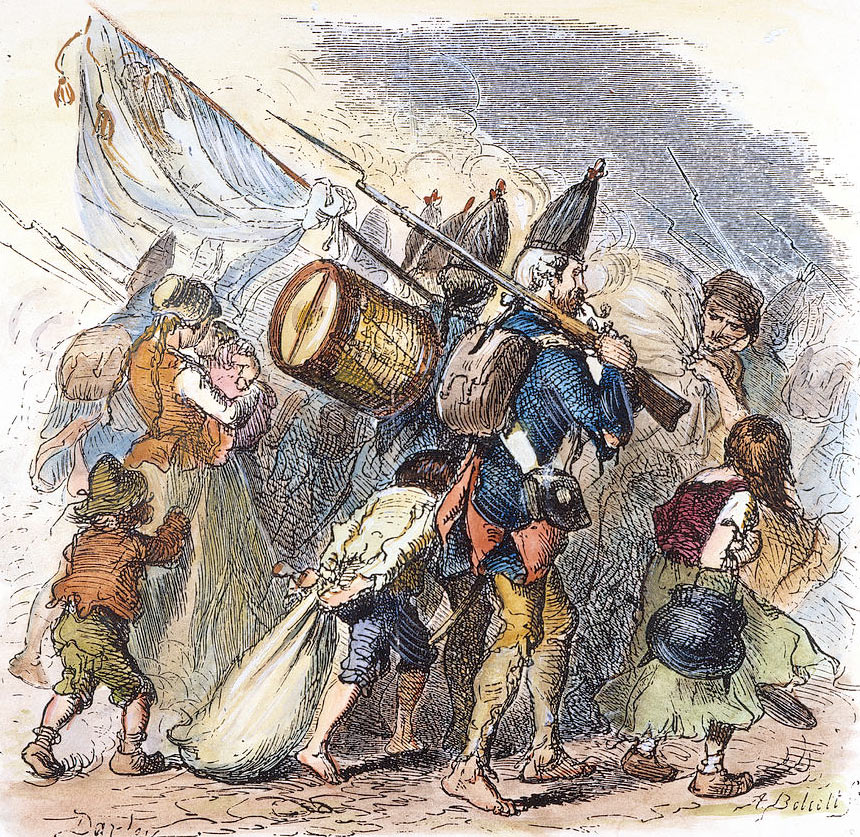
Hessian troops on the march: Battle of Bennington on 16th August 1777 in the American Revolutionary War
Stark, a veteran of the French and Indian War and the New Jersey campaign, was highly regarded in the region and colonists flocked to join his force. His brigade lay in camp at Bennington. Warner’s Green Mountain Boys, licking their wounds after the Battle of Hubbardton, were at Manchester.
As the German officer Colonel Baum advanced on Bennington, his Indians ravaged the countryside. After a skirmish with a small force under Colonel Gregg, Baum advanced to the Walloomsac River outside Bennington.
From there, Baum sent a dispatch to Burgoyne, saying he intended to give battle to the Americans at Bennington. It became clear to Baum that he was substantially outnumbered by Stark’s force. Baum sent further more urgent messages to Burgoyne, requesting support, and Burgoyne ordered Colonel Breyman with his regiment to march to Baum’s assistance.
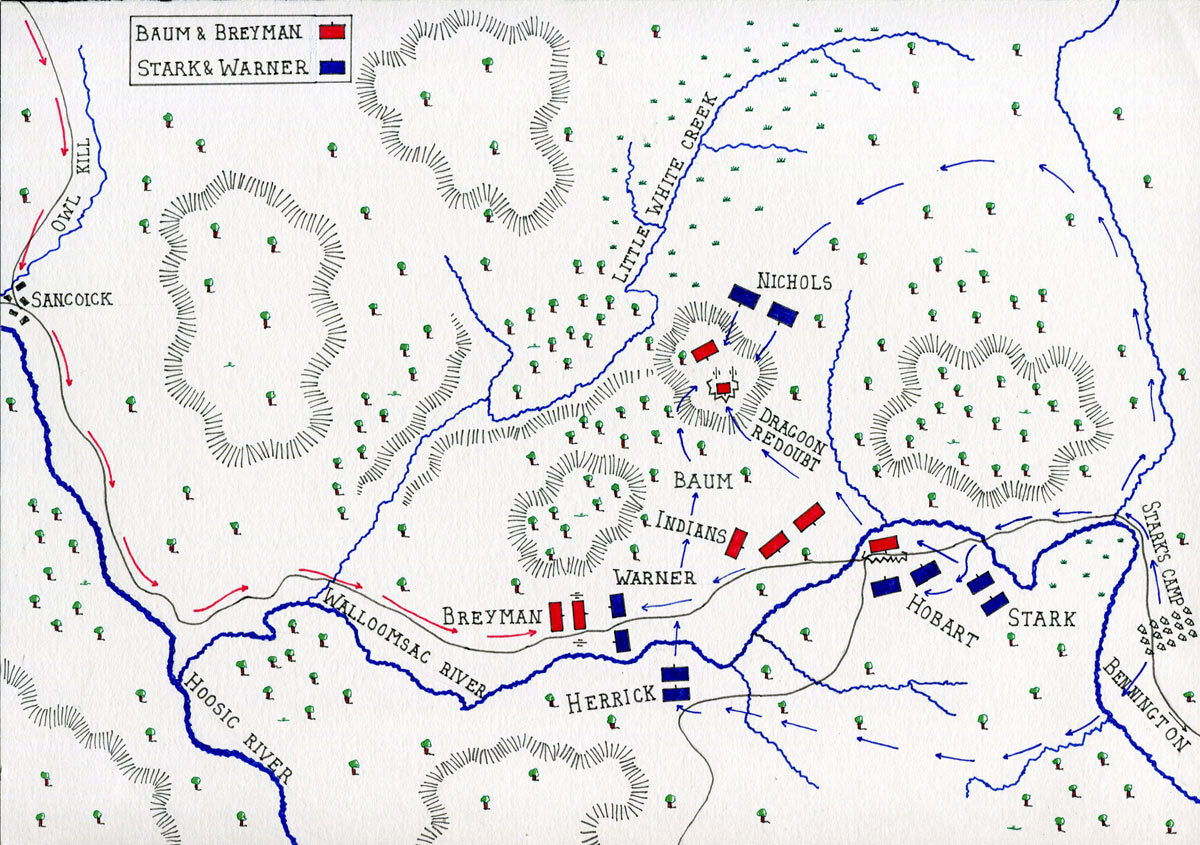
Map of the Battle of Bennington on 16th August 1777 in the American Revolutionary War: map by John Fawkes
Account of the Battle of Bennington:
The battle took place on 16th August 1777, before Breyman’s slow moving column came up.
Baum’s force lay in positions around the bridge over the Walloomsac River. Some of his troops were in hastily prepared fortification on the south side of the river, while others were on the north side. The main position was a redoubt built by the Brunswick dragoons and British riflemen, on a hill half a mile back from the bridge.
For much of 16th August, movement for both sides was held up by heavy rain. In mid-afternoon, the Americans began their assault on the dragoon redoubt; Colonel Nichols and Colonel Herrick attacking from the rear and flank.
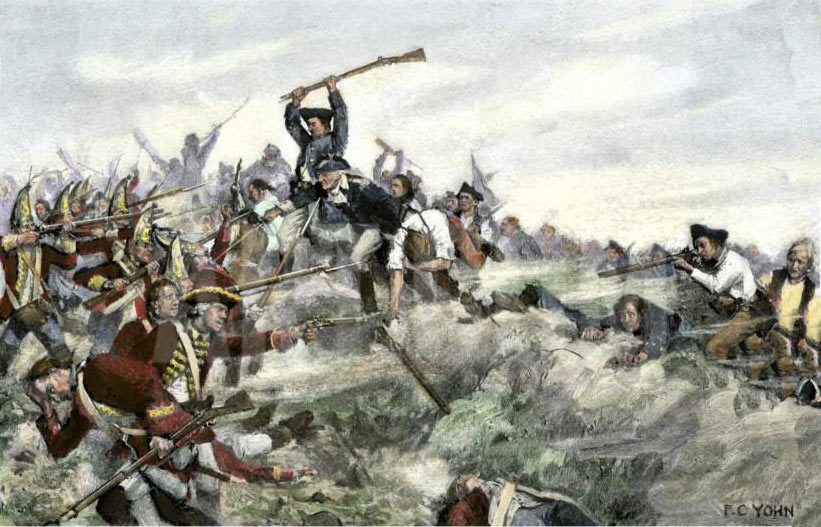
Brigadier John Stark leads the New Hampshire Militia at the Battle of Bennington on 16th August 1777 in the American Revolutionary War
On hearing the firing, the American Colonel Hobart attacked the Tory militia entrenched on the near side of the river and Brigadier Stark assaulted the main advanced body of German and British troops.
All of Baum’s positions collapsed, most of the soldiers and Indians escaping into the woods, other than the dragoon redoubt, which became the focus of heavy fighting. Finally lack of ammunition forced a severely wounded Baum and the remnants of his dragoons to surrender. His force had been annihilated.
Sometime later, Breyman’s column approached the area. Stark, with Warner’s newly arrived troops, attacked the Germans and, after an initial setback, forced them to retreat. The pursuing Americans subjected the German troops to a continuous galling fire until night fell.
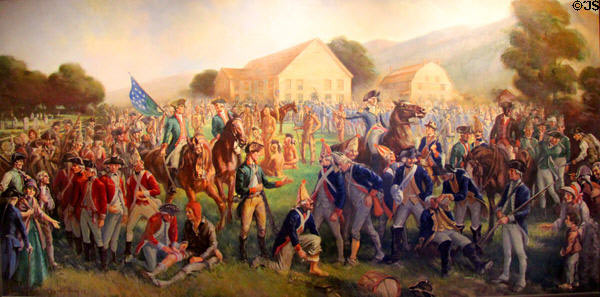
British and German prisoners after the Battle of Bennington on 16th August 1777 in the American Revolutionary War
Casualties at the Battle of Bennington:
The German force suffered 900 casualties, killed, wounded and captured. The Americans suffered 70 casualties. The Americans captured the four guns and many small arms.
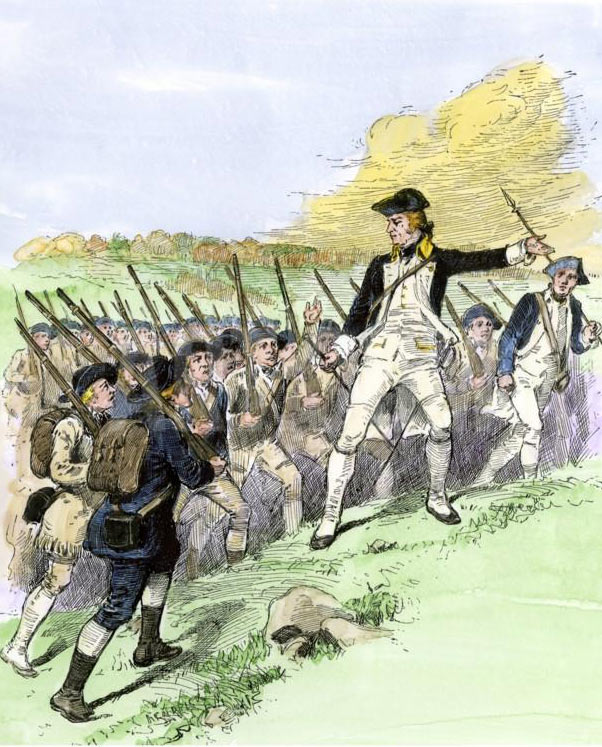
Brigadier John Stark leads the New Hampshire Militia at the Battle of Bennington on 16th August 1777 in the American Revolutionary War
Follow-up to the Battle of Bennington:
Prior to the battle, a serious clash was impending between Congress and the New Hampshire Council, over Stark’s refusal to comply with the instructions issued by Schuyler, to bring his brigade into the army on the Hudson. Following the battle Stark was appointed brigadier in the Continental Army.
Bennington was a major battle in establishing the ability of the Americans to hold their own against regular European troops. It also made Stark one of the leading soldiers of the Revolution.
As with every one of the American victories, the Battle of Bennington did much to revive the colonists’ flagging morale and raise the standing of the American cause in the eyes of major European powers such as France and Spain, whose intervention in the war became increasingly likely.
The Battle of Bennington caused major casualties to Burgoyne’s army that could not be replaced.
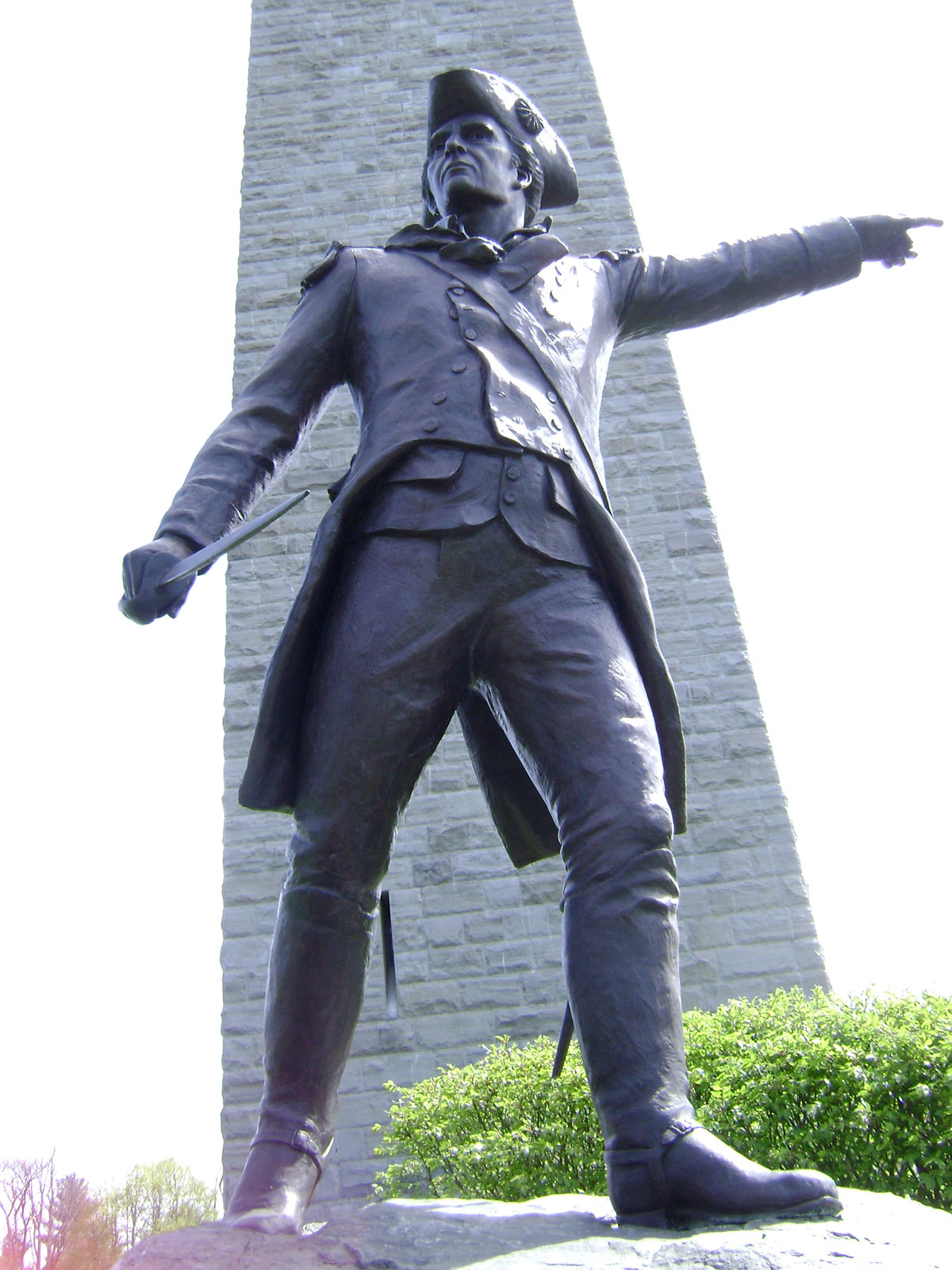
Statue of Brigadier John Stark on the Bennington Battle Memorial: Battle of Bennington on 16th August 1777 in the American Revolutionary War
Anecdotes and traditions from the Battle of Bennington:
- The Battle of Bennington is celebrated in Vermont as ‘Battle Day’ annually on 16th August.
- Brigadier John Stark, of Manchester, New Hampshire, was the American commander at the Battle of Bennington. In 1752, Stark, while hunting, was captured by Abenaki Indians who made him run the gauntlet. Stark grabbed a club and attacked the Indians who were so impressed by his courage that he was adopted into the tribe, although later ransomed. Stark fought through the French and Indian War as an officer in Roger’s Rangers. With the outbreak of the Revolutionary War, Stark became colonel in the New Hampshire Militia. Stark fought at the Battles of Bunker Hill, Trenton and Princeton, before returning to New Hampshire to raise more men for the Continental Army and leading the Americans at the Battle of Bennington. There are statues to John Stark on the Bennington Battle Memorial and in Stark Park, Manchester, New Hampshire.
References for the Battle of Bennington:
History of the British Army by Sir John Fortescue
The War of the Revolution by Christopher Ward
The American Revolution by Brendan Morrissey
Saratoga by Richard Ketchum
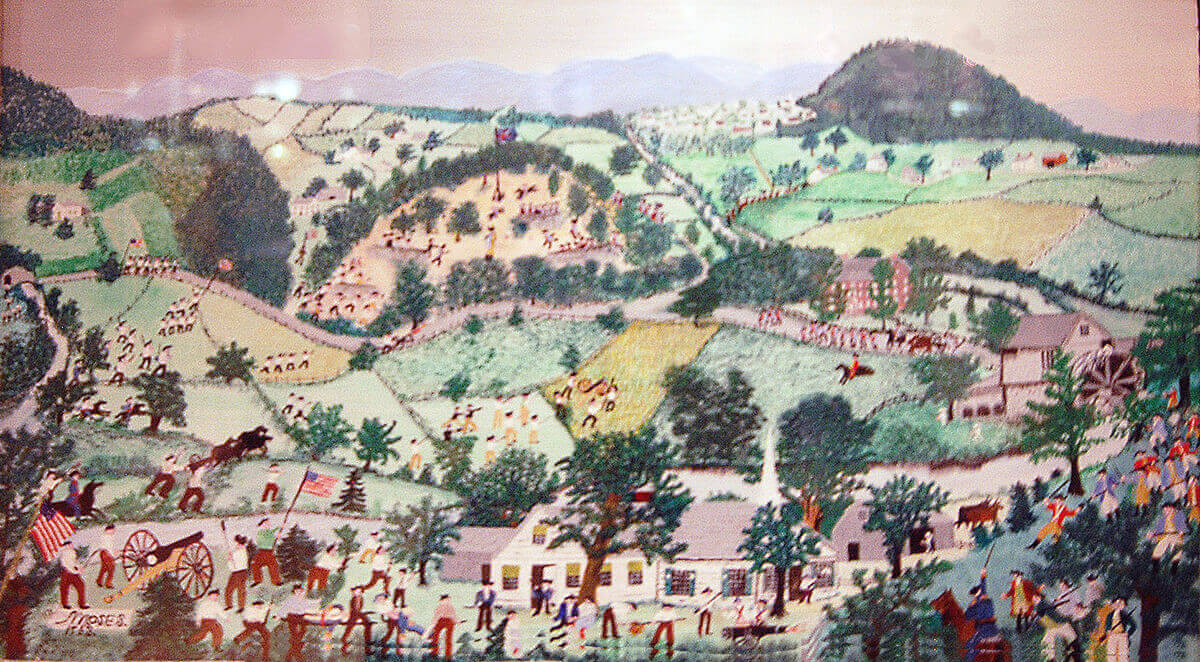
Battle of Bennington on 16th August 1777 in the American Revolutionary War: picture by Granma Moses
The previous battle of the American Revolutionary War is the Battle of Hubbardton
The next battle of the American Revolutionary War is the Battle of Brandywine Creek
To the American Revolutionary War index