The battle fought on 28th June 1778 by the American Continental Army against the British, after the 1777/8 winter spent training under Steuben
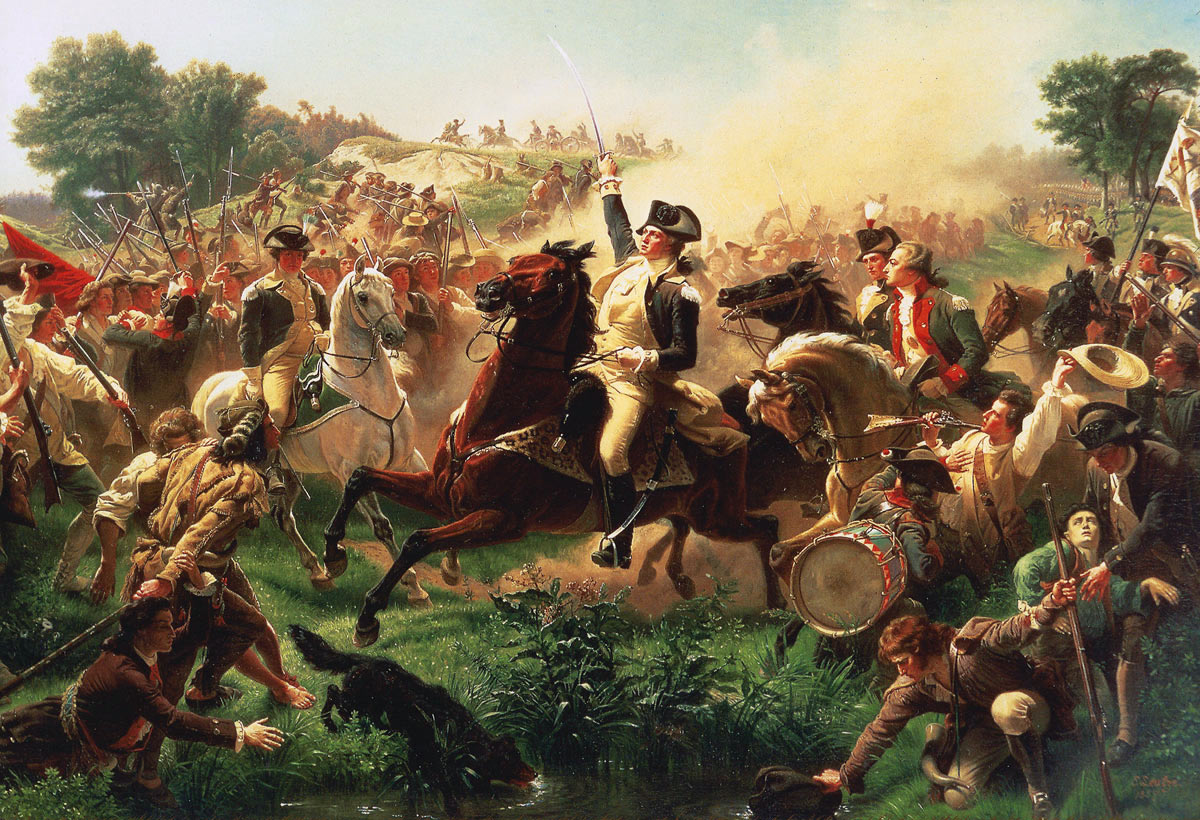
General George Washington at the Battle of Monmouth on 28th June 1778 in the American Revolutionary War: picture by Emanuel Leutze
The previous battle of the American Revolutionary War is the Battle of Saratoga
The next battle of the American Revolutionary War is the Siege of Savannah
To the American Revolutionary War index
War: American Revolutionary War
Date of the Battle of Monmouth: 28th June 1778
Place of the Battle of Monmouth: New Jersey in the United States of American
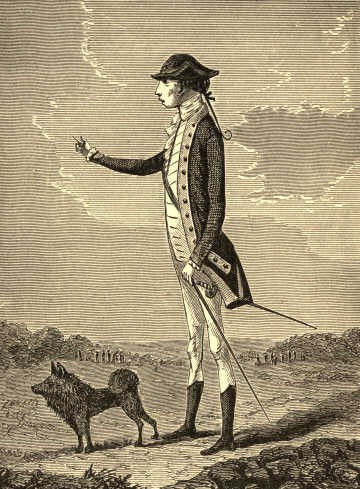
Charles Lee as a British officer in the French and Indian War: Battle of Monmouth on 28th June 1778 in the American Revolutionary War
Combatants at the Battle of Monmouth: British and German troops against the American Continental Army and Colonial Militia.
Generals at the Battle of Monmouth: Lieutenant-General Sir Henry Clinton, Major-General Lord Cornwallis and Major-General Knyphausen commanding the British and German army against General George Washington and Major-General Charles Lee commanding the American army.
Size of the armies at the Battle of Monmouth: 10,000 British troops against 11,000 Americans.
Uniforms, arms and equipment at the Battle of Monmouth:
The British infantry wore red coats, with bearskin caps for grenadiers, tricorne hats for battalion companies and caps for the light infantry. The Highland Scots troops wore the kilt and feather bonnet.
The two regiments of British light dragoons serving in America, the 16th and 17th, arrived in America wearing red coats and crested leather helmets. As the war progressed the light dragoons abandoned their red coats for green.
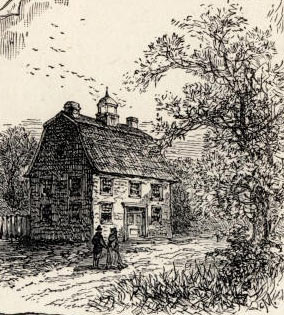
Old Monmouth Courthouse: Battle of Monmouth on 28th June 1778 in the American Revolutionary War
The Hessian and Brunswick infantry wore blue coats and retained the Prussian style grenadier mitre cap with brass front plate.
The American troops dressed as best they could. Increasingly as the war progressed infantry regiments of the Continental Army mostly took to wearing blue or brown uniform coats. The American militia continued in rough clothing.
Both sides were armed with muskets. The British and German infantry carried bayonets. The Highland Scots troops carried broadswords.
Steuben insisted that the American Continental troops be issued with bayonets, whose use Steuben’s training dealt with, so that they could meet the British and German infantry on an equal footing in hand to hand fighting. This took time to implement in full.
Many men in the Pennsylvania and Virginia militia regiments carried rifled weapons, as did other backwoodsmen. Both sides were supported by artillery.
Winner of the Battle of Monmouth: The battle is generally taken as a draw.
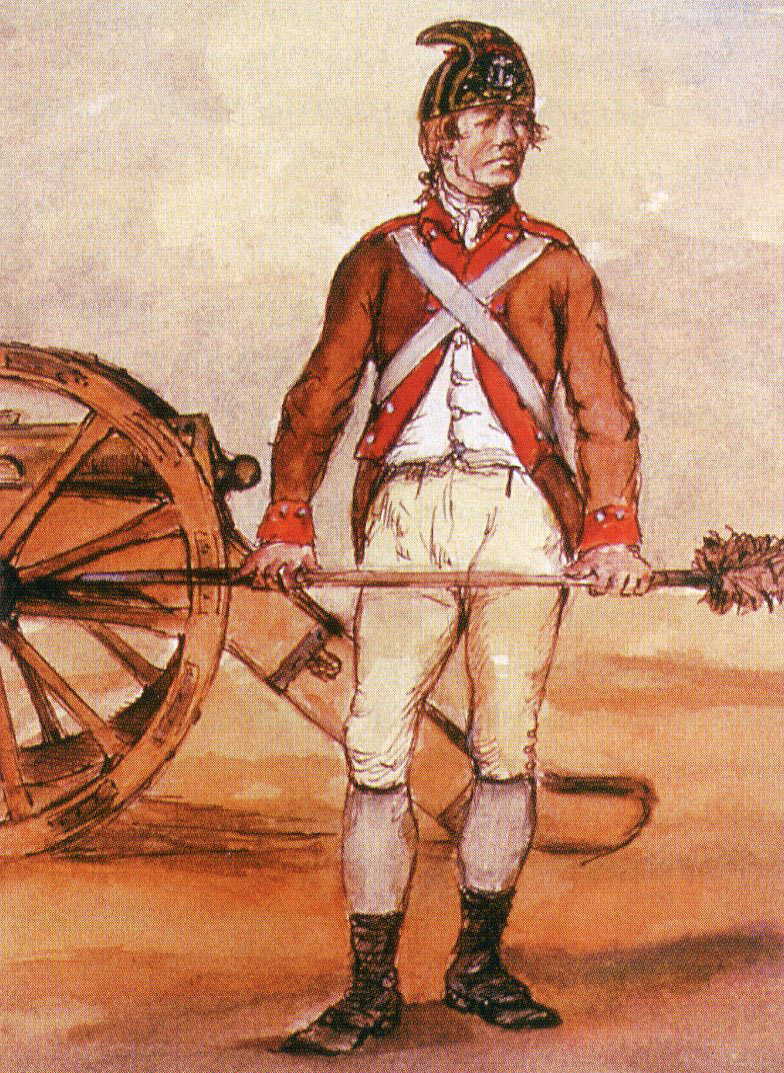
American Continental Gunner: Battle of Monmouth on 28th June 1778 in the American Revolutionary War
Background to the Battle of Monmouth:
General George Washington and his American army spent the winter of 1777/8 at Valley Forge in considerably straightened circumstances. As the winter wore on, the supply situation was brought under control and something approaching a proper issue of equipment and rations was made to the American troops.
During the 1777/8 winter in Valley Forge, the Prussian officer, General Steuben, established a system of military training for the American regiments, teaching them a form of Prussian battle drill, adapted to suit American troops.
The British army spent the winter in Philadelphia. Lieutenant-General Howe returned to England, relieved of his appointment in command in America at his own request, to be replaced by Lieutenant-General Sir Henry Clinton.
Clinton was under orders to evacuate Philadelphia and concentrate the British forces in New York.
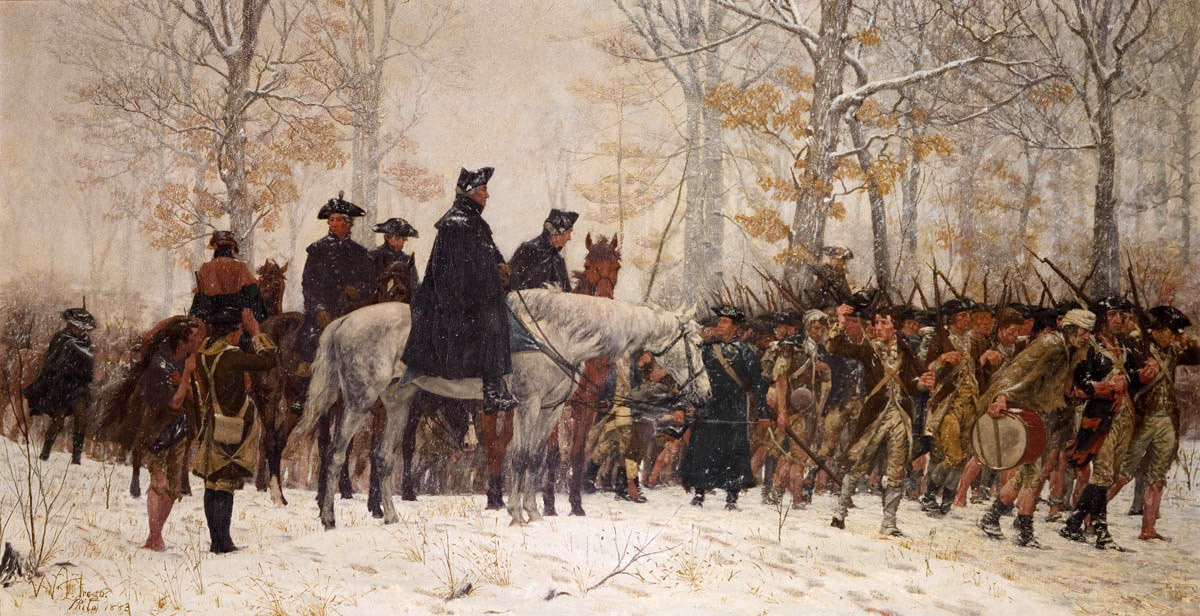
George Washington and the American Continental Army at Valley Forge Winter 1777/8: Battle of Monmouth on 28th June 1778 in the American Revolutionary War: picture by William T Trego
On 18th June 1778, Clinton’s British army, with artillery, supplies and the loyalist populace of the city, left Philadelphia and began the laborious march cross country to the North-East.
Hearing that the British were on the move, General Washington marched his army east from Valley Forge, seeking to intercept the slow-moving British column. He did so at Monmouth Courthouse.
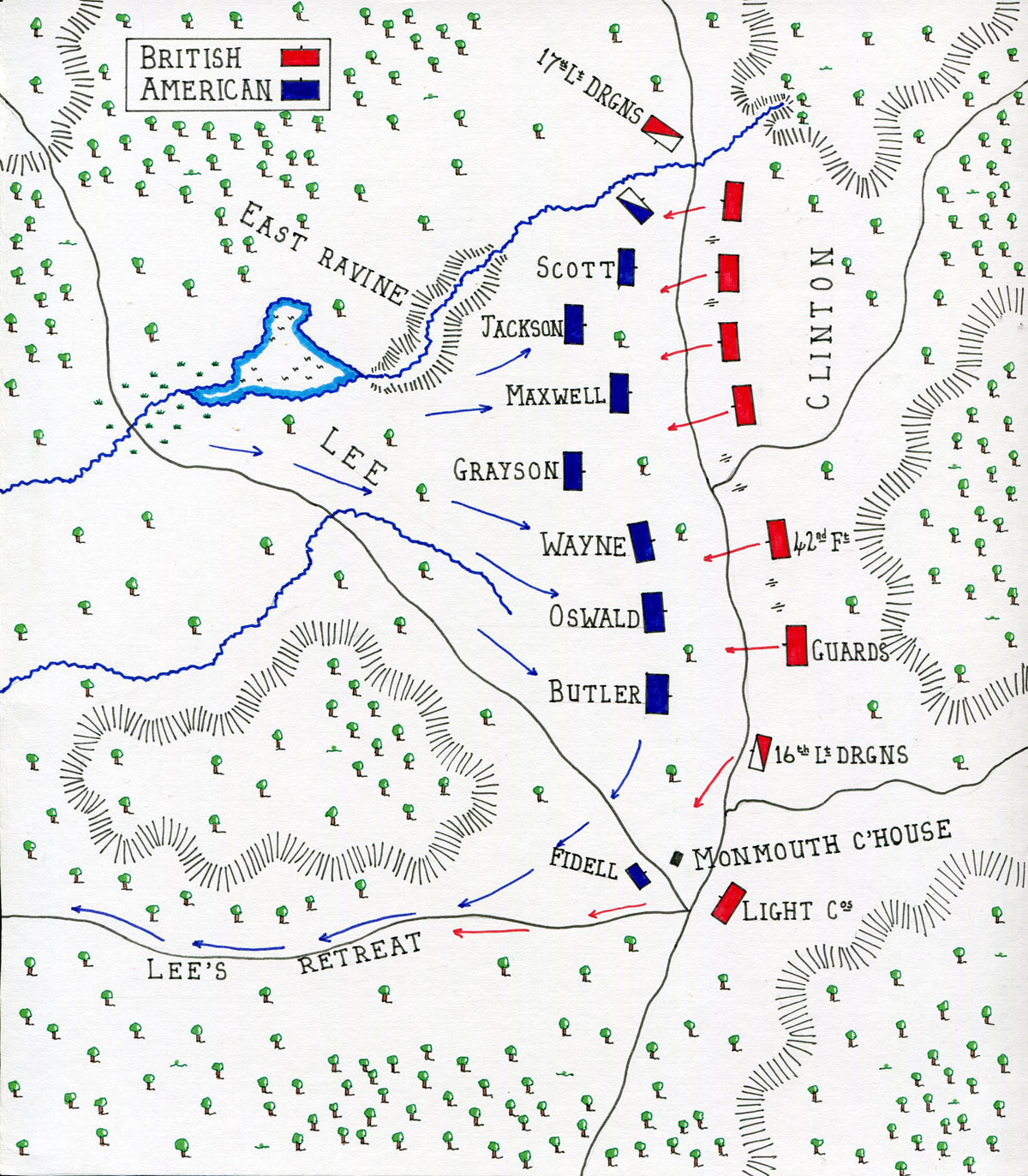
Map of Lee’s advance at the Battle of Monmouth on 28th June 1778 in the American Revolutionary War: map by John Fawkes
Account of the Battle of Monmouth:
Clinton’s intention, in accordance with his orders, was to march to New York. The first week of the march convinced him that his army with its train was too cumbersome to make the journey by land. In addition, it was reported that General Gates was moving from the Hudson River valley with his American army to block the British retreat.
Clinton decided to divert to the coast and take ship. At Allentown, his British and German army branched off the main route towards Monmouth to head north-east.
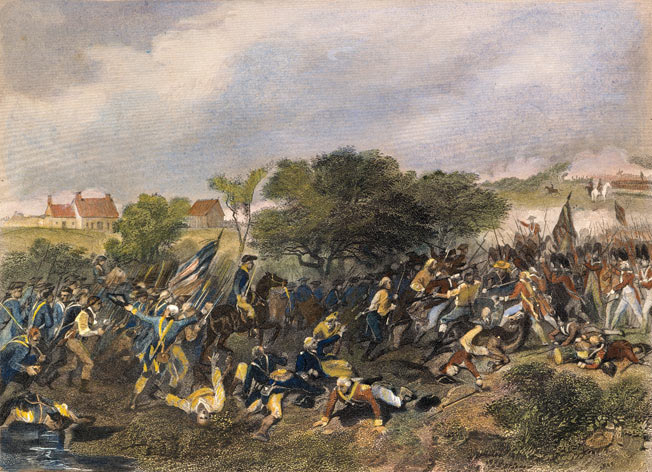
American attack at the Battle of Monmouth on 28th June 1778 in the American Revolutionary War
General Washington hurried his army forward to intercept the British withdrawal. An advanced force of some 4,000 American troops was allocated to attack the marching British Army and cut it in half. Washington offered the command of this assault to Major-General Charles Lee. Initially Lee refused the appointment, lacking confidence in the success of the plan. When the force was increased to 5,000 men and given to the Marquis de Lafayette, Lee changed his mind and insisted on having the command.
Lee’s task was to attack the British column in flank and delay it, so the main American army could come up and give battle.
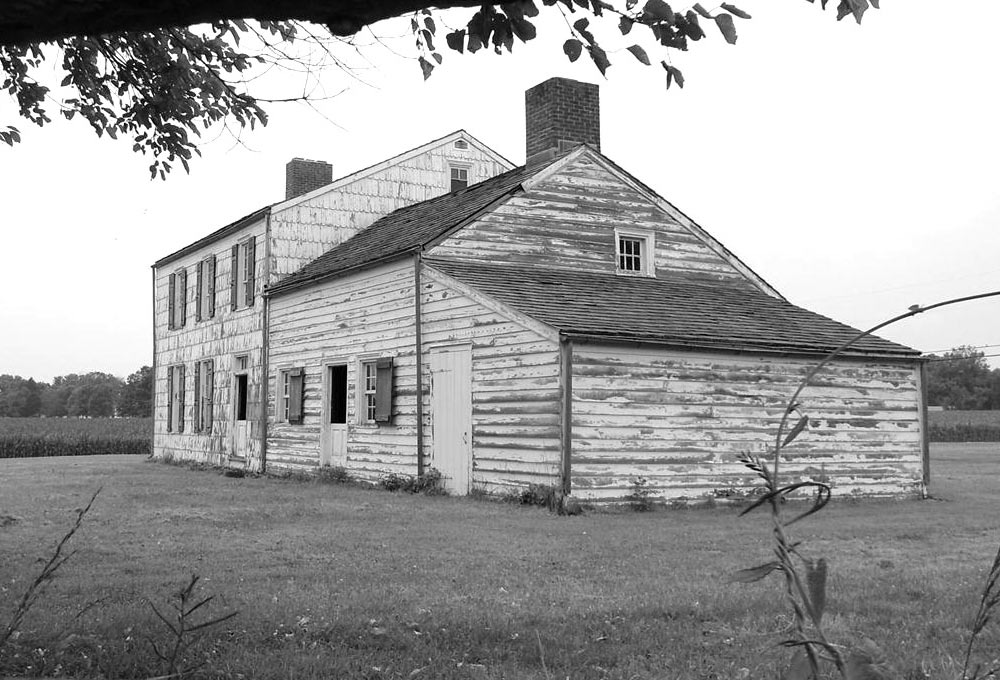
Craig House, Monmouth, used by the British as a field hospital: Battle of Monmouth on 28th June 1778 in the American Revolutionary War
The weather was unsettled, high day-time temperatures giving way to heavy rainstorms.
On 28th June 1778, suspecting that Washington intended to attack his army in strength, General Clinton ordered General Knyphausen to begin his march up the Middletown road to the North that day at 4am.
Warned by Dickinson and his New Jersey militia that Clinton’s army was on the move, Washington ordered Lee to attack and delay the British march, until he could bring up the main strength of the American army along the Monmouth Road.
Lee lay to the west of the Middletown road and was expected to deliver an attack on the slow-moving British column. Properly executed, such an attack would have halted the British march to the north-east and enabled the main American army under Washington to attack Clinton’s army in the rear.
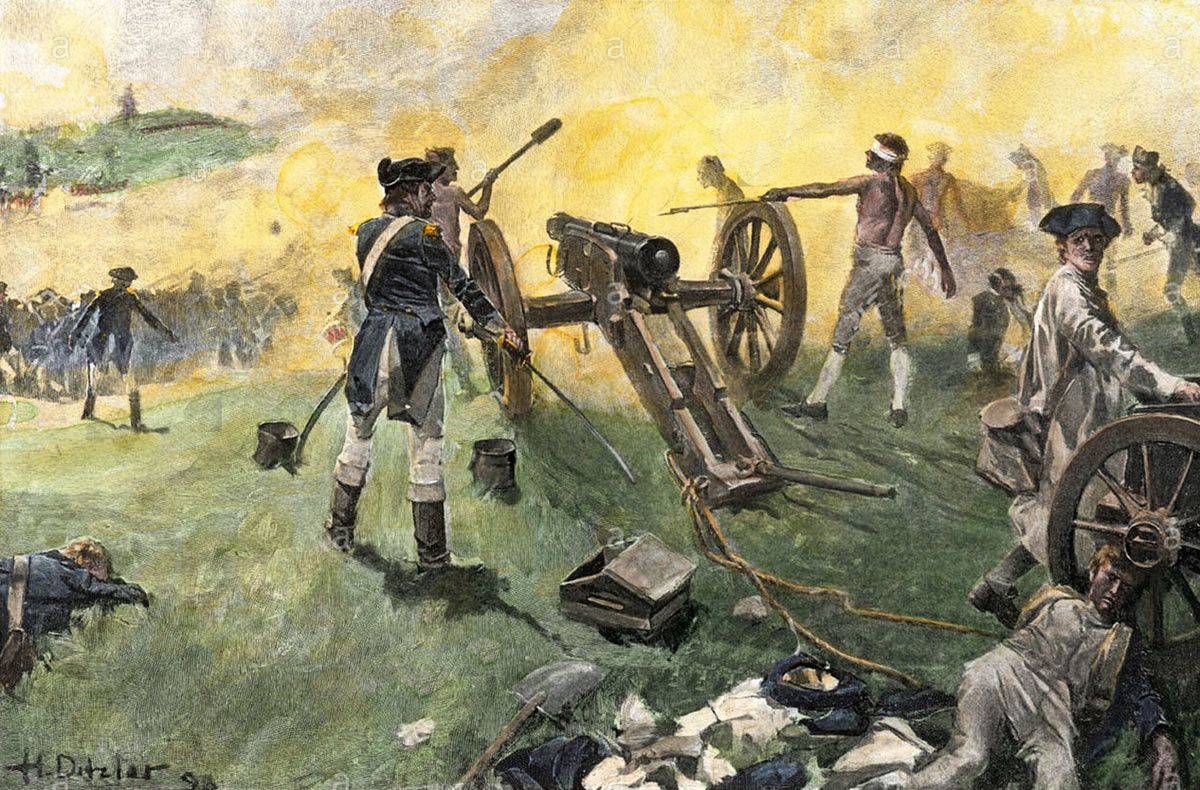
American artillery in action at the Battle of Monmouth on 28th June 1778 in the American Revolutionary War: picture by Hugh Ditzler
Lee gave no proper orders to his commanders and permitted them to act as they saw fit. Skirmishes with parties of British troops took place, as Lee’s force moved tentatively forward towards the Middletown Road. Confused fighting broke out with Clinton’s rear-guard, largely composed of British regiments. Finally, Lee ordered his troops to retreat on the main American army. As Lee withdrew down the road, Clinton launched his troops in pursuit.
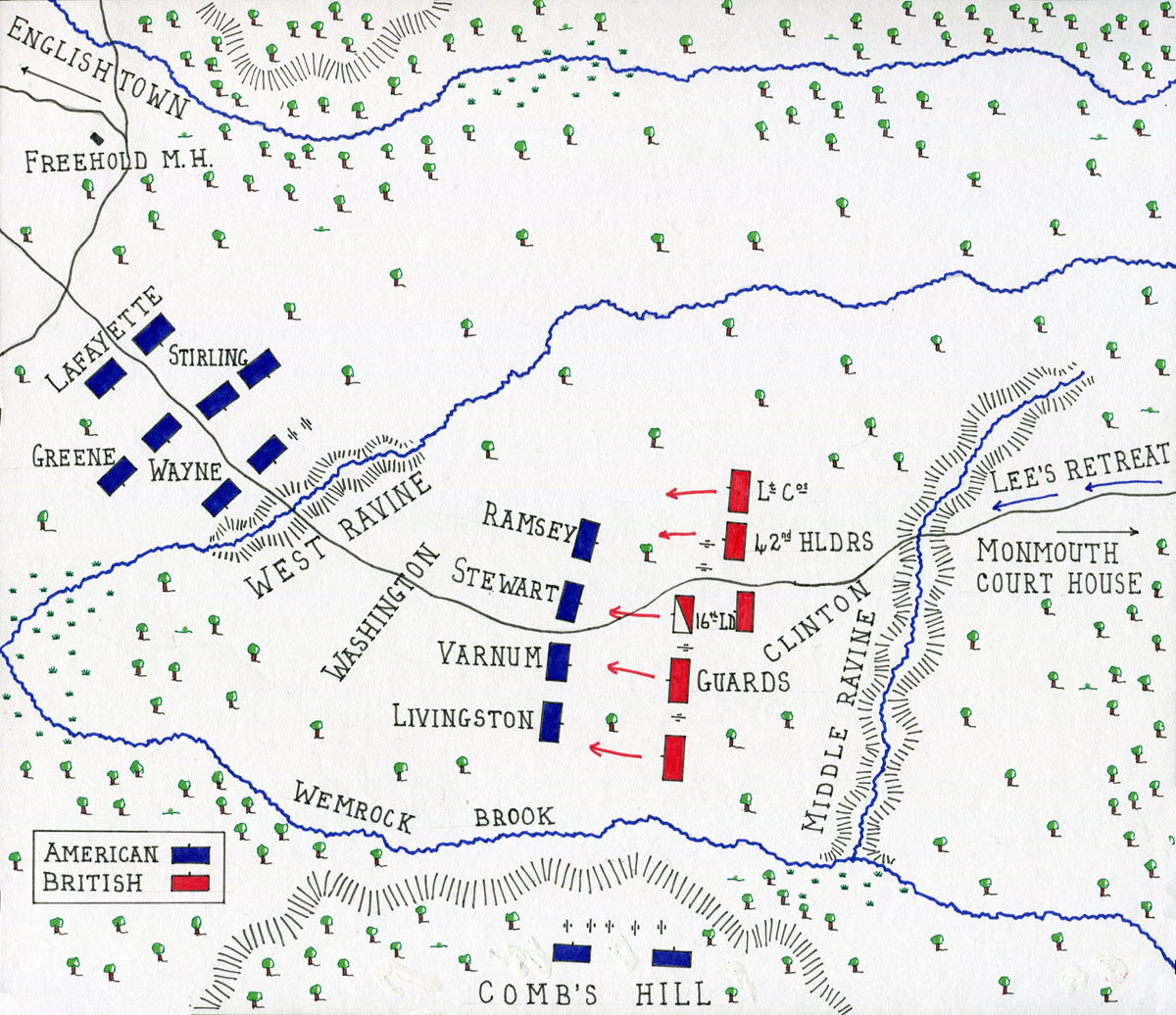
Map of Washington’s advance at the Battle of Monmouth on 28th June 1778 in the American Revolutionary War: map by John Fawkes
General Washington, bringing the main American army along the Monmouth road, encountered, not the rear of the British column, but Lee’s regiments, retreating in considerable disorder, with the British advancing behind them.
This is said to be the one occasion that Washington swore. He unleashed a volley of oaths at Lee, to the admiration of those listening, before ordering Lee to the rear. Washington then galloped forward and began the task of rallying Lee’s disordered troops.
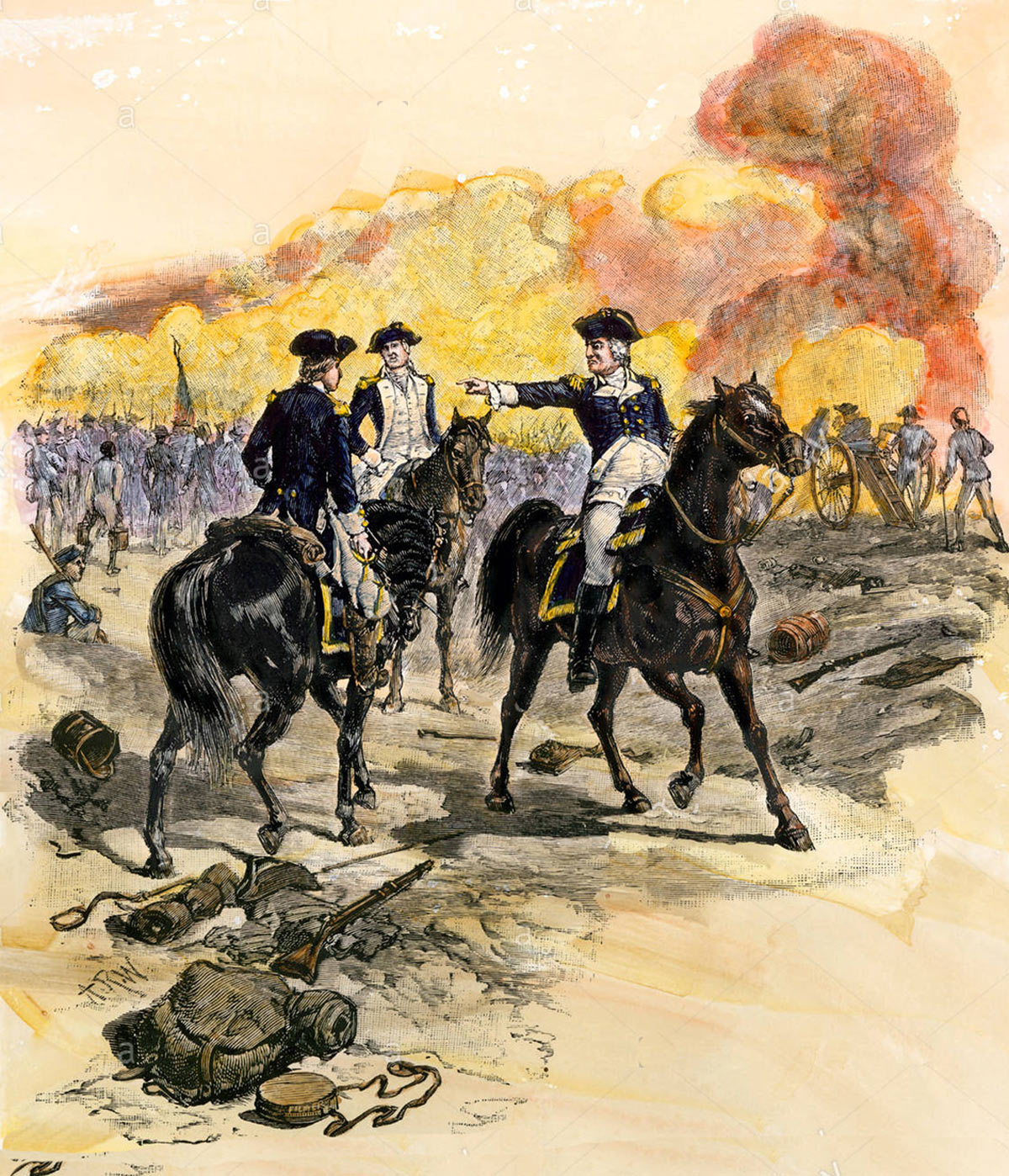
Washington confronting Lee: Battle of Monmouth on 28th June 1778 in the American Revolutionary War
Washington ordered General Wayne, with the last of Lee’s regiments, Stewart’s 13th Pennsylvania and Ramsay’s 3rd Maryland, to form to the north of the road and hold the British advance. These regiments resisted strongly but were driven back by the British 16th Light Dragoons. Their stand gave Washington the time to form the rest of the American army, with artillery on Comb’s Hill to the south of the road, enfilading the attacking British foot.
Fierce fighting took place as the British attempted to drive back the American line. This was the first test for Steuben’s newly trained American Continental regiments of foot, and they withstood the trial well. As the evening wore on, the British troops fell back and returned to their journey north, leaving the Americans on the field.

Battle of Monmouth on 28th June 1778 in the American Revolutionary War
Casualties at the Battle of Monmouth:
The British suffered some 300 casualties and the Americans 350. Up to 100 men are thought to have died of heatstroke during the battle.
During the march from Philadelphia, Clinton’s army lost around 550 deserters, of whom 450 were from the Hessian regiments. This is a striking figure. In the course of a few days, Clinton lost the equivalent of a battalion. Some of these men will have joined American regiments. Many, particularly German soldiers, are believed to have returned to Philadelphia to resume domestic relationships.
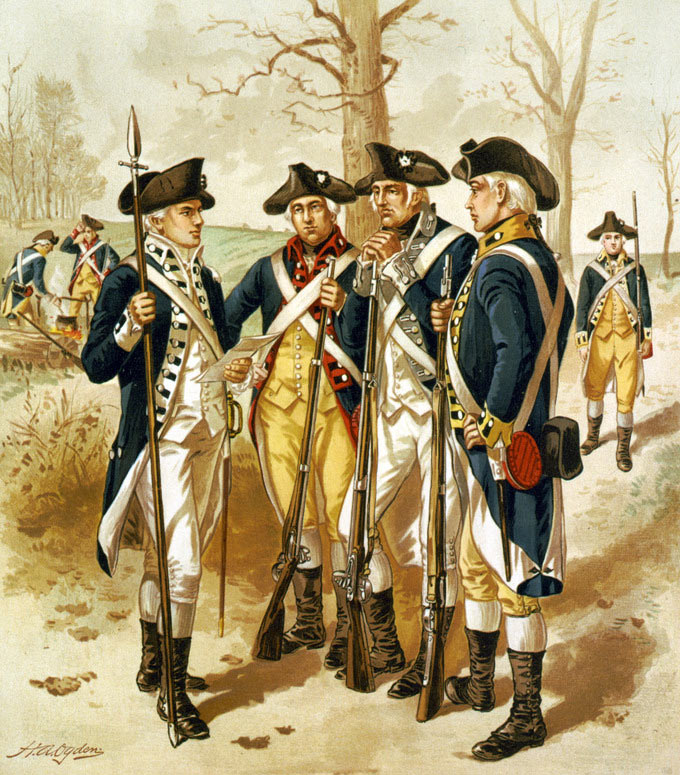
Soldiers of the American Continental Army: Battle of Monmouth on 28th June 1778 in the American Revolutionary War: picture by H.A. Ogden
Follow-up to the Battle of Monmouth:
Clinton continued the march to Sandy Hook, where his army embarked and was carried by the Royal Navy to New York. The British operation to retake Pennsylvania and New Jersey ended, leaving British fortunes at a low ebb.
Regimental anecdotes and traditions from the Battle of Monmouth:
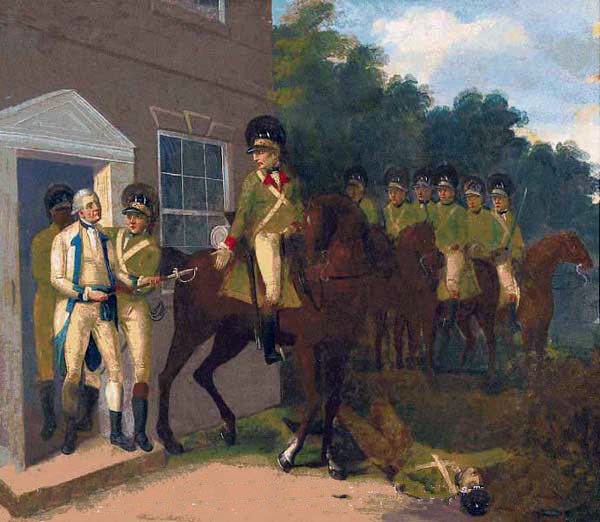
Charles Lee captured by Banastre Tarleton on 12th December 1776 at the Widow White’s Tavern
- Faced with considerable criticism for his conduct at the Battle of Monmouth, Major-General Charles Lee demanded and received trial by court martial. He was convicted and sentenced to one year’s suspension from duty. Fortescue, the historian of the British Army, seems convinced that Lee’s conduct arose from treacherous motives.
- Some American authorities categorise Lee as a traitor. Lee was a strange and interesting character. He first arrived in America as a British captain in Halkett’s 44thRegiment, taking part in Braddock’s disastrous march to the Ohio River in 1755. Lee continued to serve during the French and Indian War. He was given the nickname of “Boiling Water” by the Iroquois, due to his temper. He was also the subject of an assassination attempt by members of his regiment. After the French and Indian War, Lee left the British Army and joined the Polish Army, apparently rising to the rank of General. After unsuccessfully attempting to re-join the British Army in a senior rank, Lee returned to America and joined the American Army, achieving his ambition of appointment as a general. It may be that Lee’s flawed character caused his command failings, rather than deliberate treachery, although, during the retreat through New Jersey from New York, on 12th December 1776, Lee was captured in a tavern by Tarleton and a party of British light dragoons. Lee was exchanged and resumed his erratic career in the American Continental Army. This episode would have been an opportunity for Lee to agree to change sides.
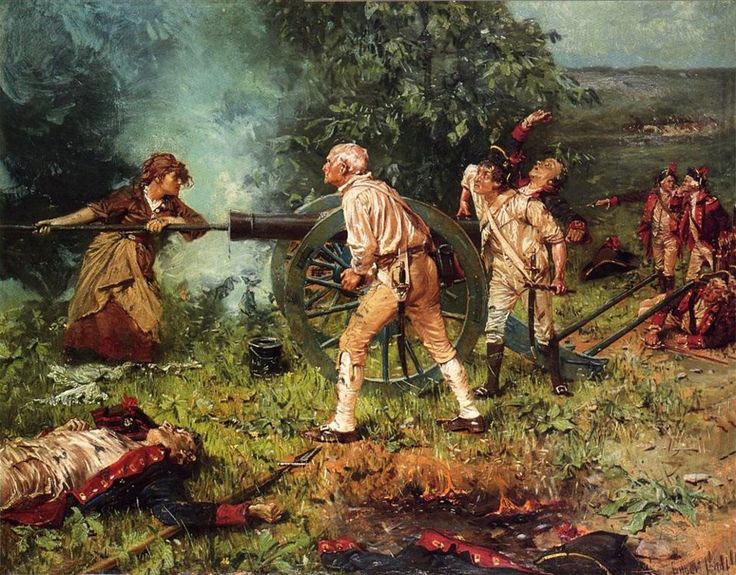
Molly Pitcher at the Battle of Monmouth on 28th June 1778 in the American Revolutionary War: picture by Franz Ludwig Catel
- During the Battle of Monmouth, ‘Molly Pitcher’, the wife of an American artilleryman, is reputed to have taken over the firing of her husband’s cannon, when the crew became casualties. ‘Molly Pitcher’ is said to have been a common nickname for the women who brought water for use in sponging out the guns between shots. The ‘Molly Pitcher’ at the Battle of Monmouth is believed to have been Mary Ludwig Hays from Philadelphia, Pennsylvania. Margaret Corbyn, who took over the duties of a gunner at the Battle of Fort Washington, is said to have been another ‘Molly Pitcher’.
References for the Battle of Monmouth:
History of the British Army by Sir John Fortescue
The War of the Revolution by Christopher Ward
The American Revolution by Brendan Morrissey
The Philadelphia Campaign Volume I Brandywine and the Fall of Philadelphia by Thomas J. McGuire
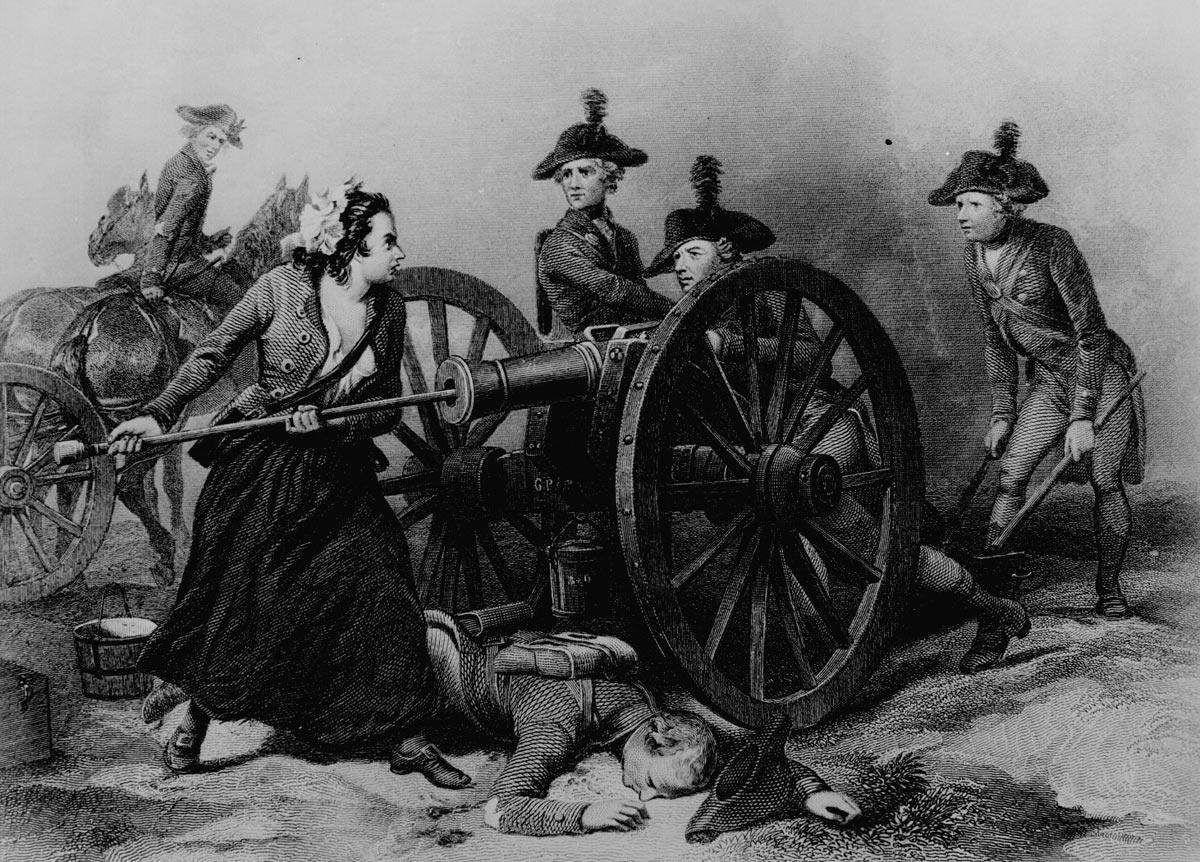
Molly Pitcher at the Battle of Monmouth on 28th June 1778 in the American Revolutionary War: picture by Alonzo Chapell
The previous battle of the American Revolutionary War is the Battle of Saratoga
The next battle of the American Revolutionary War is the Siege of Savannah
To the American Revolutionary War index