The capture of the strategic French port of Louisburg on 27th July 1758
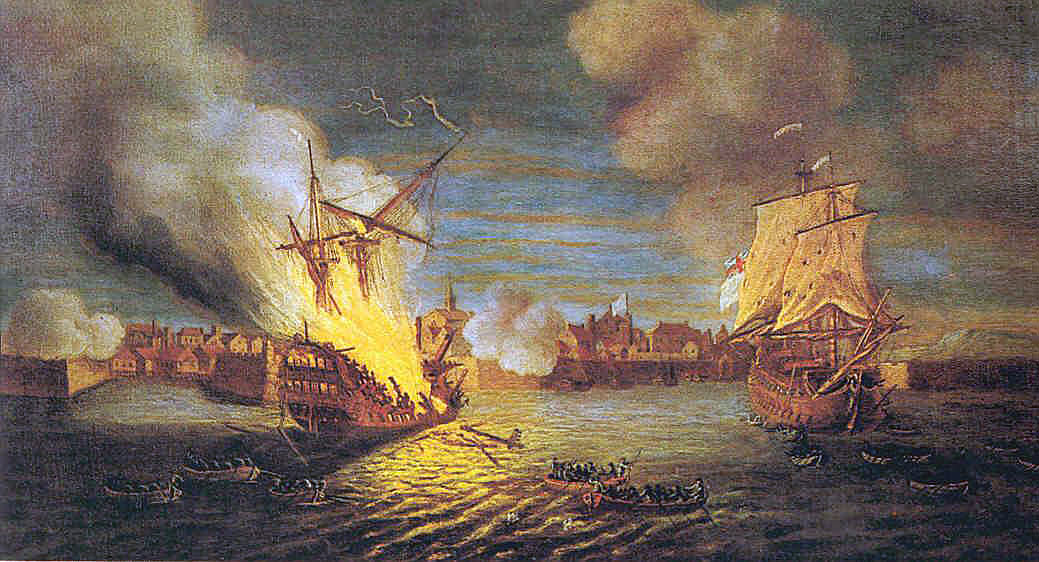
British fire ships at the Siege of Louisburg July 1758 in the French and Indian War: picture by Dominic Serres
The previous battle of the French and Indian War is the Battle of Ticonderoga
The next battle of the French and Indian War is the Battle of Quebec
To the French and Indian War index
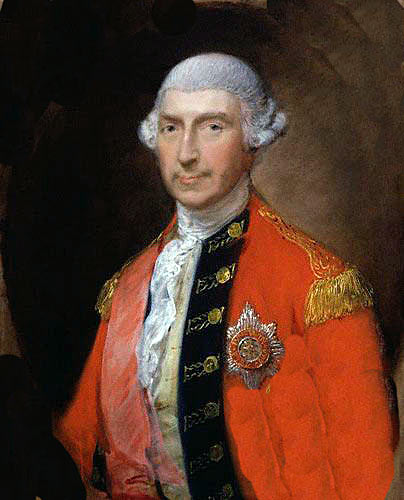
General Jeffery Amherst: Siege of Louisburg July 1758 in the French and Indian War: picture by Thomas Gainsborough
Battle: Capture of Louisburg 1758
War: The French and Indian War also known as the Seven Year War (1755 to 1762)
Date of the Capture of Louisburg 1758: 27th July
Place of the Capture of Louisburg 1758: On the North East coast of Nova Scotia on the eastern seaboard of Canada.
Combatants at the Capture of Louisburg 1758: British and Americans against the French and Canadians.
Commanders at the Capture of Louisburg 1758: General Amherst commanded the British and American force with Brigadier James Wolfe as one of his subordinate commanders. Chevalier de Drucour commanded the French and Canadians.
Size of the armies at the Capture of Louisburg 1758: 11,000 British regular troops and 200 American Rangers. The French garrison was around 6,000.
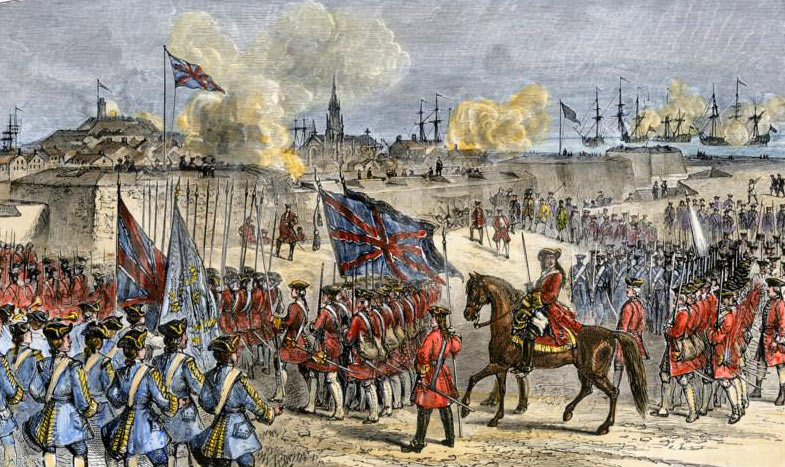
Surrender of Louisburg to the British on 27th July 1758 in the French and Indian War
Winner of the Capture of Louisburg 1758: The British-American force.
British Regiments at the Capture of Louisburg 1758: Brigadier Whitmore’s brigade: 1st/1st Foot, 40th, 3rd/60th, 48th, 22nd Foot. Brigadier Wolfe’s brigade: 17th, 47th, 2nd/60th, 35th Foot. Brigadier Lawrence’s brigade: 28th, 58th, Fraser’s Highlanders, 45th, 15t Foot.
- 1st Foot later the Royal Scots and now the Royal Regiment of Scotland
- 15th Foot later the East Yorkshire Regiment and now the Yorkshire Regiment
- 17th Foot later the Leicestershire Regiment and now the Royal Anglian Regiment
- 22nd Foot later the Cheshire Regiment and now the Mercian Regiment
- 28th Foot later the Gloucestershire Regiment and now the Rifles
- 35th Foot later the Royal Sussex Regiment and now the Princess of Wales’s Own Royal Regiment
- 40th Foot later the South Lancashire Regiment and now the Duke of Lancaster’s Regiment
- 45th Foot later the Sherwood Foresters and now the Mercian Regiment
- 47th Foot later the North Lancashire Regiment and now the Duke of Lancaster’s Regiment
- 48th Foot later the Northamptonshire Regiment and now the Royal Anglian Regiment
- 58th Foot later the Northamptonshire Regiment and now the Royal Anglian Regiment
- 60th Foot later the King’s Royal Rifle Corps and now the Rifles
- Fraser’s Highlanders disbanded at the end of the war.
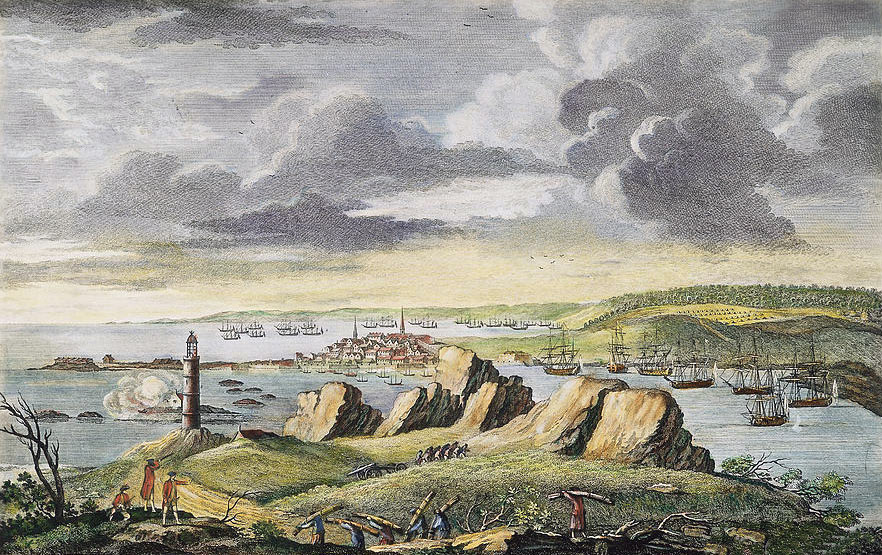
Louisburg: captured from the French by the British on 27th July 1758 in the French and Indian War
Amherst camped overlooking the fortress and brought his artillery and stores ashore. Louisburg was on a landlocked bay 2 ½ miles across with a mile wide outlet to the sea restricted by islets. The garrison comprised 5 battalions of regular troops, 4,000 in number, and several companies of provincial Canadian troops. The French commander General Drucour was an experienced soldier.
While Amherst prepared to begin the siege of the fortress, Wolfe engaged the defences around the bay and the French ships until by the end of July 1758 the frigates in the harbour had been either destroyed or captured.
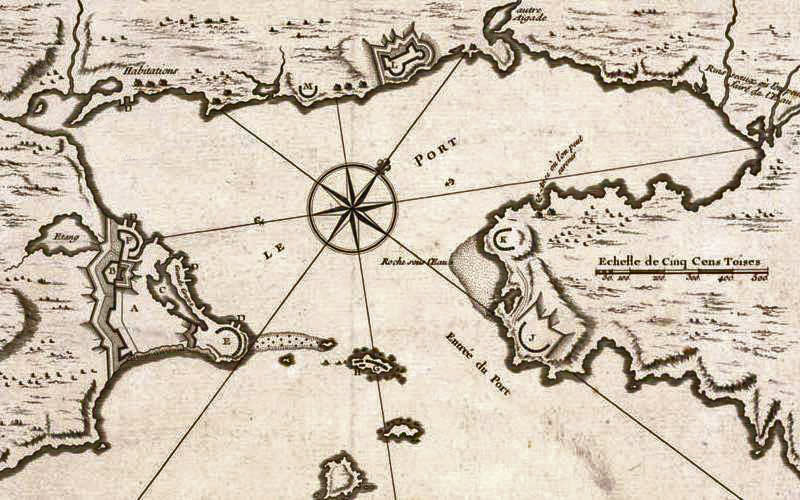
Map of Louisburg, captured on 27th July 1758 from the French by a British and American force in the French and Indian War
Account of the Capture of Louisburg 1758: The Fortress of Louisburg on the Atlantic coast of Cape Breton Island was the bastion guarding the entrance to the Saint Lawrence River and access to French Canada. Before the British could conquer the French colony Louisburg had to be captured. It had been taken by British provincial troops in King George’s War but returned to France in the peace settlement of 1748.

British troops landing at the Siege of Louisburg taken on 27th July 1758 in the French and Indian War
In February 1758 Admiral Boscawen’s fleet carrying General Amherst’s army sailed from Britain, 157 ships and 11,000 soldiers. On 2nd June 1758 the fleet sailed into Gabarus Bay to the West of Louisburg. There were three possible landing places. On 8th June 1758 the weather abated sufficiently for the attack to be made. Brigadiers Lawrence and Whitmore made feint moves against White Point and Flat Point while Brigadier Wolfe attacked Freshwater Cove.
Wolfe commanded all the grenadier companies from the regiments, a band of marksmen known as the Light Infantry and rangers and highlanders. 3 boats with light infantry managed to land in the face of heavy fire and were reinforced. Lawrence brought his brigade onto the French flank and they were forced from their positions. The army was ashore.
Amherst’s batteries opened fire on the fortress and began to batter down the walls. On 26th July 1758 the last French gun positioned on the wall was destroyed and a breach made. Drucour was called on to surrender which with some hesitation he did.
Casualties at the Capture of Louisburg 1758: The British casualties were around 500 killed and wounded. The French casualties are unknown but are thought to have been substantial. 5,600 French soldiers surrendered with 200 cannon and munitions.
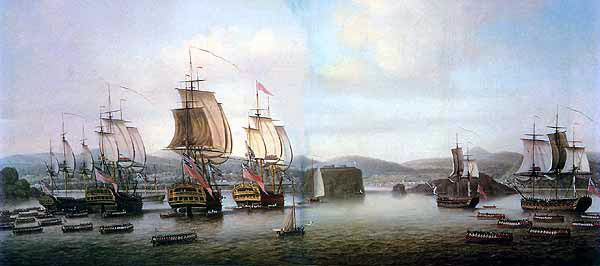
British Fleet at the Siege of Louisburg taken on 27th July 1758 in the French and Indian War
Follow-up to the Capture of Louisburg 1758: Cape Breton and Prince Edward’s Island became British colonies and the way opened up for General Wolfe’s attack up the Saint Lawrence and Quebec the following year.
Anecdotes and Traditions from the Capture of Louisburg 1758:
- Madame Drucour, the wife of the French commander, went to the ramparts every day and made a point of firing three cannon with her own hands. She and Amherst exchanged presents of pineapples and wine. Monsieur Drucour offered the services of French surgeons to wounded English officers.
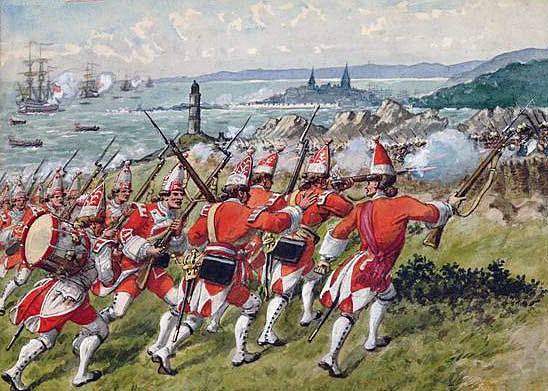
58th Foot in the Siege of Louisburg captured on 27th July 1758 in the French and Indian War : picture by Richard Simkin
References for the Capture of Louisburg 1758:
- History of the British Army by Fortescue
- Montcalm and Wolfe by Parkman
- Wolfe of Quebec by Robin Reilly
The previous battle of the French and Indian War is the Battle of Ticonderoga
The next battle of the French and Indian War is the Battle of Quebec
To the French and Indian War index