The second battle in which Prince Charles Edward Stuart defeated the Royal troops of King George II
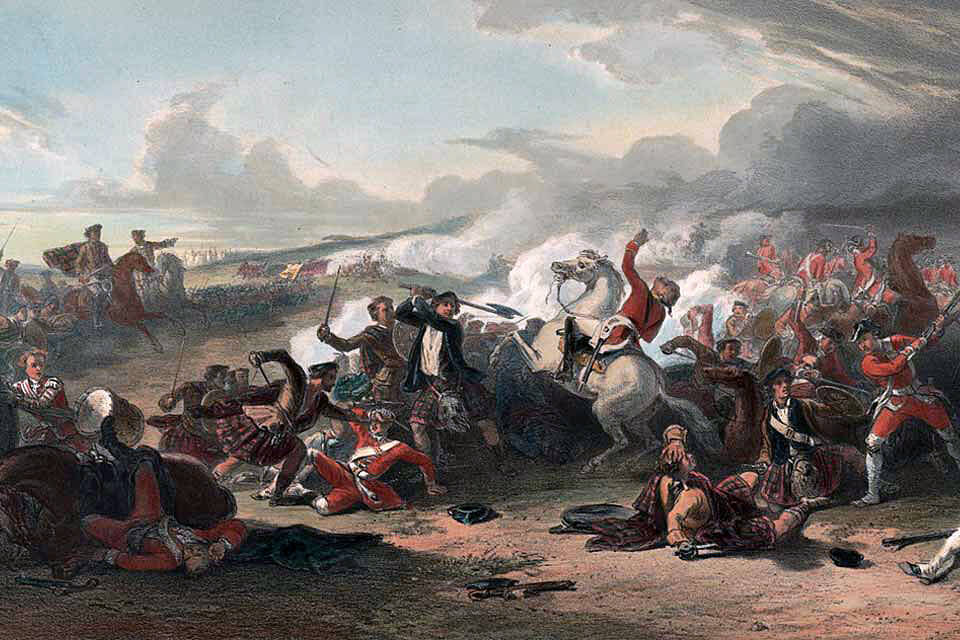
Battle of Falkirk 17th January 1746 in the Jacobite Rebellion
The previous battle of the Jacobite Rebellion is the Battle of Prestonpans
The next battle of the Jacobite Rebellion is the Battle of Culloden
To the 1745 Jacobite Rebellion index
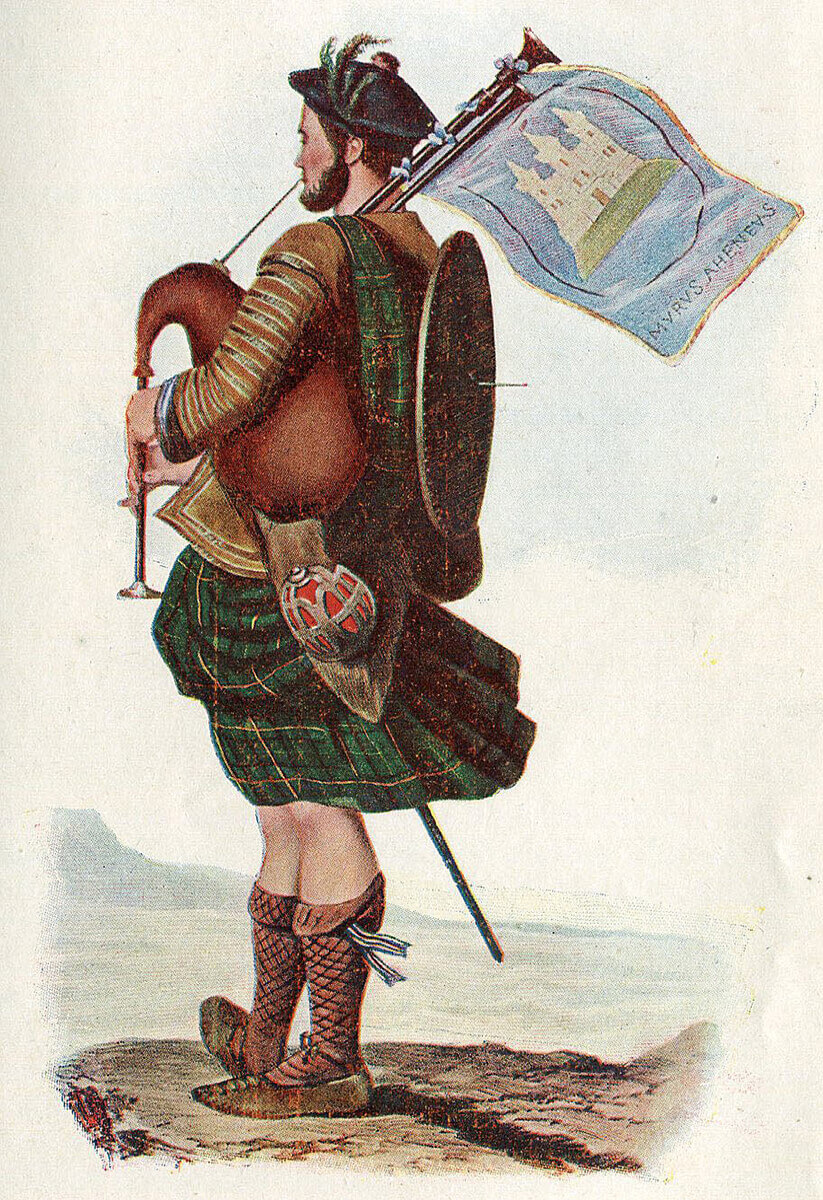
Highland Piper: Battle of Falkirk 17th January 1746 in the Jacobite Rebellion
Battle: Falkirk
War: The Jacobite Rebellion of 1745
Date of the Battle of Falkirk: 17th January 1746 (Old Style) (28th January 1746 New Style). The dates in this page are given in the Old Style.
Place of the Battle of Falkirk: On the moor to the south west of Falkirk some ten miles south of Stirling in Scotland.
Combatants at the Battle of Falkirk: The Highland Army of Prince Charles and the royal troops of George II
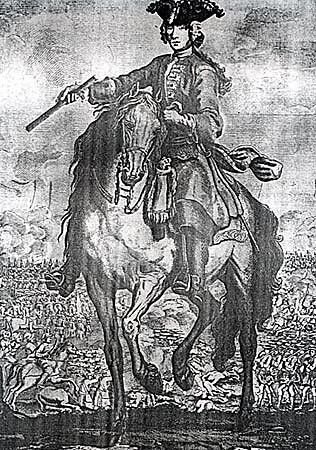
Prince Charles Edward Stuart at the Battle of Falkirk 17th January 1746 in the Jacobite Rebellion
Generals at the Battle of Falkirk: Prince Charles and Lord George Murray against Lieutenant General Henry Hawley.
Size of the Armies at the Battle of Falkirk: Around 5,000 highlanders and 7,000 royal troops.
British Regiments present at the Battle of Falkirk: 9th Dragoons, 13th Dragoons and 14th Dragoons: Foot; 2nd/1st Royal Scots, Howard’s 3rd Old Buffs, Barrel’s 4th King’s Own Royal, Wolfe’s 8th King’s, Pulteney’s 13th, Price’s 14th, Blakeney’s 27th, Cholmondeley’s 34th ,Fleming’s 36th, Munro’s 37th, Battereu’s 62nd and Ligonier’s 59th.
Account of the Battle of Falkirk:
Following his defeat at the Battle of Prestonpans, Sir John Cope was replaced by Lieutenant General Henry Hawley as commander-in-chief of the royal forces in Scotland. During the latter part of 1745 Prince Charles’s Jacobite Army marched south towards London.
Prince Charles got no further than Derby before turning back and marching into the North of Scotland where it joined the Jacobite forces besieging Major General Blakeney in Stirling Castle.
Lieutenant-General Hawley led his army from Edinburgh to relieve Blakeney and arrived at Falkirk for the final approach, where the Royal troops encamped. On 17th January 1746 the rebels were seen marching up onto Falkirk Moor to the south west of the town.
Lieutenant-General Henry Hawley: Battle of Falkirk 17th January 1746 in the Jacobite Rebellion
The royal army formed up while word was sent to Hawley in his lodgings. Hawley at first refused to believe the rebels could be advancing. Finally he galloped into the camp.
Hawley ordered his army to march up onto the moor. The weather had broken and it was raining hard. It was also nearly dark.
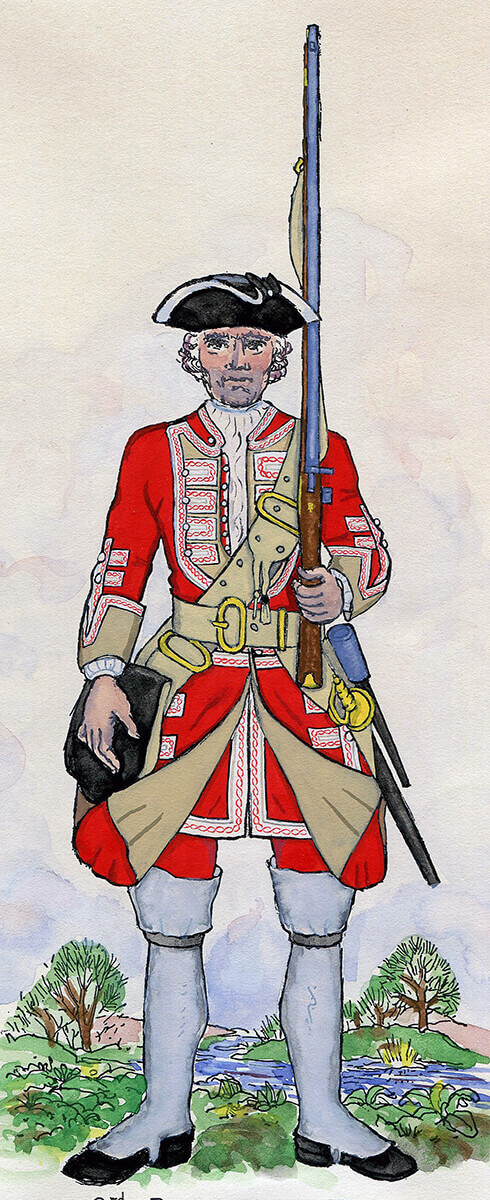
Howard’s 3rd Old Buffs: Battle of Falkirk 17th January 1746 in the Jacobite Rebellion: Mackenzie after Representation of Cloathing
The Royal army set off to march up onto the moor in the heavy rain. The artillery became stuck in the mud at the bottom of the hill, depriving Hawley of an important asset for the battle.
Hawley had formed the view in the 1715 Jacobite rising that the highlanders would not stand against cavalry. His three regiments of dragoons were not of sufficient quality to test this opinion.
The royal army formed facing the rebels on the moor with the three regiments of dragoons on the left flank in advance of the infantry.
Hawley ordered his dragoons to charge. The dragoons approached the highlanders and received a volley which caused them to break and flee down the hill back to Falkirk. The highlanders then attacked the two lines of royal foot.
Most of the royal regiments fled, other than three regiments that held their ground; Ligonier’s, Barrel’s and Price’s. These three regiments met the highland charge with steady volleys before withdrawing in good order back down the hill to their camp, Barrel’s grenadiers attaching themselves to the traces of abandoned guns and dragging them into the camp.
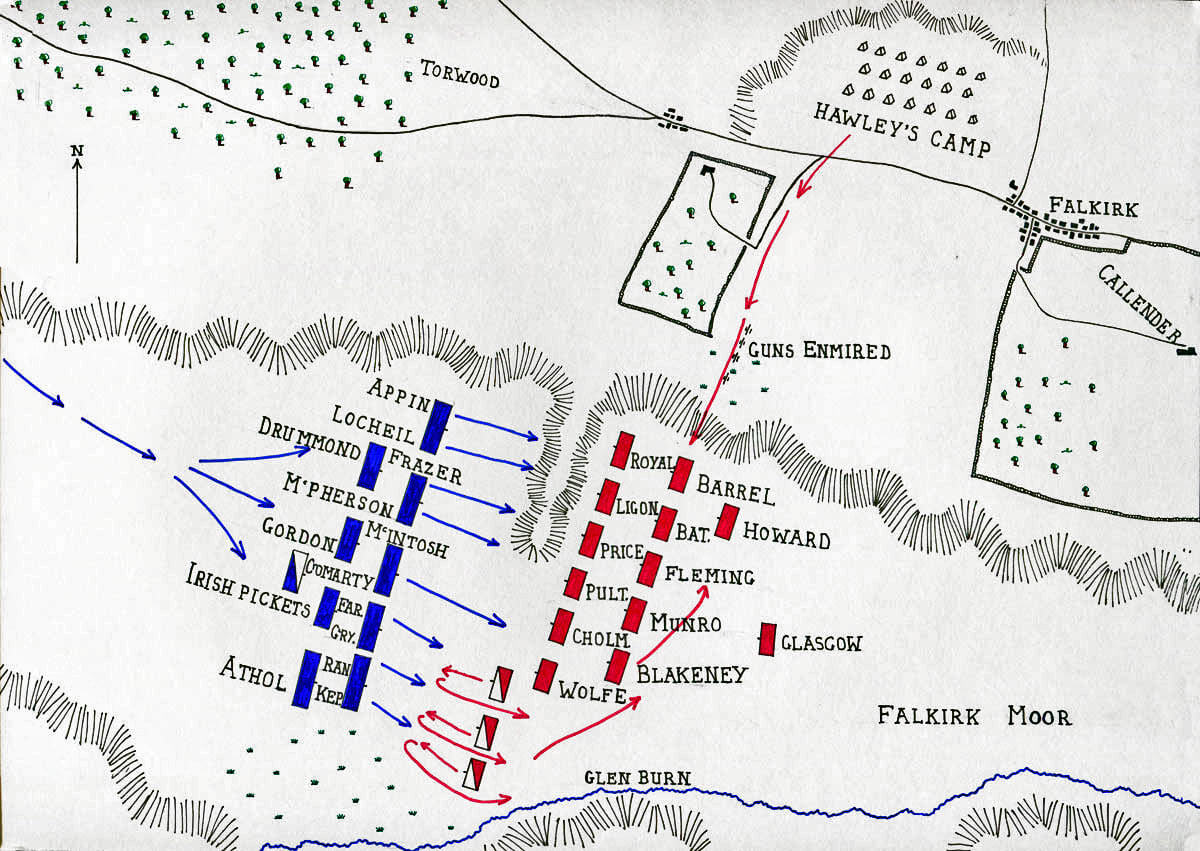
Map of Battle of Falkirk 17th January 1746 in the Jacobite Rebellion by John Fawkes
The highlanders had become considerably dispersed in the murky conditions and many of them were in doubt as to who had won the battle, which had lasted around twenty minutes.
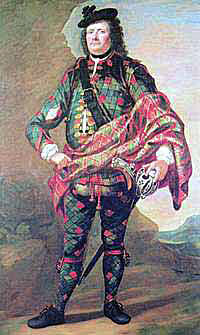
Highland Officer: Battle of Falkirk 17th January 1746 in the Jacobite Rebellion
As soon as the government regiments reached their camp they headed off towards Edinburgh in considerable disarray. The steady regiments followed.
Casualties at the Battle of Falkirk:
The reports indicate that the royal army lost around 350 men killed, wounded and missing. Some 300 were captured. The highlanders lost some 50 dead and 70 wounded.
Follow-up to the Battle of Falkirk:
Following the battle Hawley led his army back to Edinburgh. There the Duke of Cumberland arrived to take over command on 30th January 1746.
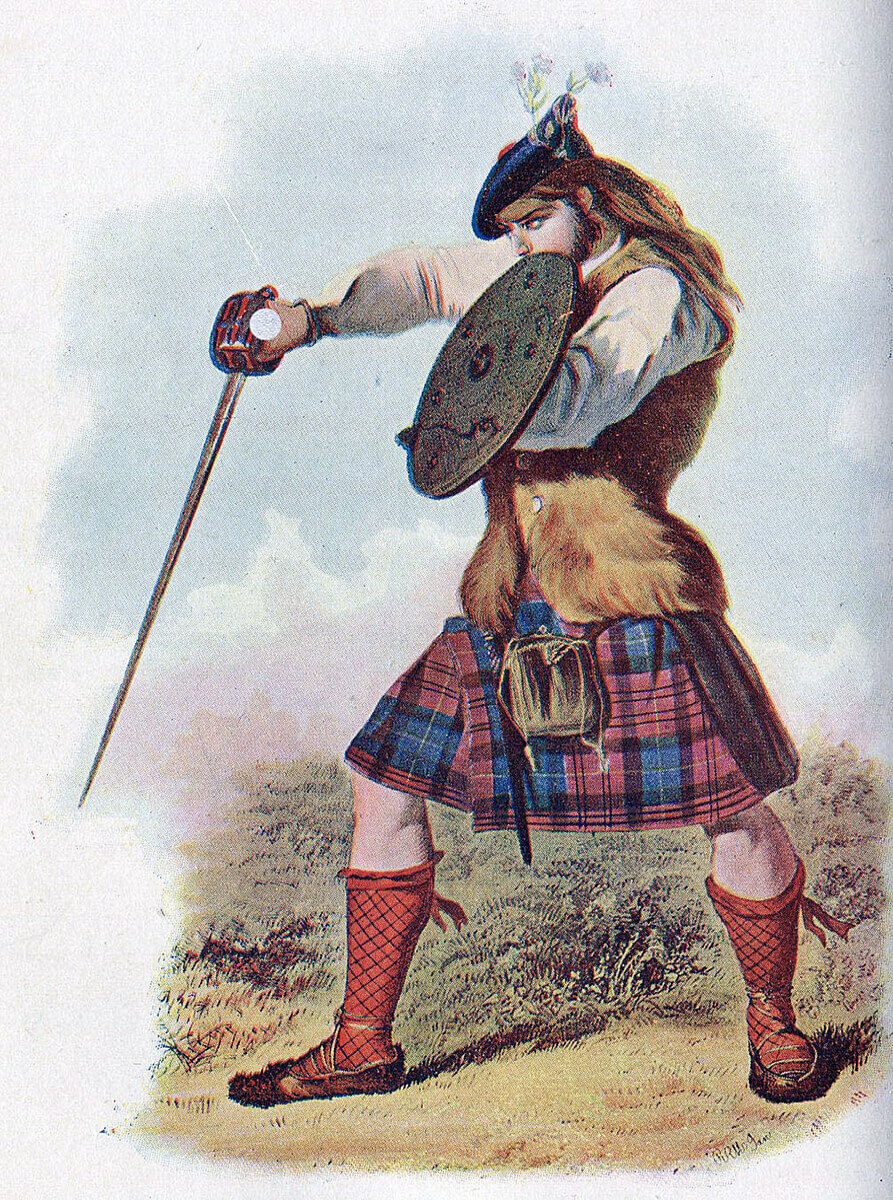
Highlander: Battle of Falkirk 17th January 1746 in the Jacobite Rebellion
Regimental anecdotes and traditions from the Battle of Falkirk:
- It is said that Sir John Cope following his defeat at the Battle of Prestonpans made ₤10,000 in a wager that his successor would be beaten by the Highlanders as he had been.
- Hawley was a protégé of the Duke of Cumberland. He was said by Horace Walpole to be illiterate, was a brutal disciplinarian and had the nickname ‘Hangman’ Hawley. As had Cope, he neglected to ensure that he had a proper train of artillery on the battlefield. His handling of the army, mostly veteran regiments of foot from the Flanders war was inept.
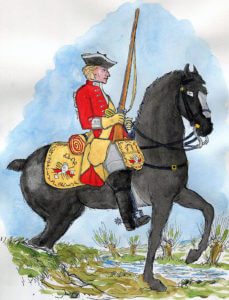
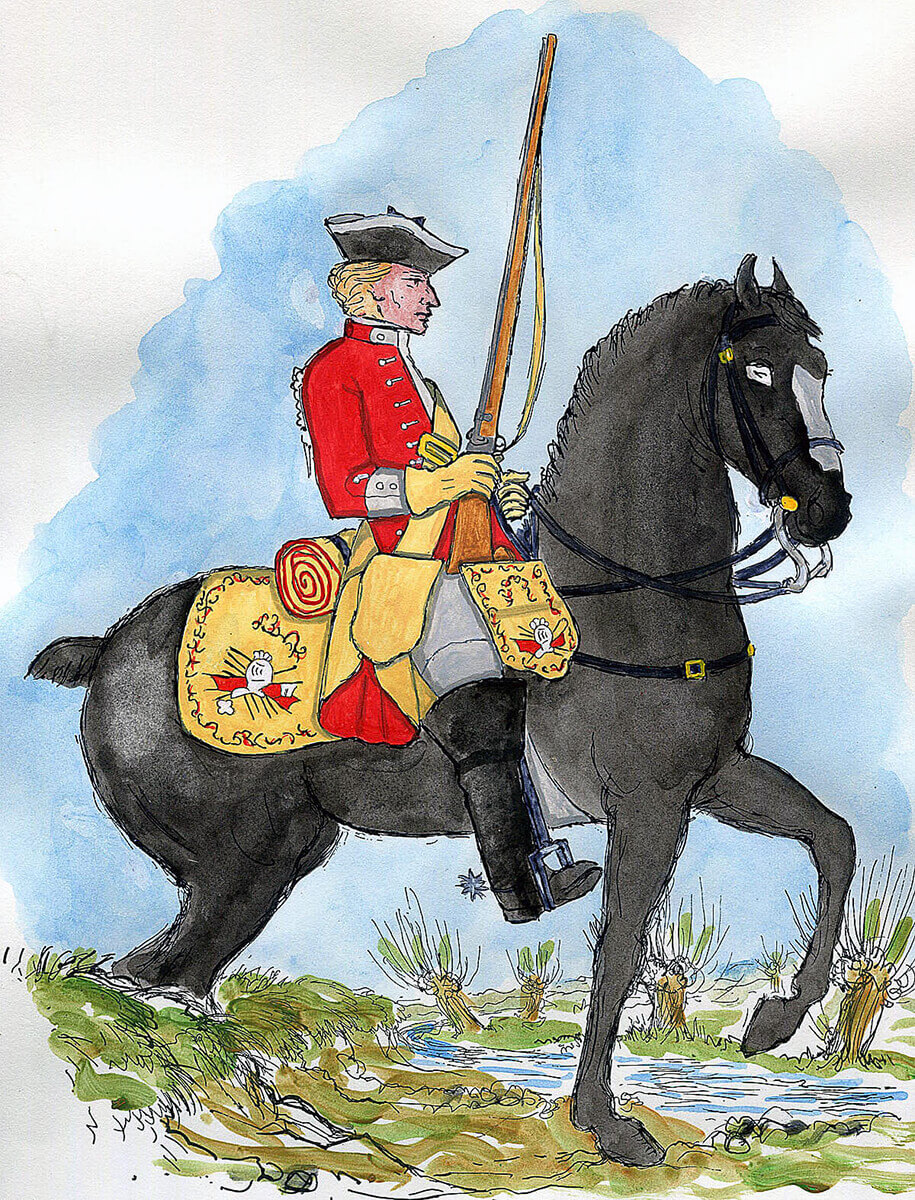
14th Dragoons: Battle of Falkirk 17th January 1746 in the Jacobite Rebellion: Mackenzie after Representation of Cloathing
- Hawley hanged all the deserters from the army he could lay his hands on. Captain Cunningham the artillery officer was tried by court martial and thrown out of the army after a ceremony of “degradation”.
References:
- Fortescue’s History of the British Army Volume 1 Part II
- Battles of the ’45 by Tomasson and Buist
The previous battle of the Jacobite Rebellion is the Battle of Prestonpans
The next battle of the Jacobite Rebellion is the Battle of Culloden
To the 1745 Jacobite Rebellion index