The battle on 30th September 1746 at which General Ligonier, in command of the British, Hanoverian and Hessian troops, showed his tactical ability in handling an overwhelming attacking force of French troops
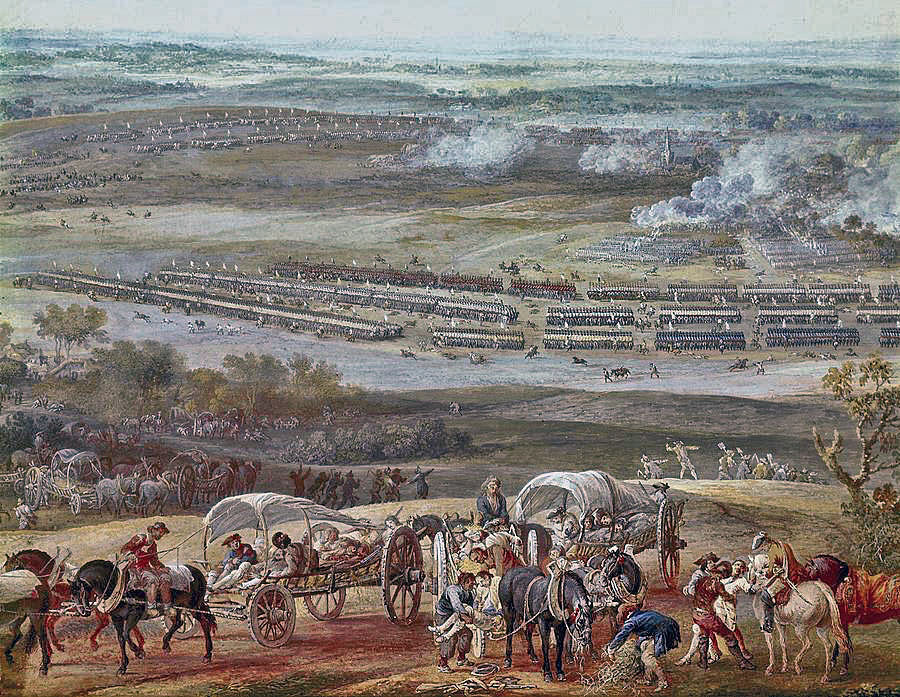
Battle of Rocoux 30th September 1746 in the War of the Austrian Succession
The previous battle of the War of the Austrian Succession is the Battle of Fontenoy
The next battle of the War of the Austrian Succession is the Battle of Lauffeldt

General Sir John Ligonier commander of the British and German contingents at the Battle of Rocoux on Battle of Rocoux 30th September 1746 in the War of the Austrian Succession
To the War of the Austrian Succession index
Battle: Rocoux
War: War of the Austrian Succession or King George’s War.
Date of the Battle of Rocoux: 30th September 1746 (old style) (new style 11th October 1746)
Place of the Battle of Rocoux: Outside Liege on the west bank of the River Meuse in Flanders (Belgium).
Combatants at the Battle of Rocoux: 120,000 French against 80,000 British, Hanoverians, Austrians and Dutch.
Generals at the Battle of Rocoux: Prince Charles of Lorraine commanded the Austrian troops in the Pragmatic Army and, as the commander of the largest contingent, the senior general, but above all as the brother-in-law of the Empress Maria-Theresa and a Prince he was the overall commander of the Pragmatic Army. Lieutenant-General Sir John Ligonier commanded the British and Hessian contingents, Marshal de Somerfeldt commanded the Hanoverian contingent and the Prince of Waldeck commanded the Dutch contingent.
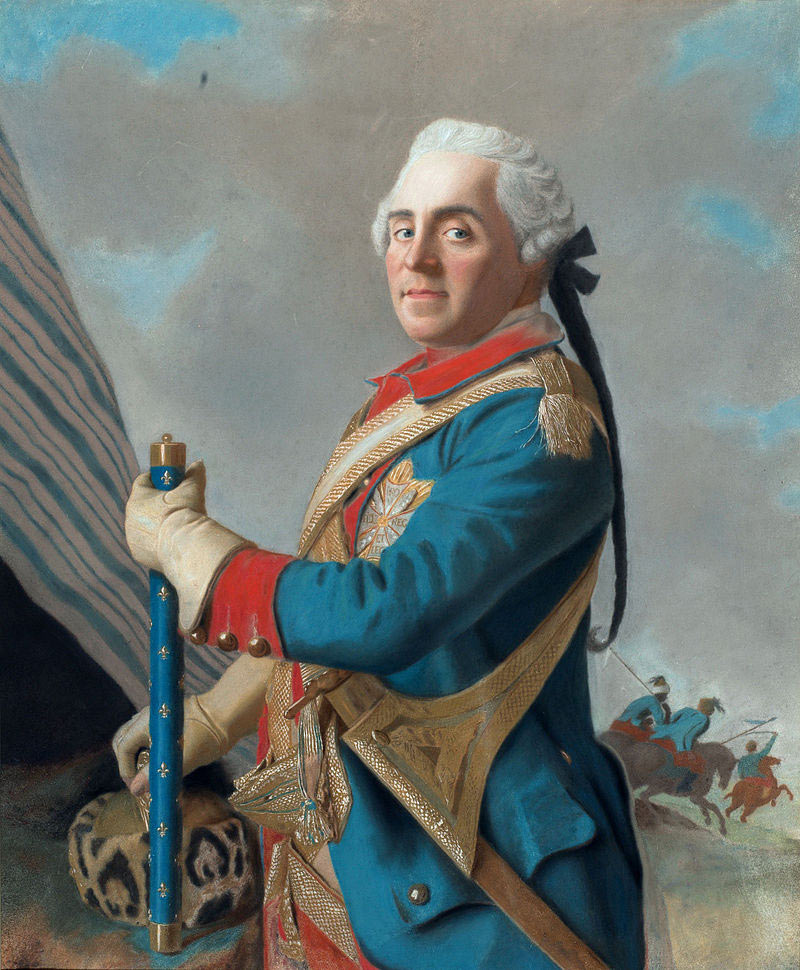
Marshal Maurice de Saxe victor of the Battle of Rocoux 30th September 1746 in the War of the Austrian Succession: picture by Liotard
Marshal Maurice de Saxe commanded the French Army.
Size of the armies at the Battle of Rocoux: 120,000 French troops against 80,000 troops (Austrian, Dutch, British, Hanoverian and Hessian) in the Pragmatic Army.
Winner of the Battle of Rocoux: Marshal Saxe and his French Army
British Regiments at the Battle of Rocoux:
Roucoux is not a battle honour for any British regiment.
The following regiments were present at the battle:
Cavalry: 2nd Dragoons (Royal Scots Greys), 6th Dragoons and 7th Dragoons.
Regiments of Foot: 8th, 19th, 33rd, 43rd Foot. The 13th and 26th arrived at the start of the battle and acted as a rear-guard.
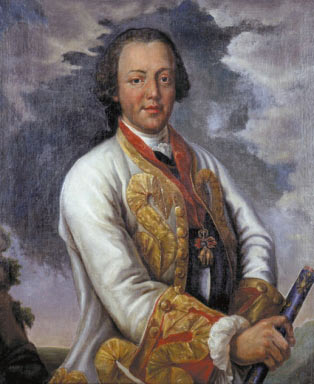
Prince Charles of Lorraine commander of the Pragmatic Army at the Battle of Rocoux 30th September 1746 in the War of the Austrian Succession: picture by Liotard
Background to the Battle of Rocoux:
Following the defeat of the Pragmatic allies before Tournai at the Battle of Fontenoy on 30th April 1745 Marshal Saxe, commanding the French army, was enabled to take Tournai. Later in 1745 the outbreak of the Jacobite Rebellion in Britain compelled the withdrawal of the greater part of the British force in the Netherlands with their commander the Duke of Cumberland.
During the winter of 1745/6 the French advanced north-east from the River Scheldt and captured Louvain, Brussels and Antwerp, in the absence of a cohesive Pragmatic Army spear headed and largely funded by the British.
In June 1746 Lieutenant-General John Ligonier returned to Flanders with troops released by the withdrawal of Prince Charles Edward Stuart to Scotland following the failure of his invasion of England.
Ligonier found a far from satisfactory situation. Marshal Saxe lay at Louvain with a powerful French army of around 120,000 men. The Prince of Conti threatened Charleroi from a position further up the River Meuse with another strong French army.
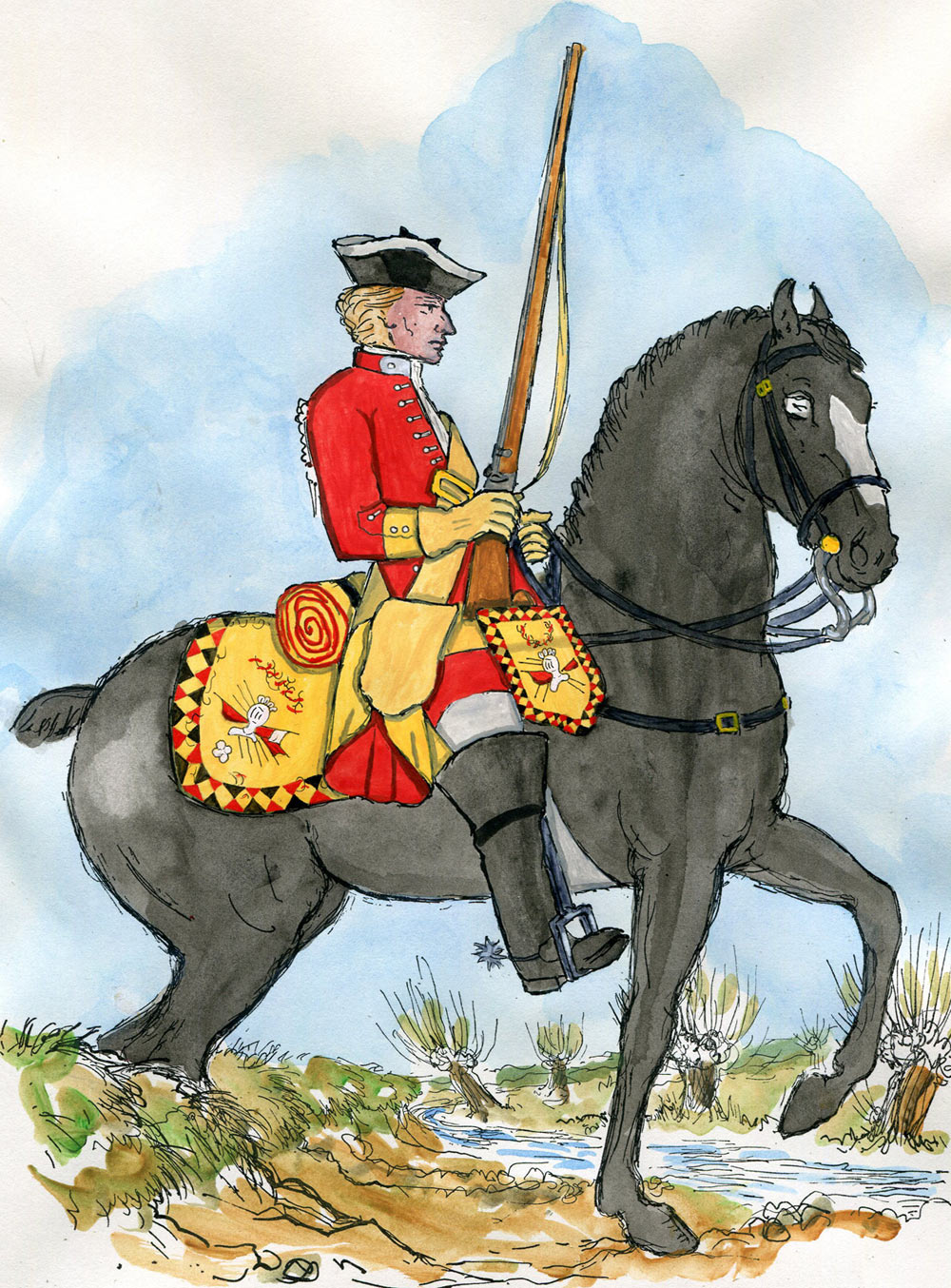
6th Dragoons: Battle of Rocoux 30th September 1746 in the War of the Austrian Succession: picture by Mackenzies from Representation of Cloathing
The line of towns along the River Meuse; Charleroi, Namur, Liège and Maastricht lay under threat from the French.
The Pragmatic Army of Dutch, British, Hanoverian and Hessian troops took the field on 12th July 1746, late in the campaigning season, marching south-west to prevent the loss of Charleroi. The Pragmatic allies met Prince Charles of Lorraine who commanded a substantial contingent of Austrian troops, bringing the army to around 80,000 men.
Marshal Saxe marched from Louvain towards the Meuse intending to attack the Pragmatic Army, while Charleroi fell to the French followed by Namur on around 25th September 1746.
To protect Liège, the next town downstream on the River Meuse under threat from the French, the Pragmatic army crossed the Jaar River, which forms a right angle to the River Meuse some ten miles to the north-east of Liège, and took up positions in the group of villages outside Liège, facing west with it left flank on the Liège suburbs, where it would receive the French attack.

Map of the Battle of Rocoux 30th September 1746 in the War of the Austrian Succession: map by John Fawkes
Account of the Battle of Rocoux:
The command structure in the Pragmatic army was problematic until the arrival of the Austrian Prince Charles of Lorraine ensured a paramount commander, Prince Charles being the brother-in-law of the Empress Maria-Theresa of Austria. Nevertheless, the various national contingents preserved a high degree of autonomy which made concerted action difficult.
The British and German (Hanoverian and Hessian) troops commanded by General Ligonier, comprising 12 battalions of foot and 5 regiments of horse and dragoons, took the centre of the Pragmatic position based on a trio of villages outside Liège; Rocoux (which gave its name to the ensuing battle), Varoux and Liers.
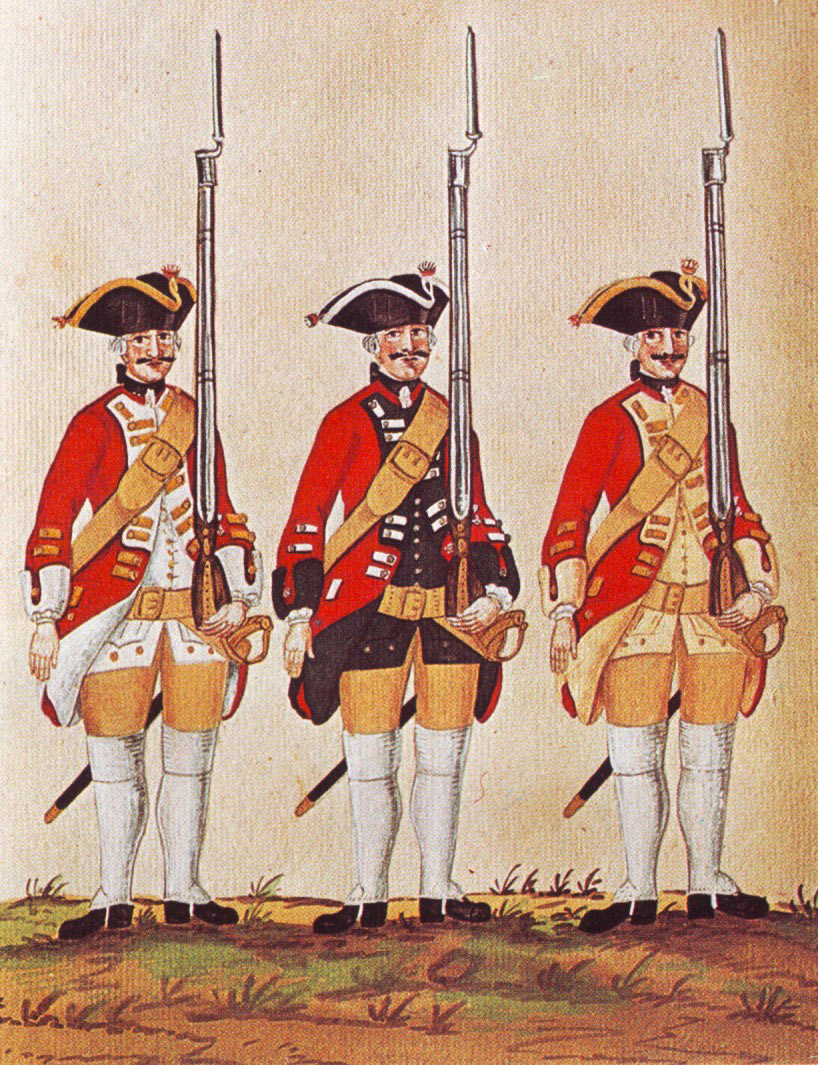
Hanover Foot Regiments von Zastrow senior, von Zastrow junior and von Sporcken: Battle of Rocoux 30th September 1746 in the War of the Austrian Succession: picture by Karsten
The British and German foot were flanked by the 2 Hanoverian cavalry regiments on the right and the 3 British dragoons regiments on the left.
The Dutch took the left of the army, extending from Rocoux, which they initially held, into the suburbs of Liège, which was fortified and expected to be a barrier against the French.
Prince Charles and the strong Austrian contingent took the right of the Pragmatic line based on the villages of Enick, Fexhe and Slins and extending towards the Jaar River.
On 29th September 1746 (old style) Saxe’s army approached from the direction of St Trond, crossing the River Jaar and advancing on Liège from the north-west. Skirmishes with outlying Austrian pickets warned the Pragmatic allies of the impending battle.
That night the French encamped outside Liège while the Pragmatic troops sent their baggage across the River Meuse in case they were forced to retreat in the face of the overwhelming French strength.
It rained all night which gave way to a heavy mist. On the morning of 30th September 1746 (old style) the French army began an advance in eight columns, four of foot and four of cavalry. The targets of this advance were Liège itself, the Dutch positions immediately outside Liège and the British and Germans immediately to the north of the Dutch. The Austrians were beyond the scope of the main French attack.
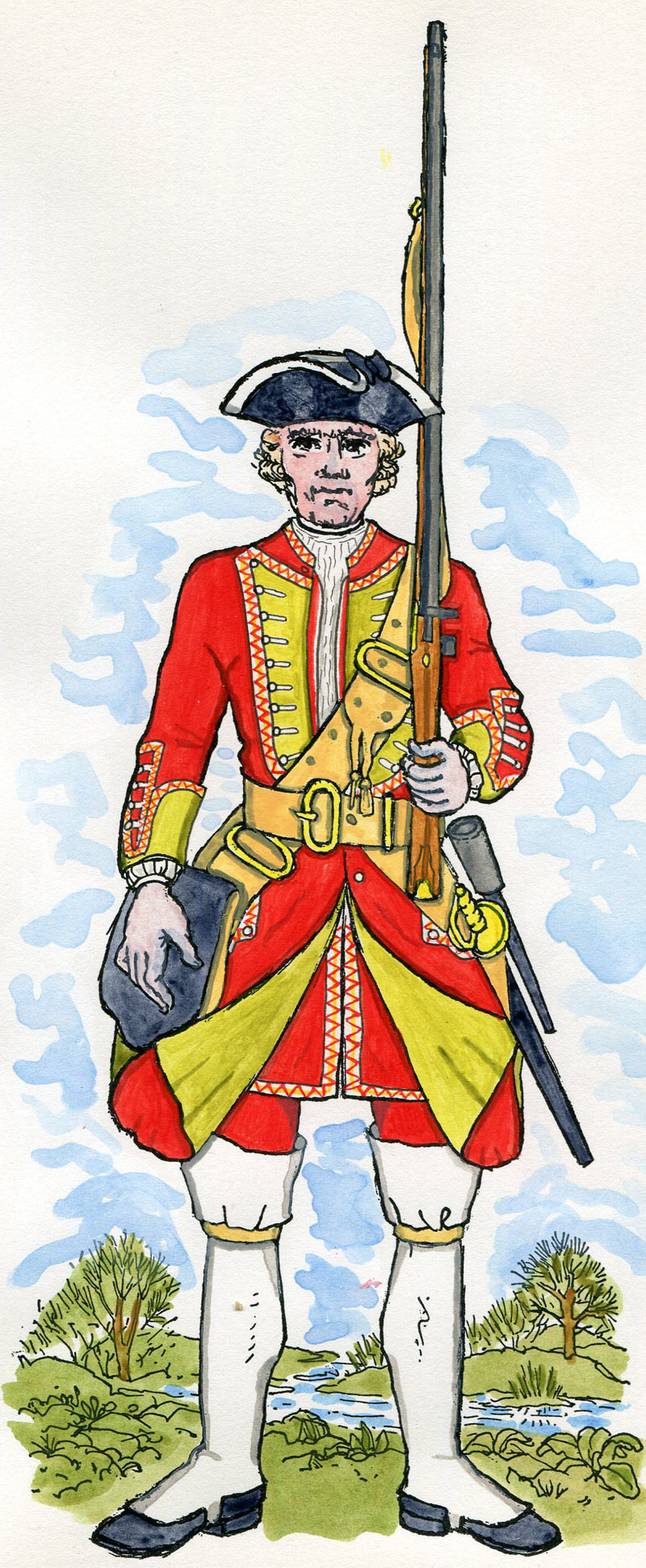
8th Foot: Battle of Rocoux 30th September 1746 in the War of the Austrian Succession: picture by Mackenzies from Representation of Cloathing
The news soon reached the Pragmatic commanders that the authorities of Liège had opened the town gates to the French troops who were marching through Liège to take the Dutch in the flank.
The Prince of Waldeck reformed his line to counter the French attack that would fall on his left flank and Ligonier took over the defence of the village of Rocoux.
At this late stage steps were taken to fortify the villages and two British gun batteries deployed to cover the front and left flank of the British and German position.
2 British and 2 Hessian battalions with the Royal Scots Greys formed a reserve under Ligonier’s immediate control. 2 further British battalions, the 13th and 26th Regiments, were on the march from Maastricht as an added reinforcement.
As the French columns advanced and the mist cleared Marshal Saxe concentrated his attack on the villages of Rocoux and Varoux and on the Dutch, while the Austrians faced only a light diversion.
The French troops attacking the Dutch did not begin their assault until around 3pm. Heavy fighting took place around the village of Ance with the Dutch troops strongly resisting the French advance.
Once this attack was well established Marshal Saxe began his assault on the British and Germans in Rocoux and Varoux. A battery of 36 guns opened a heavy barrage on the two redoubts. Two columns of infantry then attacked. In all 52 battalions of French infantry were poured into the two villages, brigade succeeding brigade as the leaders were repulsed by the strong defence. Even so within half an hour the 8 British, Hanoverian and Hessian battalions in the two villages were forced out, although the Hanoverian General Zastrow managed to hold Liers.

Howard’s 19th Foot: Battle of Rocoux 30th September 1746 in the War of the Austrian Succession: picture by Mackenzies from Representation of Cloathing
The two British battalions in reserve, Howard’s 19th and Graham’s 43rd, resisted the French attack fiercely in a hollow way where they had been posted.
Ligonier passed word to the Prince of Waldeck that the two villages, Rocoux and Varoux had been lost and the Dutch troops began to retire from their positions, as had been agreed before the battle, marching behind the British and German positions towards the River Meuse.
The French infantry, after fighting through Rocoux and Varoux, emerged into the open country but were driven back into the villages by the British and Hanoverian dragoons.
The British and German battalions driven from Rocoux and Varoux joined the garrison of Liers under General Zastrow. The 2 British battalions from Maastricht and the Royal Scots Greys formed a new flank on the left to replace the retreating Dutch regiments, with further flank guards forming as troops came up from the Austrian positions on the right. The British and Hanoverian cavalry kept the French infantry from advancing out of Rocoux and Varoux. With this protection, the British and German regiments were enabled to follow the Dutch back to the river.
As night fell the Dutch, British, Hanoverians and Hessians crossed the River Meuse by three pontoon bridges. Marshal Saxe made no effort to interfere with the crossing.
The Austrians withdrew to the right, crossed the River Jaar and marched to Maastricht.
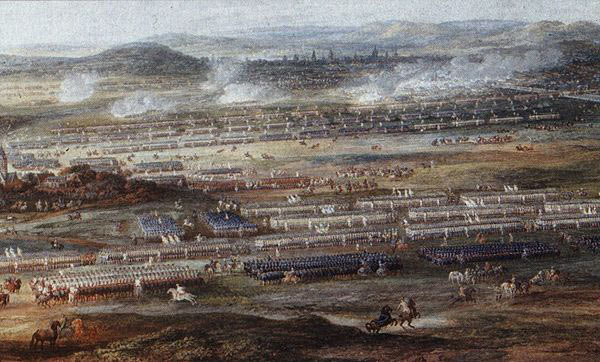
Battle of Rocoux 30th September 1746 in the War of the Austrian Succession
Casualties at the Battle of Rocoux:
The Pragmatic Army suffered some 5,000 casualties.
The French Army is said to have suffered around 9,000 casualties, largely through the tactic of mass assault on the Pragmatic positions.
The losses of the British, Hanoverian and Hessian regiments was around 2,000.
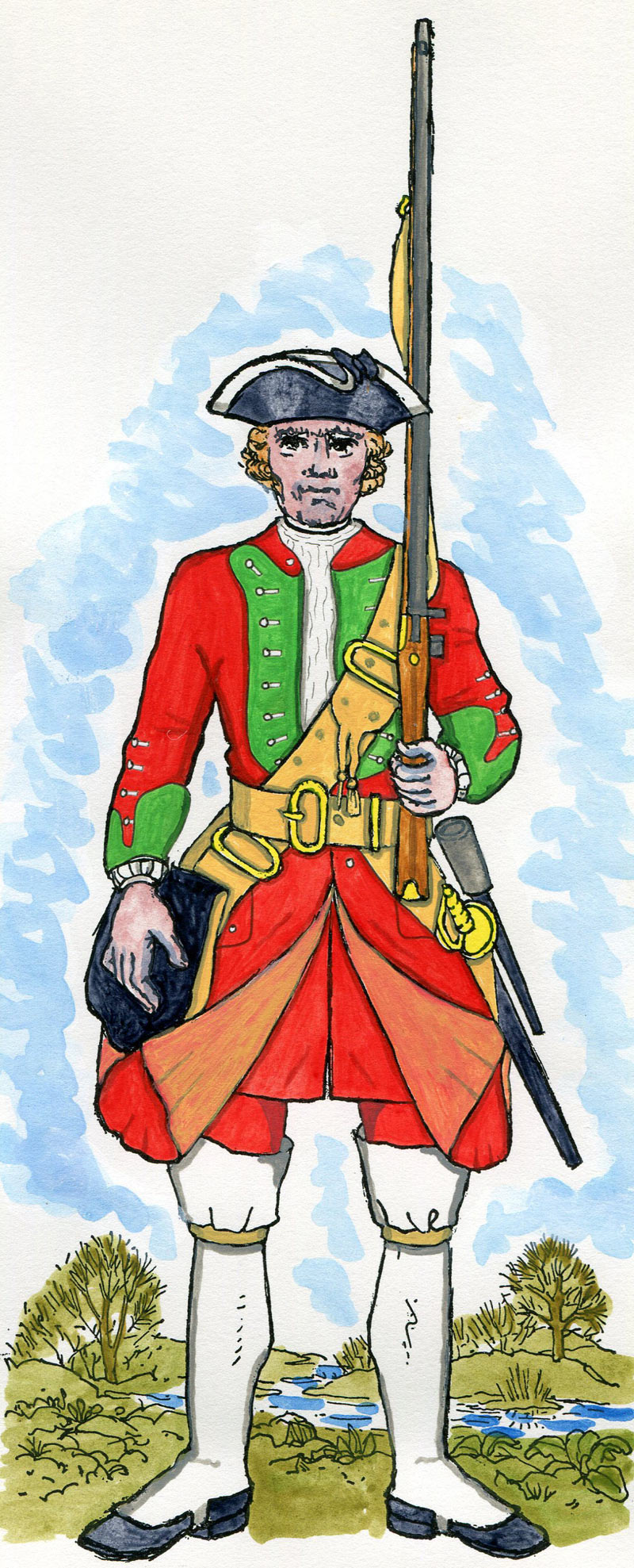
Graham’s 43rd Foot: Battle of Rocoux 30th September 1746 in the War of the Austrian Succession: picture by Mackenzies from Representation of Cloathing
British losses were: officers 3 killed and 20 wounded: soldiers 230 killed or missing and 66 wounded. Around 200 casualties are said to have been incurred by Graham’s 43rd Regiment.
The French captured 8 British and Hessian guns.
Follow-up to the Battle of Rocoux: The Battle of Rocoux took place at the end of the 1746 campaigning season. After the battle, Marshal Saxe withdrew his French army into winter quarters and the Pragmatic allies withdrew to Maastricht and then to Venlo for the Winter.
Regimental anecdotes and traditions from the Battle of Rocoux:
- Marshal Saxe’s critics in the French court accused him of failing to achieve a decisive victory at the Battle of Rocoux to prolong the war for his own benefit. They criticized Saxe for not attacking on the Austrian flank which would have enabled him to cut the Pragmatic Army off from the river crossings and for failing to press the retreating Pragmatic troops as they retreated to the River Meuse.
- King George II, on receiving General Ligonier’s report of the battle, was highly critical of Prince Charles and his Austrians for failing to come to the relief of the troops in the centre and on the left during the French attack on the Dutch in Ance and the British and Germans in Rocoux, Varoux and Liers. Ligonier considered this criticism to be unfair on the basis that the Austrians were bound to secure the army’s position on the River Jaar.
References for the Battle of Rocoux:
- William Augustus Duke of Cumberland by Evan Charteris
- Field Marshall Lord Ligonier by Rex Whitworth
- Fortescue’s History of the British Army Volume II
- Fontenoy by Francis Henry Skrine
- William Augustus Duke of Cumberland by Rex Whitworth
- Marshal of France: The life and times of Maurice de Saxe by Jon Mancip White
The previous battle of the War of the Austrian Succession is the Battle of Fontenoy
The next battle of the War of the Austrian Succession is the Battle of Lauffeldt
To the War of the Austrian Succession index