The ‘Soldier’s Battle’, fought in the Crimean fog on 5th November 1854
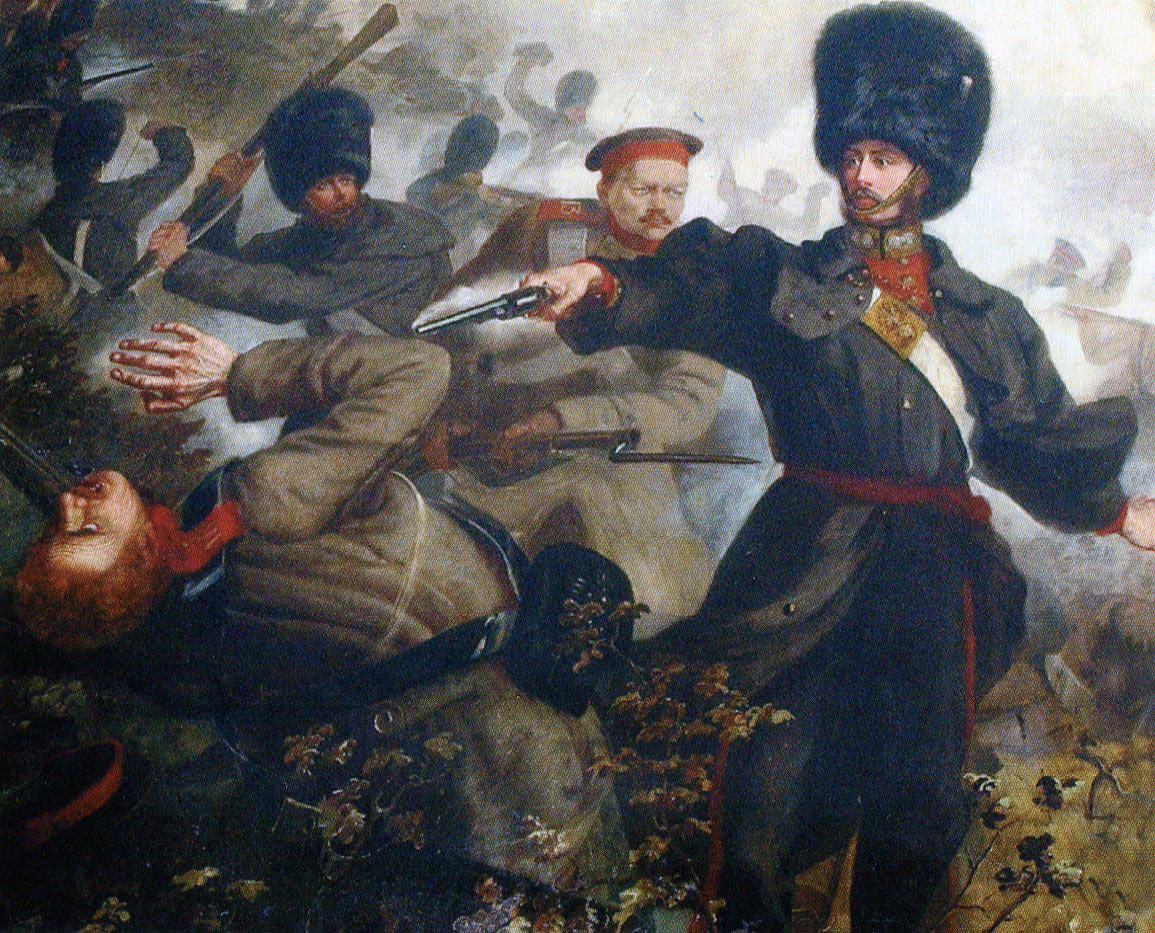
Lieutenant Russell and Private Palmer of the Grenadier Guards winning Victoria Crosses at the Battle of Inkerman on 5th November 1854 during the Crimean War: picture by Louis Desanges
The previous battle in the Crimean War is the Battle of Balaclava
The next battle in the Crimean War is the Siege of Sevastopol
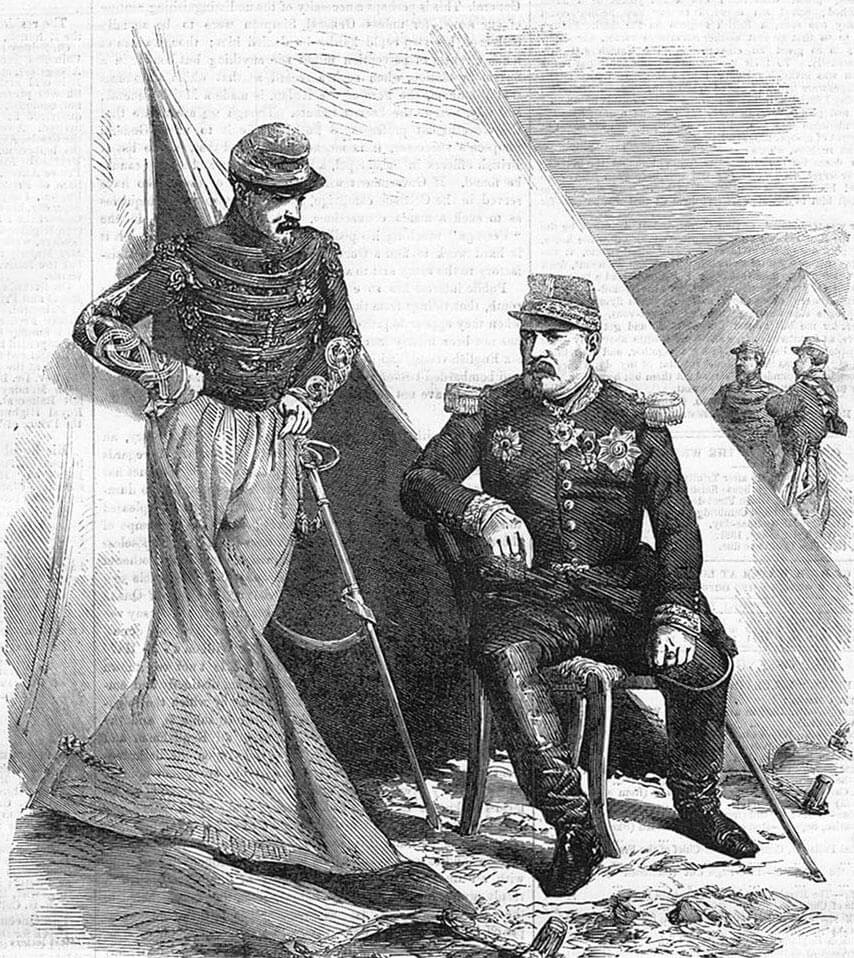
General Bosquet and staff officer: Battle of Inkerman on 5th November 1854 in the Crimean War
Battle: Inkerman
War: Crimean War
Date of the Battle of Inkerman: 5th November 1854
Place of the Battle of Inkerman: In the Crimea outside Sevastopol, in the Old Tsarist Russian Empire.
Combatants at the Battle of Inkerman: British and French troops against the Imperial Russian Army.
Generals at the Battle of Inkerman: Lieutenant General the Earl of Raglan commanded the British Army, General Canrobert commanded the French Army and Prince Menshikov commanded the Russian Army.
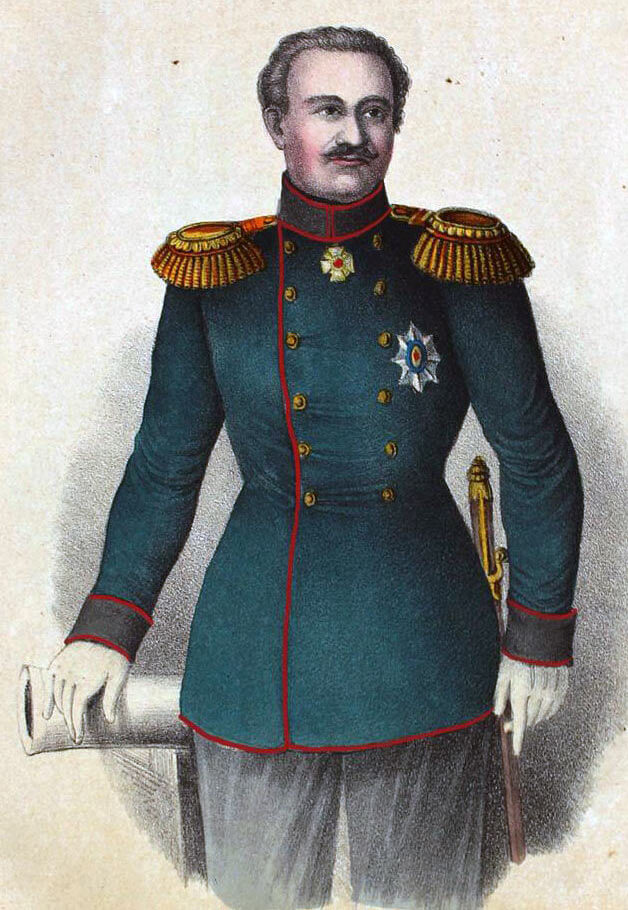
General Dannenberg, Russian commander at the Battle of Inkerman on 5th November 1854 in the Crimean War
The immediate commanders in the battle were: British; Major General Sir George Brown, Major General Sir George Cathcart and Brigadier Pennefather. The French general on the ground was General Bosquet. The Russian commanders were General Dannenberg, General Soimonoff and General Pauloff.
Size of the armies at the Battle of Inkerman: The forces involved in the battle were: British; 8,500 men and 38 guns; French; 7,500 men and 18 guns; Russian; 42,000 men and 134 guns.
Uniforms, arms and equipment at the Battle of Inkerman: The armies that fought in the Crimean War for Russia, Britain and France were in organisation little different from the armies that fought the Napoleonic wars at the beginning of the century. They were however on the verge of substantial change, brought about by developments in firearms.
The British infantry fought with the Brown Bess musket in some form from the beginning of the 18th Century.
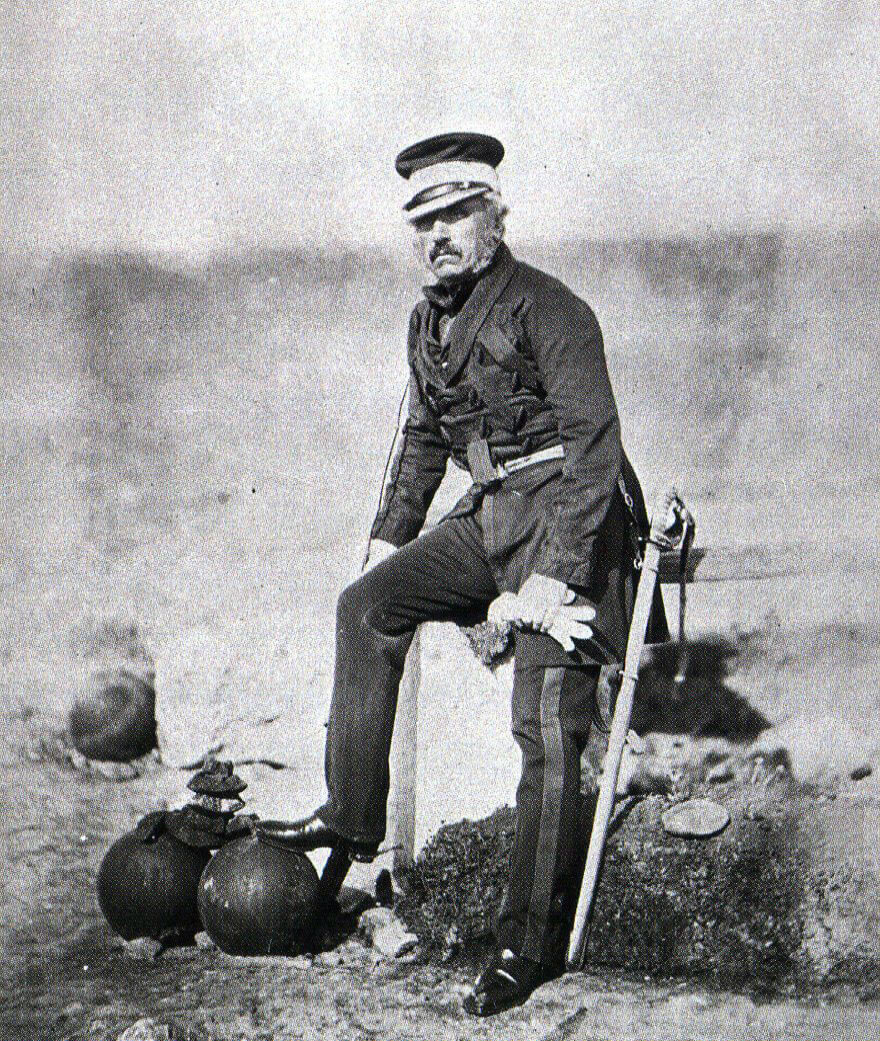
Brigadier General Pennefather, commander of the British Second Division at the Battle of Inkerman on 5th November 1854 in the Crimean War
As the Crimean War broke out, the British Army’s infantry was being equipped with the new French Minié Rifle, a muzzle loading rifle fired by a cap (all the British divisions, other than the Fourth, arriving in the Crimea with this weapon). This weapon was quickly replaced by the more efficient British Enfield Rifle.
The new rifle was sighted up to 1,000 yards, as against the old Brown Bess, wholly inaccurate beyond 100 yards.
It would take the rest of the century for field tactics to catch up with the effects of the modern weapons coming into service.
The Russian infantry, in contrast, were still armed with the flintlock muskets carried in the Napoleonic Wars of forty years before.
Winner of the Battle of Inkerman: The British and the French were left holding the field. The Russians withdrew.
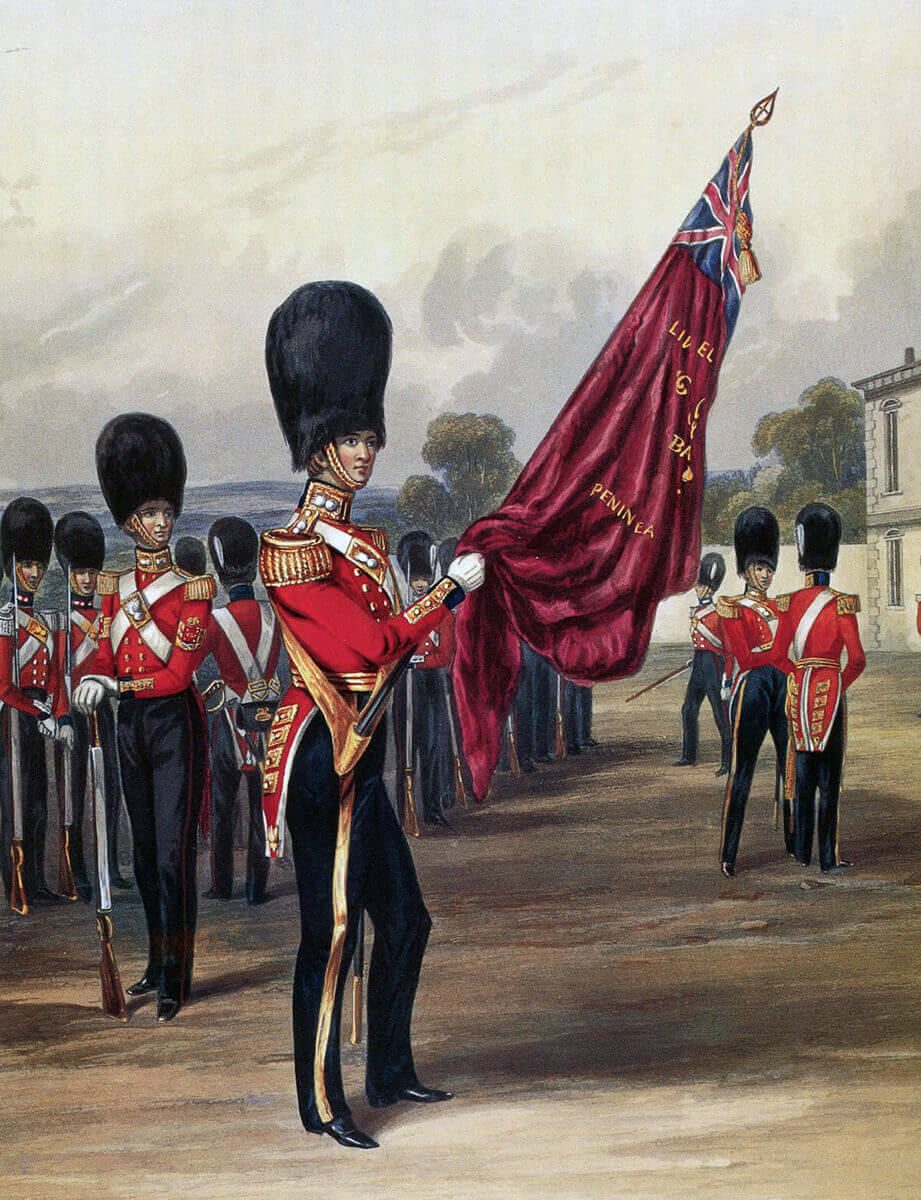
Ensign of the Grenadier Guards: Battle of Inkerman on 5th November 1854 in the Crimean War: print by Ackermann
British Regiments at the Battle of Inkerman:
Royal Artillery
Grenadier Guards
Coldstream Guards
Scots Fusilier Guards, now the Scots Guards
1st Regiment, the Royal Regiment, now the Royal Regiment of Scotland.
4th the King’s Own Royal Regiment, now the Duke of Lancaster’s Regiment.
7th Royal Fusiliers, now the Royal Regiment of Fusiliers.
19th Regiment, now the Yorkshire Regiment.
20th Regiment, later the Lancashire Fusiliers and now the Royal Regiment of Fusiliers.
21st Royal North British Fusiliers, now the Royal Regiment of Scotland.
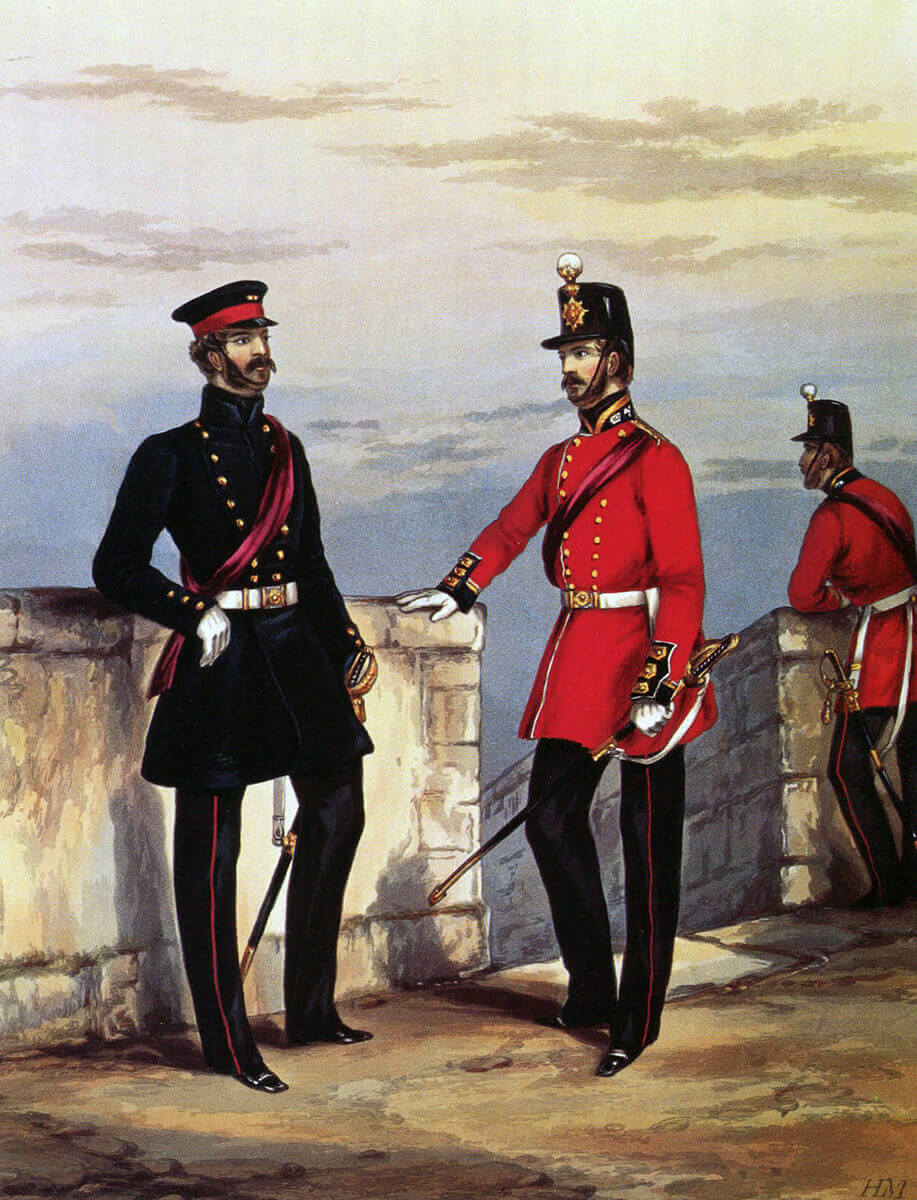
7th Royal Fusiliers: Battle of Inkerman on 5th November 1854 in the Crimean War: print by Ackermann
23rd Royal Welch Fusiliers, now the Royal Welsh.28th Regiment, later the Gloucestershire Regiment and now the Rifles.
30th Regiment, later the East Lancashire Regiment and now the Duke of Lancaster’s Regiment.
33rd Regiment, later the Duke of Wellington’s Regiment and now the Yorkshire Regiment.
38th Regiment, later the South Staffordshire Regiment and now the Mercian Regiment.
41st Regiment, later the Welch Regiment and now the Royal Welsh.
44th Regiment, later the Essex Regiment and now the Royal Anglian Regiment.
47th Regiment, later the Loyal Regiment and now the Duke of Lancaster’s Regiment.
49th Regiment, later the Royal Berkshire Regiment and now the Rifles.
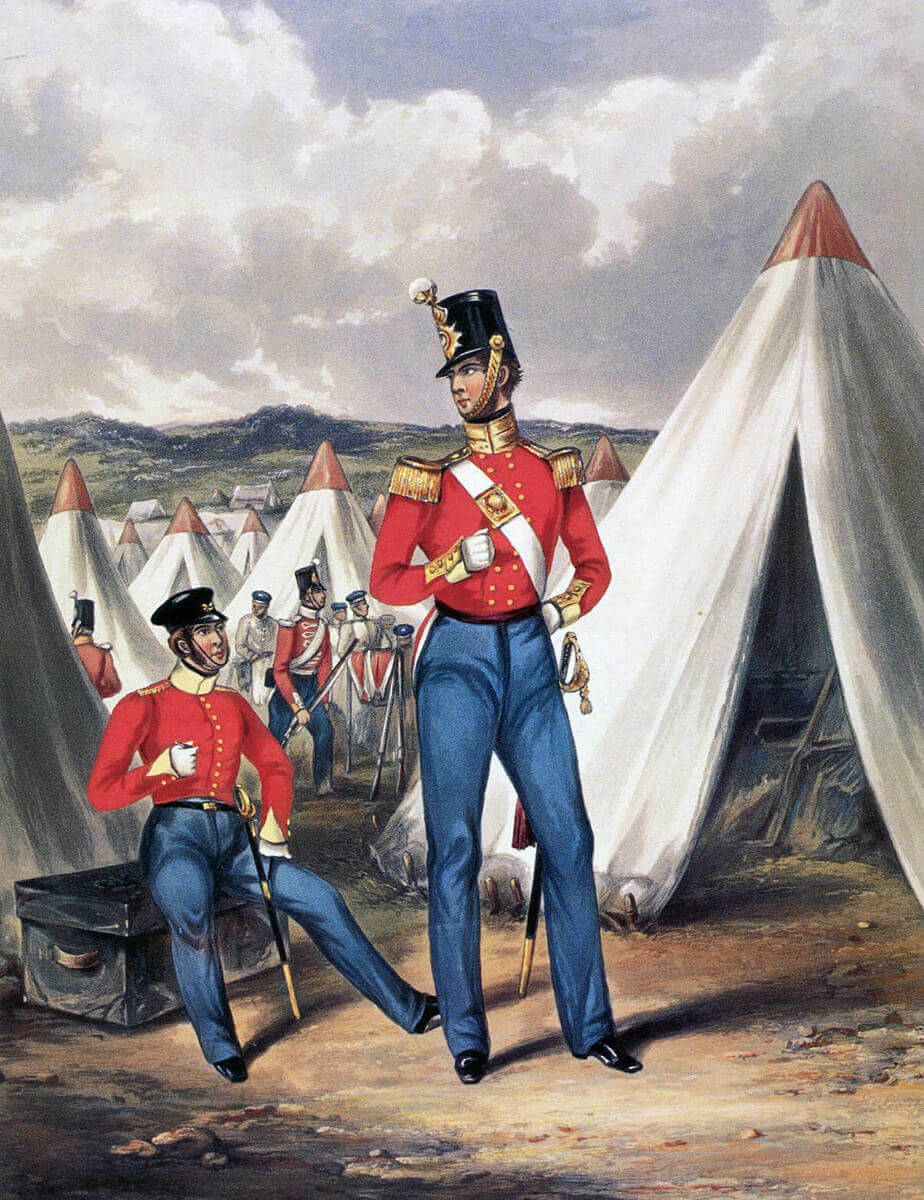
38th Regiment: Battle of Inkerman on 5th November 1854 in the Crimean War: print by Ackermann
50th Regiment, later the Queen’s Own Royal West Kent Regiment and now the Princess of Wales’s Royal Regiment.
55th Regiment, later the Border Regiment and now the Duke of Lancaster’s Regiment.
57th Regiment, later the Middlesex Regiment and now the Princess of Wales’s Royal Regiment.
63rd Regiment, later the Manchester Regiment and now the Duke of Lancaster’s Regiment.
68th Regiment, later the Durham Light Infantry and now the Light Infantry.
77th Regiment, later the Middlesex Regiment and now the Princess of Wales’s Royal Regiment.
88th Regiment, the Connaught Rangers, disbanded in 1922.
95th Regiment, later the Sherwood Foresters and now the Mercian Regiment.
The Rifle Brigade, now the Rifles.
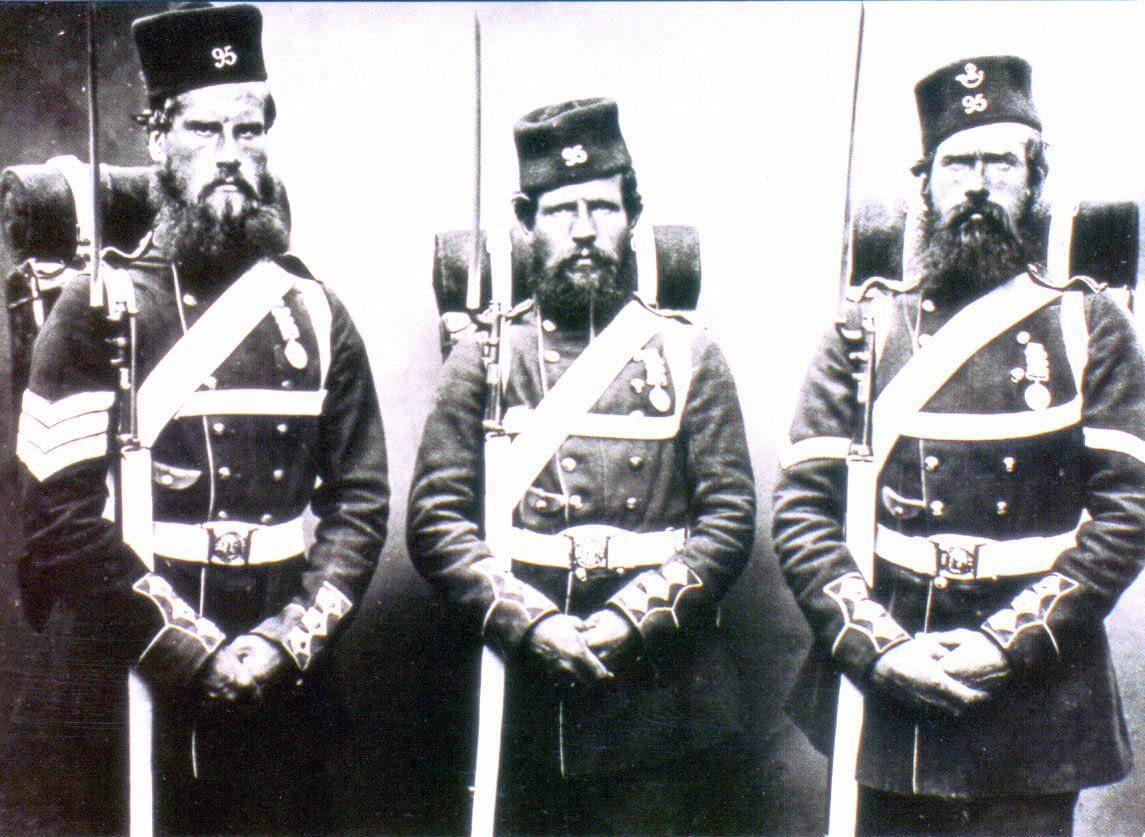
95th Regiment: Battle of Inkerman on 5th November 1854 in the Crimean War
Account of the Battle of Inkerman:
The British, French and Turkish Armies landed on the western coast of the Crimea, in the Tsarist Russian Empire, on 14th September 1854, intending to capture and destroy the Russian naval port of Sevastopol. The Allied army marched south towards the city, crossing a series of rivers and winning the battle of the Alma.
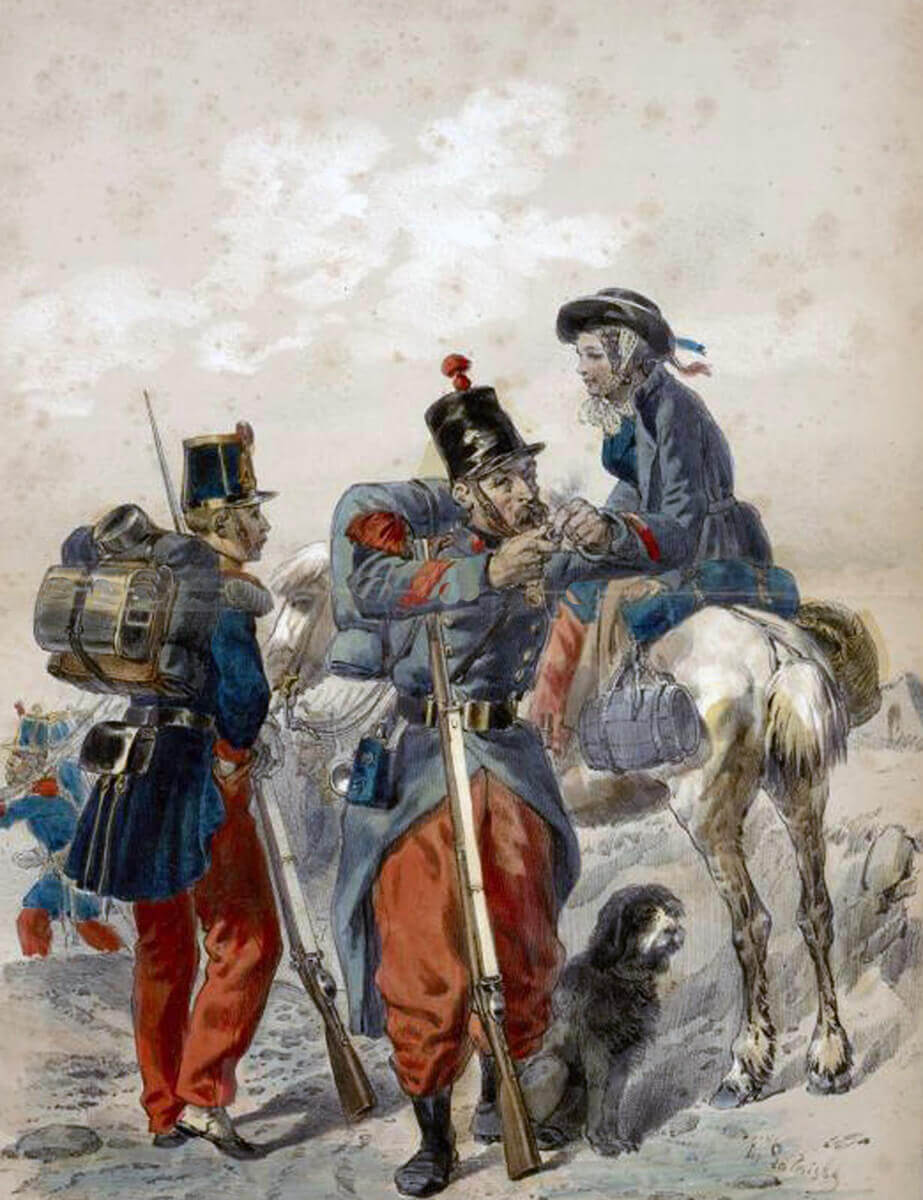
French troops: Battle of Inkerman on 5th November 1854 in the Crimean War
Following the Battle of the Alma, the allied armies could have forced their way into Sevastopol, taking advantage of the confusion of defeat and the Russian failure to put the city in a proper state of defence. The French General St Arnaud and the British commander, Lord Raglan, were unable to agree on a plan of attack. The allies marched around the city, establishing themselves to the east and south and began a siege, digging entrenchments and batteries and bombarding the Russian defences.
Before the siege began, Prince Menshikov took his field army out of Sevastopol, leaving a garrison, and, crossing the Tchernaya River, established the Russian army to the north-east of the city.
During October 1854, Menshikov received substantial re-inforcements and was urged by Tsar Nicholas II to take the offensive against the British and French.
On 25th October 1854, a Russian force under General Liprandi crossed the Tchernaya and advanced on the British base, leading to the Battle of Balaclava. Liprandi’s assault was foiled in the battle, during which the Charge of the Light Brigade and the Charge of the Heavy Brigade took place, but the Russians were left holding a strong position north of the British line.
The Battle of Balaclava revealed the weakness of the allies before Sevastopol. The British and French did not have sufficient troops to man the siege lines around the city and, at the same time, to oppose the substantial field army of Prince Menshikov, threatening them across the Tchernaya River.
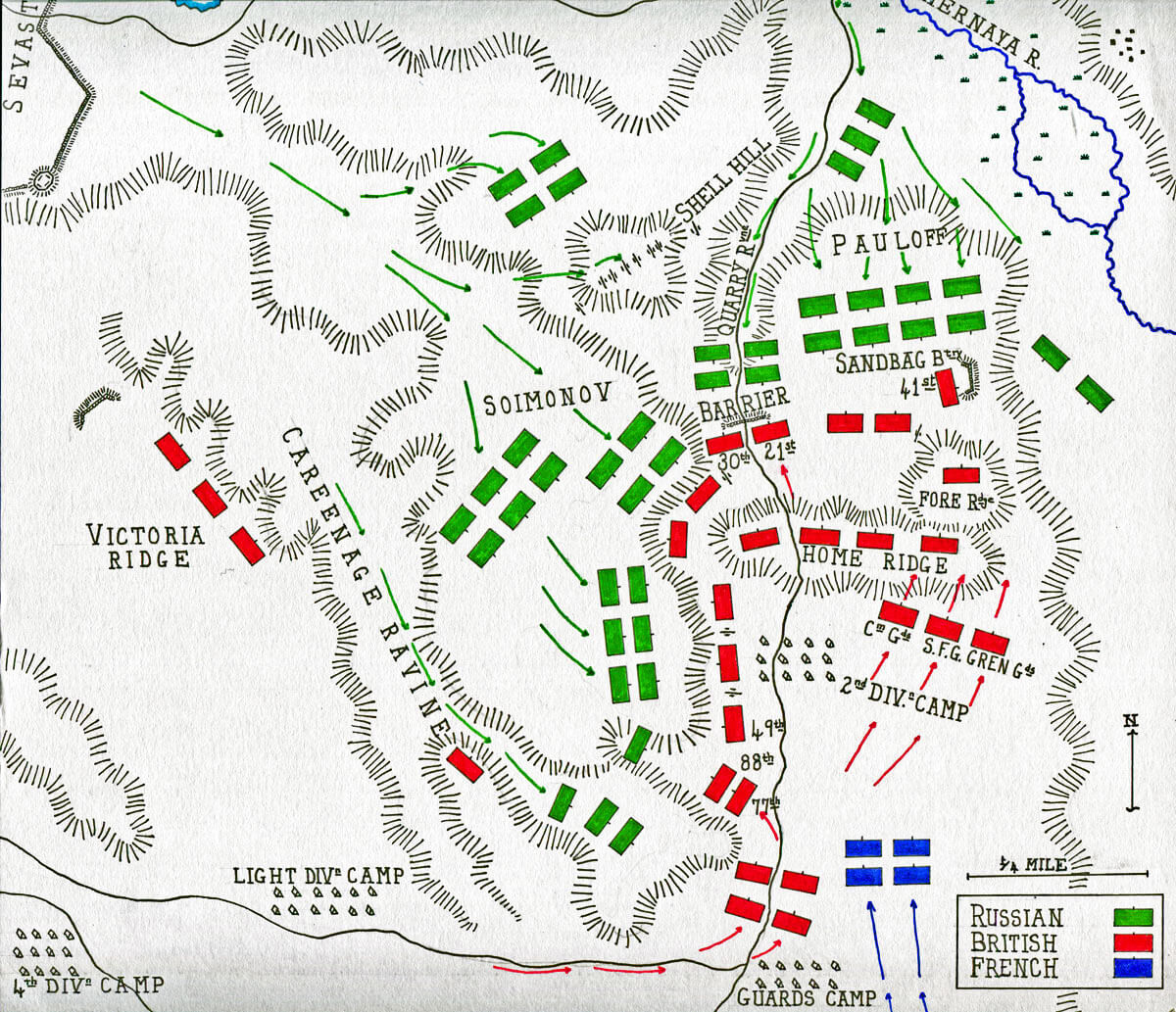
Map of the Battle of Inkerman on 5th November 1854 in the Crimean War: map by John Fawkes
Account of the Battle of Inkerman:
On 5th November 1854, the Russians launched a heavy attack on the right of the allied positions to the east of Sevastopol. The attacking force was made up of infantry and guns from the garrison of the city, commanded by General Soimonoff, and a second column from the field army, commanded by General Pauloff. The two forces, numbering 42,000 men and 134 guns, would come under the overall command of General Dannenberg once they combined. The attack fell on the British Second Division, comprising 2,700 men and 12 guns (41st, 47th, 49th, 30th, 55th and 95th Regiments).
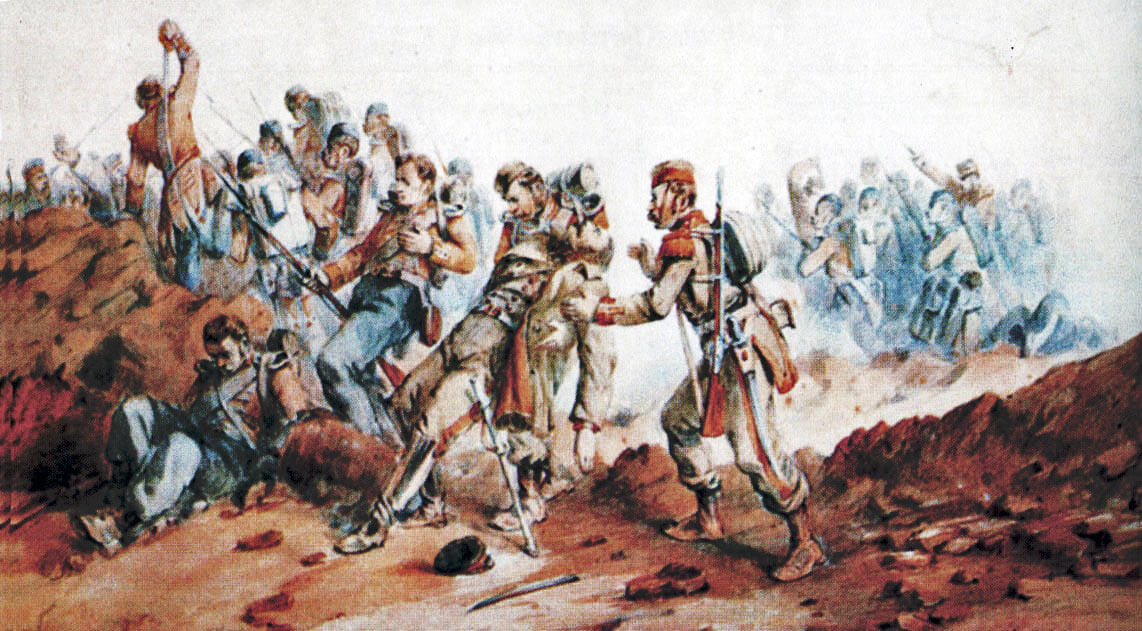
55th Regiment at the the Battle of Inkerman on 5th November 1854 in the Crimean War: picture by Orlando Norie
Soimonoff’s advance on the British positions was to be along the southern side of a deep ravine known as the Careenage, moving east. With Pauloff advancing from the north-eastern side of the Tchernaya River to join him, the combined force would be in a position to overwhelm the Second Division on the end of the British line, before support could arrive.
In the event, Soimonoff followed an earlier directive from Menshikov and took his whole force along the northern side of the Careenage Ravine, with the result that there was insufficient space for his substantial number of troops to deploy.
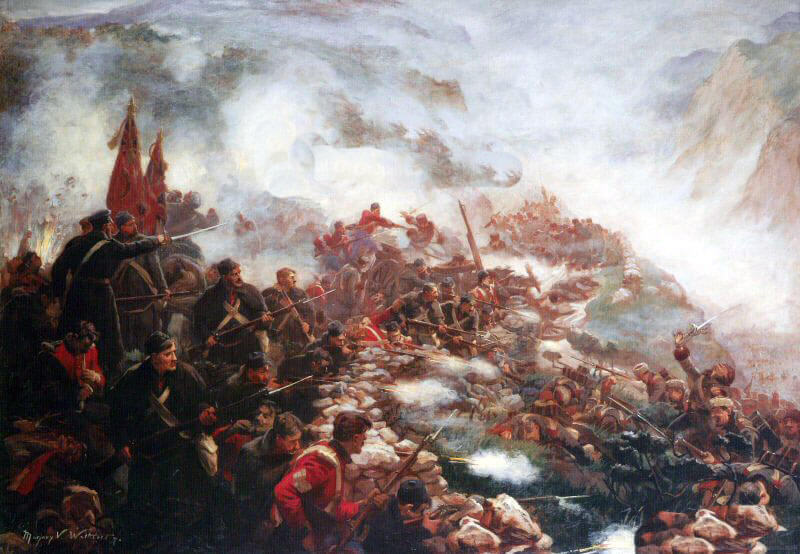
21st Royal North British Fusiliers defending the Barrier at the Battle of Inkerman on 5th November 1854 in the Crimean War: picture by Marjorie Weatherstone
The Second Division had its positions and camp on a hill called Home Ridge. The post road, known as Quarry Road, from the south of the Crimea, climbed over Home Ridge and descended into the valley to its north, past an outcrop known as Fore Ridge, before crossing the Tchernaya River at Inkerman Bridge. The village of Inkerman itself was on the far side of the Tchernaya River. The area around Home Ridge came to be known as Mount Inkerman.
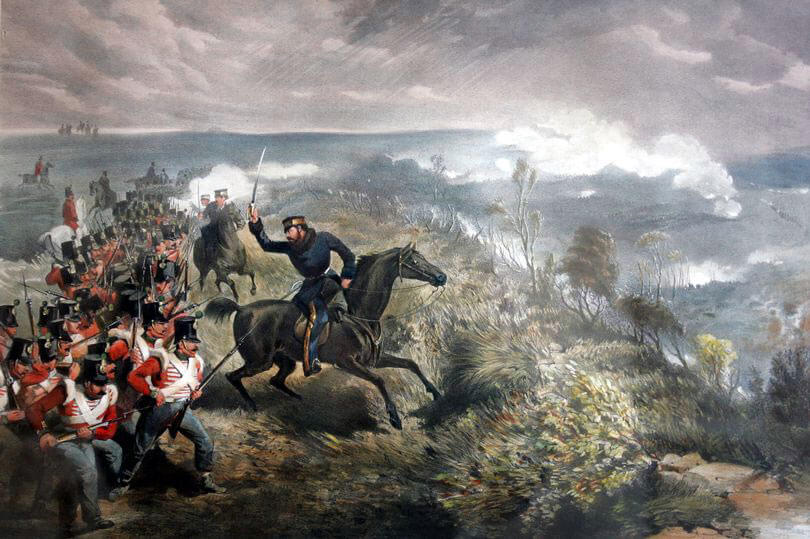
British infantry attacking the Russians at the Battle of Inkerman on 5th November 1854 in the Crimean War
The British troops built a wall across the post road on its descent, which they called ‘The Barrier’. On the eastern face of Fore Ridge overlooking the Tchernaya River was an empty battery position called ‘the Sandbag Battery’. The Barrier and the Sandbag Battery were to be of great significance in the battle, both bitterly contested, particularly in the second series of attacks by Pauloff’s columns.
Soimonoff’s force of 20,000 men and 100 guns set off from the city of Sevastopol before dawn. It was a foggy day, the clouds hanging around the gullies and ravines. Soimonoff’s guns, many of them of the heaviest calibres, 20 pounders and more, established themselves on a hill called Shell Hill directly to the North of Home Ridge.
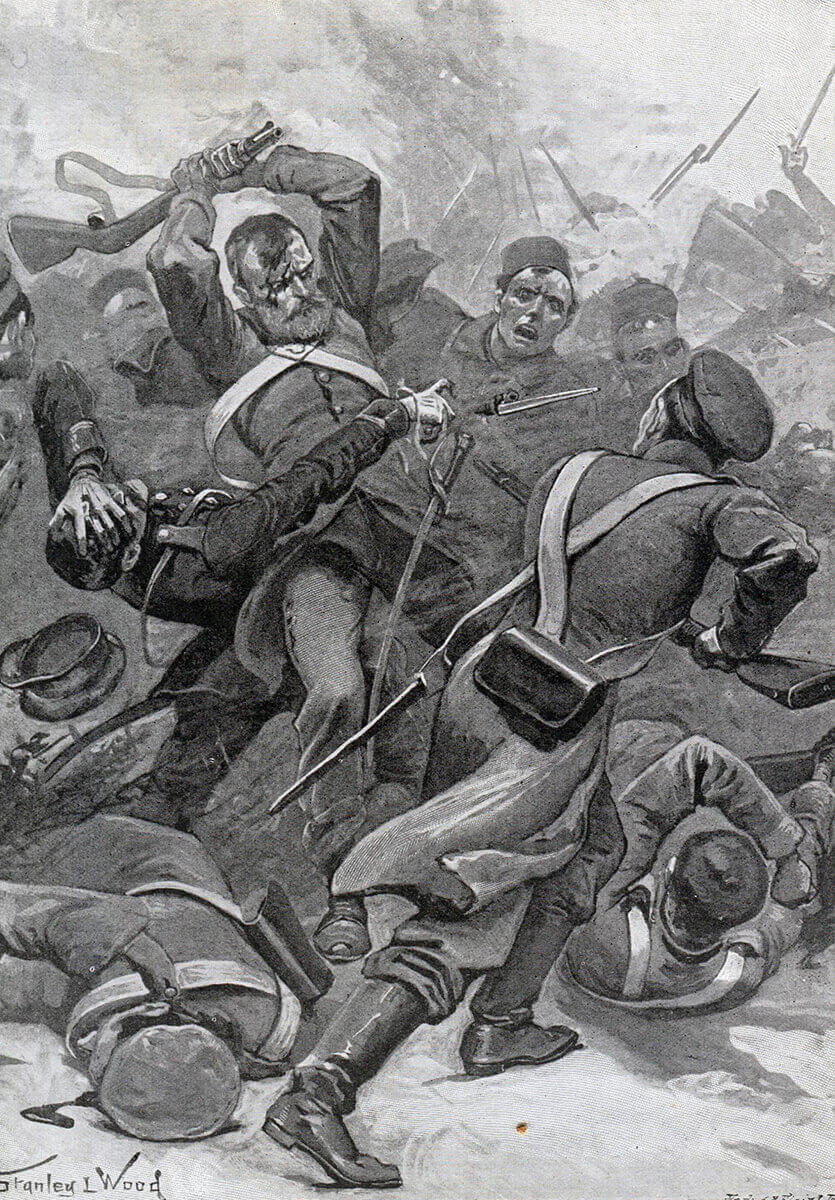
55th Regiment attacking the Russian infantry at the Battle of Inkerman on 5th November 1854 in the Crimean War: picture by Stanley Wood
As dawn broke, all the church bells of Sevastopol began a frenzied peel. It was Sunday, but the ringing was to encourage the Russian soldiery, rather than to call the faithful to worship. Soimonoff’s columns advanced on Home Hill, 300 riflemen preceding his first line, 6,000 men moving in dense columns. Behind Shell Hill waited the Russian reserve of a further 9,000 men.
Several factors alerted the Second Division to the imminence of an attack, one being the reconnaissance battle known as Little Inkerman the day after the Battle of Balaclava. Strong British pickets were in place along the valley to the North West, many at company strength. In the fog these pickets engaged the advancing Russian columns.
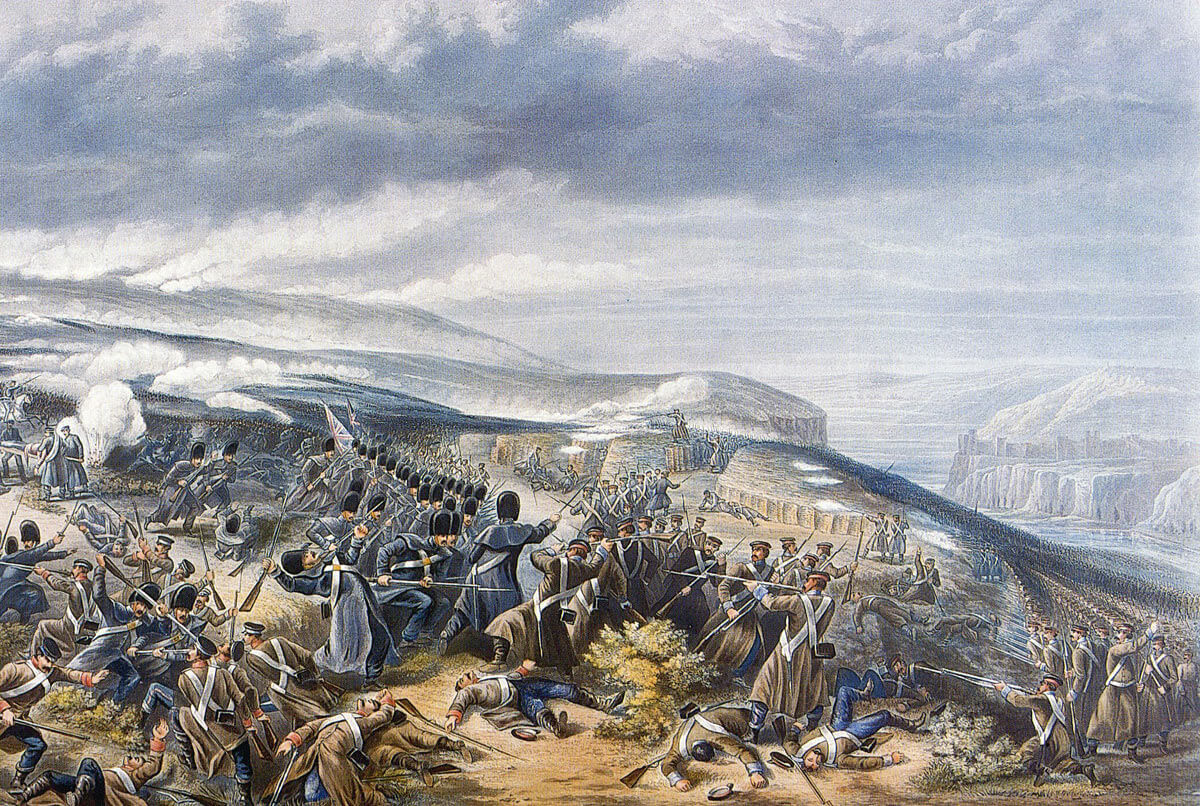
Guards attacking the Sandbag Battery at the Battle of Inkerman on 5th November 1854 in the Crimean War
The firing in the valley gave warning to Brigadier Pennefather, the acting divisional commander of the British Second Division, of the beginning of a general action.
Pennefather, a highly aggressive officer, always inclined to the attack, sent all the units of the Second Division forward to engage the Russians. His actions were exactly appropriate for the day, even though he was committing a small number of troops to battle against overwhelming odds. The Russian heavy artillery on Shell Hill opened a bombardment of the Second Division’s position and camp on Home Ridge. The camp was destroyed but there were no troops on the crest, the division having moved off the ridge into the valley.
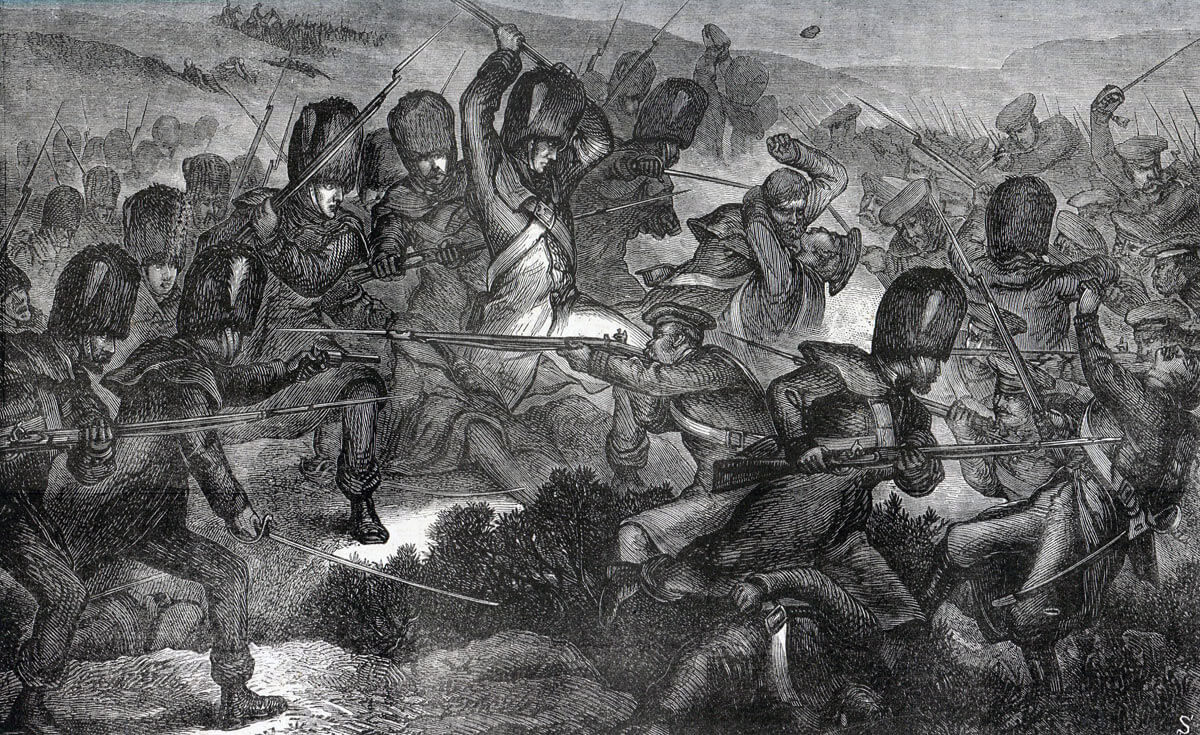
Grenadier Guards attacking at the Battle of Inkerman on 5th November 1854 in the Crimean War
The Russian infantry, advancing through the drifting fog in dense columns, were met by the British regiments in open skirmishing order or in line. The British Minié rifled muskets gave quicker, longer ranged and more accurate fire than the Russian flint lock muskets of the Napoleonic period, the cap firing mechanism of the Minié infinitely more reliable in the wet conditions.
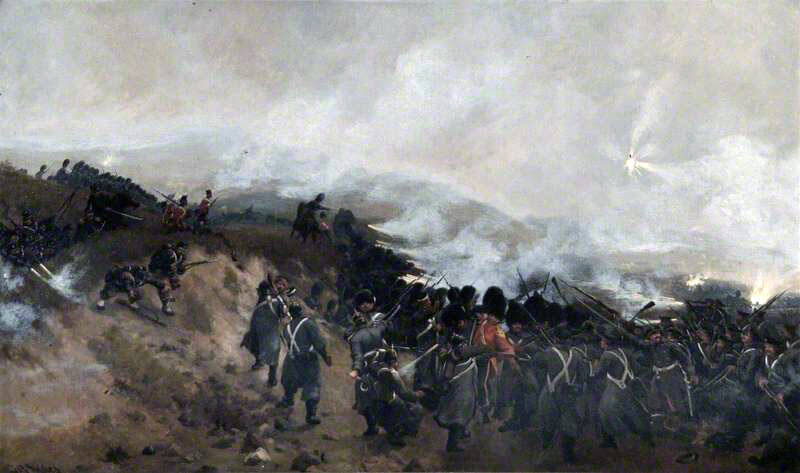
Guards at the Battle of Inkerman on 5th November 1854 in the Crimean War: picture by Thomas Rose Miles
The bottleneck formation of the ground prevented the Russians from making their final approach to Home Ridge on a broad front. The first Russian column to attack emerged from the constricted ground and advanced on the Second Division’s left. A wing of the British 49th Regiment fired a volley into the column and charged with the bayonet, driving the Russians down the slope and across the valley to Shell Hill.
The next assault, also on the Second Division’s left, was in substantially greater numbers and led by General Soimonoff himself.
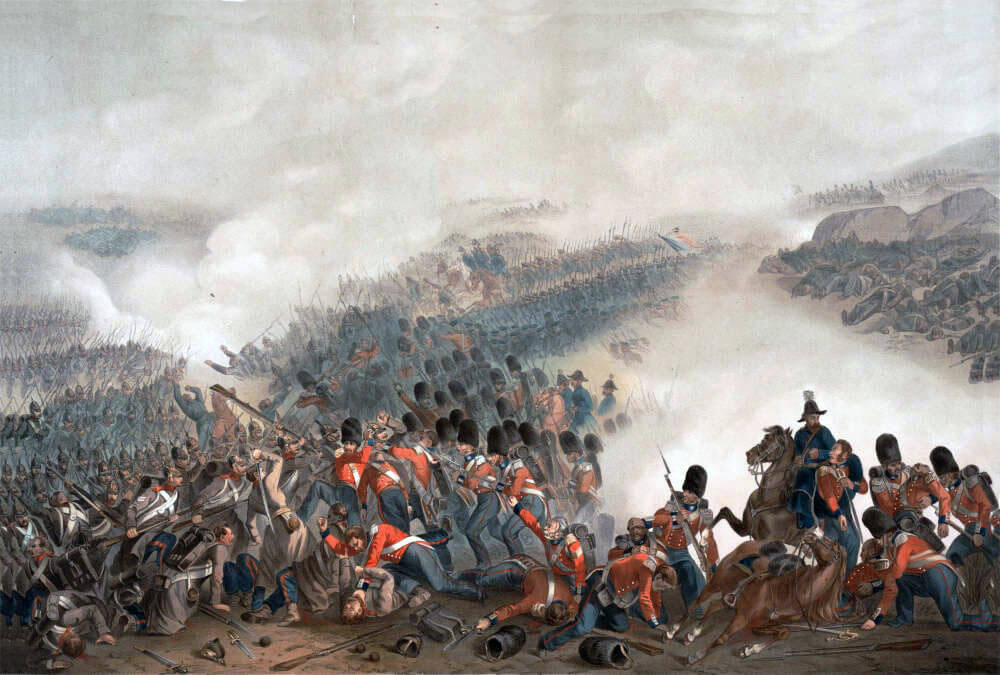
Battle of Inkerman on 5th November 1854 in the Crimean War
As the Russians approached the ridge, troops of General Buller’s brigade from the Light Division and a battery of guns came up. The 88th Regiment passed the crest, followed by the battery, but were driven back, three guns falling into Russian hands.
General Buller then charged the Russian column with the 77th and 88th Regiments. The 47th Regiment attacked the Russians in flank and the column retreated, giving up the captured guns. General Soimonoff was killed in the struggle and General Buller wounded.
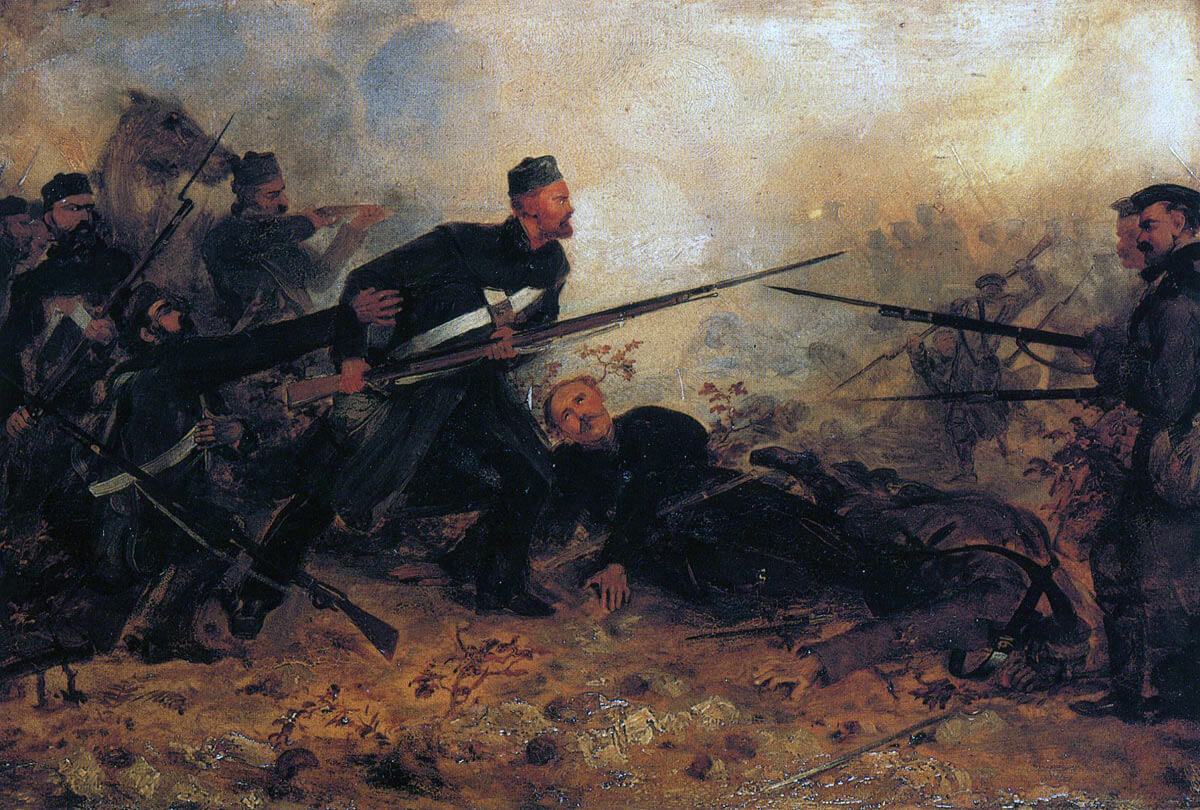
Private John McDermond of the 47th winning the VC by rescuing his CO at the Battle of Inkerman on 5th November 1854 in the Crimean War: picture by Louis Desanges
A column of Russian sailors, attempting an approach from the Careenage Ravine was also attacked by Buller’s men and driven back.
The remainder of Soimonoff’s first line advanced down the post road to the Barrier. They were bombarded by a British battery and finally driven back by the assembled British pickets and the remaining companies of the 49th Regiment. The initial Russian assaults had all failed.
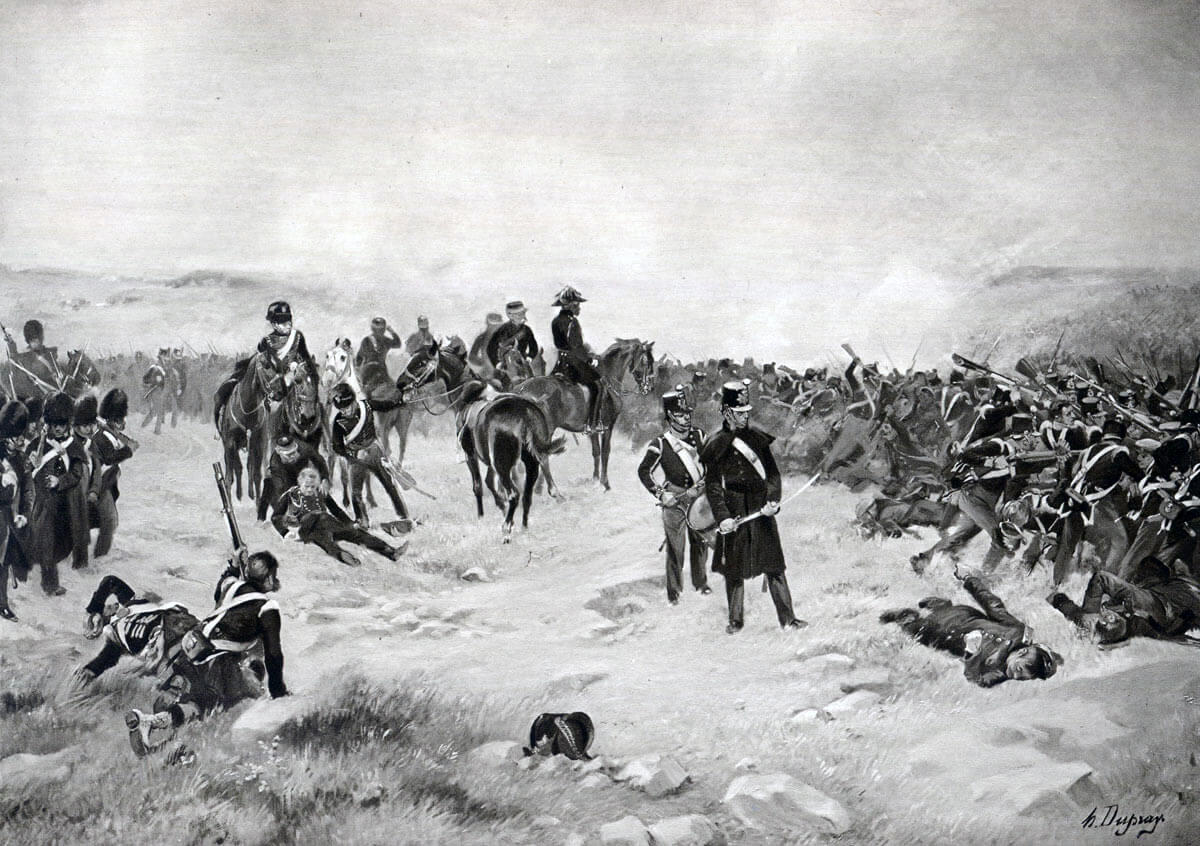
Battle of Inkerman on 5th November 1854 in the Crimean War: picture by Henri Dupray
Soimonoff’s attack took up the first part of the battle. Some of his regiments were so severely handled, losing a high proportion of officers, that they took no further part in the war. While the struggle had been intense it could not compare with the severity of the fighting that began with the arrival of Pauloff’s force from across the Tchernaya River.
General Pauloff’s 15,000 men advanced down the axis of the post road towards the northern and north-eastern sides of Home Ridge and Fore Ridge. The main focal points of the battle became the Barrier, the Sandbag Battery and the crest of the ridge above them.
Pauloff’s attacking line stretched from the post road to the Sandbag Battery. As the Russians advanced, the wing of the British 30th Regiment holding the Barrier, 300 men, leaped the wall and attacked with the bayonet. After a savage fight, the leading Russian battalions were driven back down the slope. A further five Russian battalions were assailed by the British 41st Regiment under Brigadier Adams, advancing in extended order. Their intense fire drove this column back to the banks of the Tchernaya River.
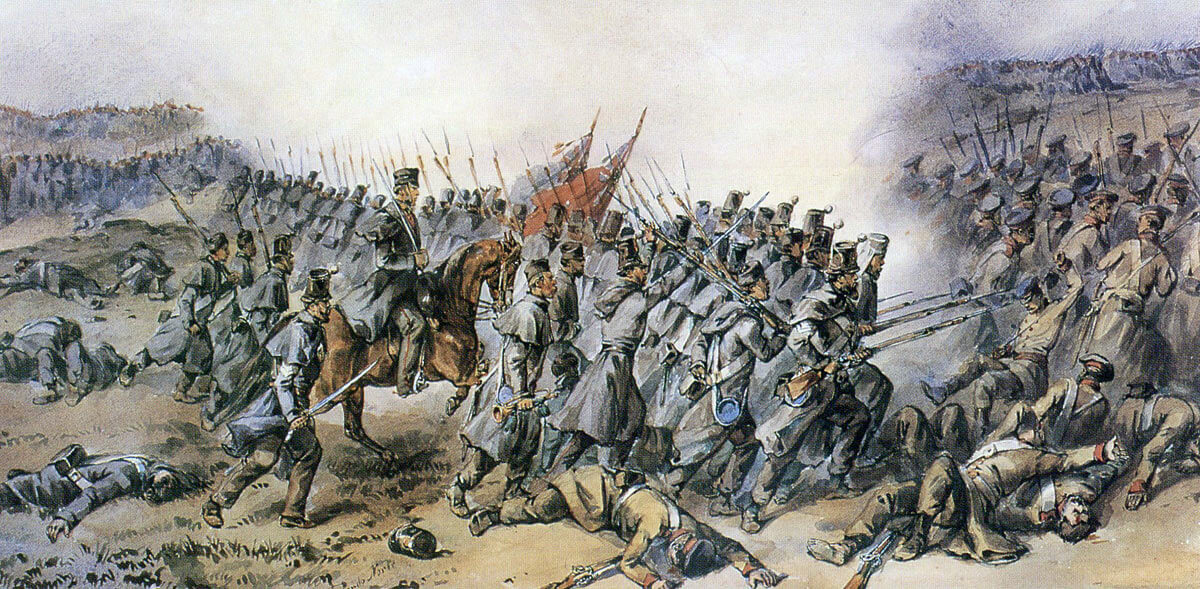
21st Royal Scots Fusiliers attacking at the Battle of Inkerman on 5th November 1854 in the Crimean War
General Dannenberg now took command of the two Russian forces, Pauloff’s troops from the field army and the 9,000 men in Soimonoff’s reserve and began a sustained and ferocious attack on the Second Division’s positions on Home Ridge.
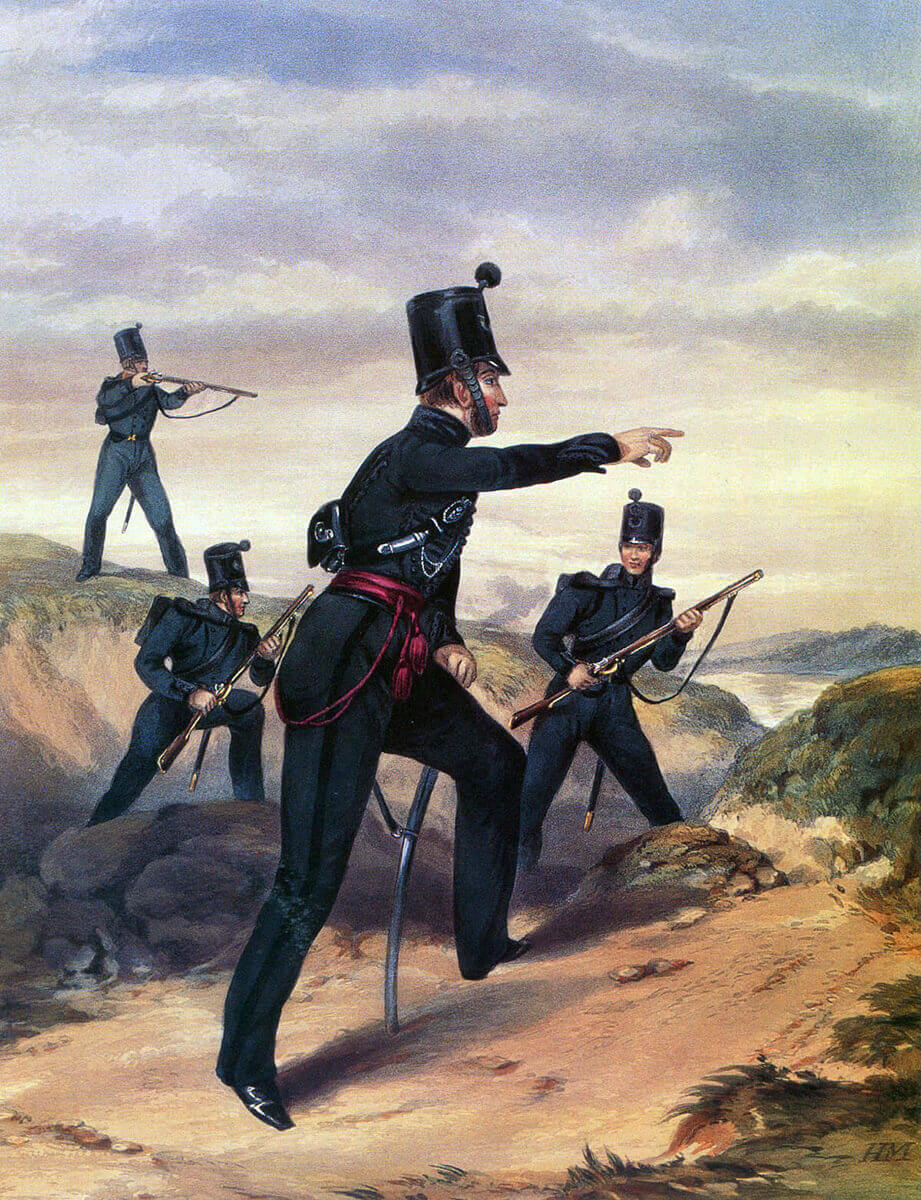
Rifle Brigade: Battle of Inkerman on 5th November 1854 in the Crimean War: print by Ackermann
Support was coming up for Brigadier Pennefather, the Guards Brigade arriving from its camp to the south and General Cathcart approaching with his Fourth Division.
The British troops holding the Barrier abandoned the position to the Russians for a time, but Pennefather sent forward men from the 21st Royal North British Fusiliers, the 63rd and the Rifle Brigade to retake it and the Barrier remained in British hands for the rest of the battle, despite repeated and determined assaults by the Russians.
Brigadier Adams held the Sandbag Battery with 700 men, supported by the 1,300 men of the Guards Brigade. The Russians launched an attack on his position with 7,000 men, beginning a series of charges and counter charges, the ground changing hands several times as the fighting raged up and down the hillside.
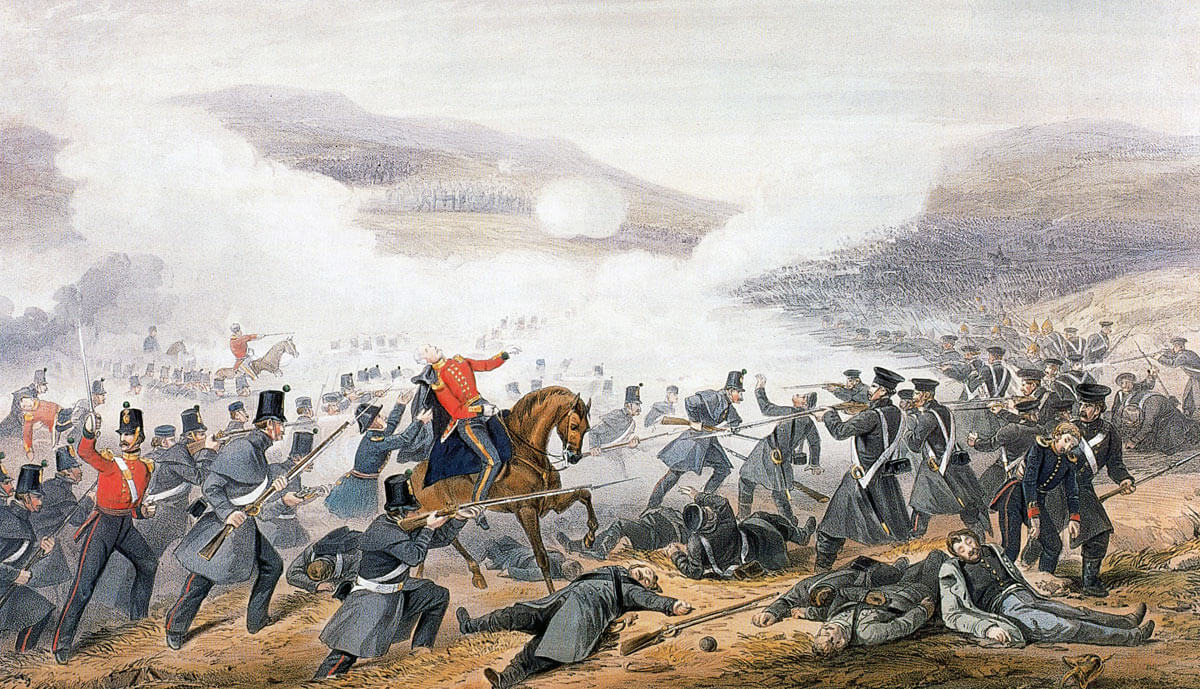
Death of General Sir George Cathcart at the Battle of Inkerman on 5th November 1854 in the Crimean War
The British were only finally enabled to go on the offensive with the arrival of Cathcart’s Fourth Division. Cathcart’s men were rushed into the line wherever there appeared to be a gap, other than 400 men that Cathcart himself led in a flank attack on the Russians. Whilst initially successful, Cathcart was taken in the rear by an unexpected assault from the crest of the ridge. Cathcart was killed and his force broken up.
Cathcart’s initiative had the unfortunate effect of encouraging other British units to break from the line and attempt charges down the hill, giving a Russian regiment the opportunity to gain the crest of the ridge. The situation was retrieved by the timely arrival of a French infantry regiment which attacked the Russians in flank and drove them off the ridge.
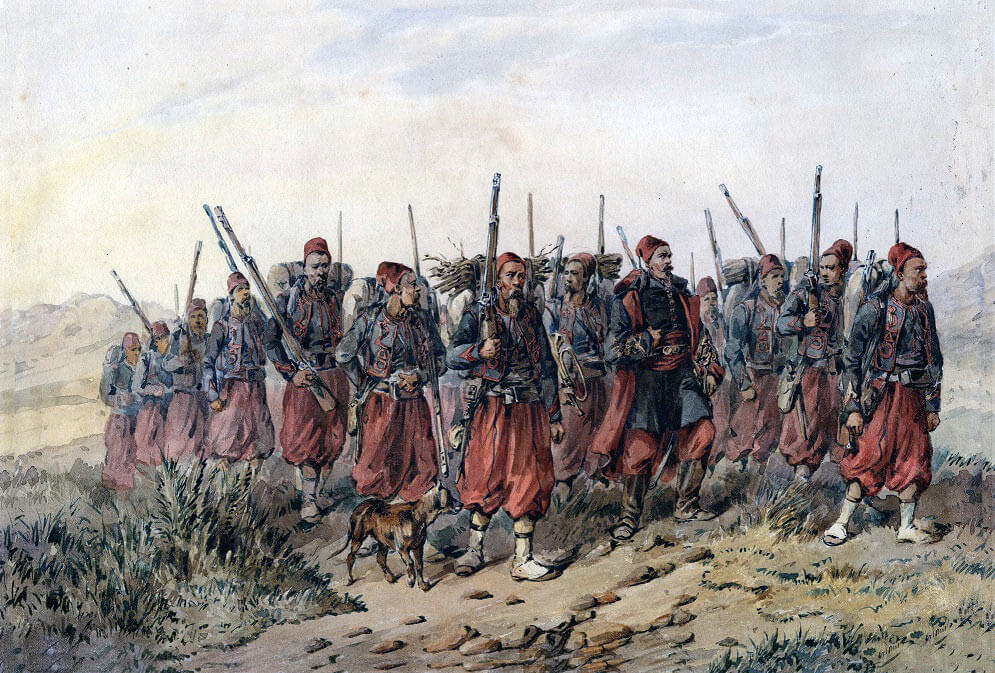
French Zouaves: Battle of Inkerman on 5th November 1854 in the Crimean War: picture by Orlando Norie
The arrival of further French reinforcements helped to reduce the preponderance of Russian strength and drive them down the hillside. The 21st Regiment still held the Barrier on the post road, although the position had been enveloped by each Russian advance.
At this crisis in the battle, the Russians launched a further assault on the left of the Second Division’s position at the exit from the Careenage Ravine, with a second attack on the Home Ridge, bypassing the Barrier. Along the line the Russians reached the crest of the ridge, where a savage struggle developed. But the presence of the French and other British reinforcements was decisive and the Russian attacks were all driven back.
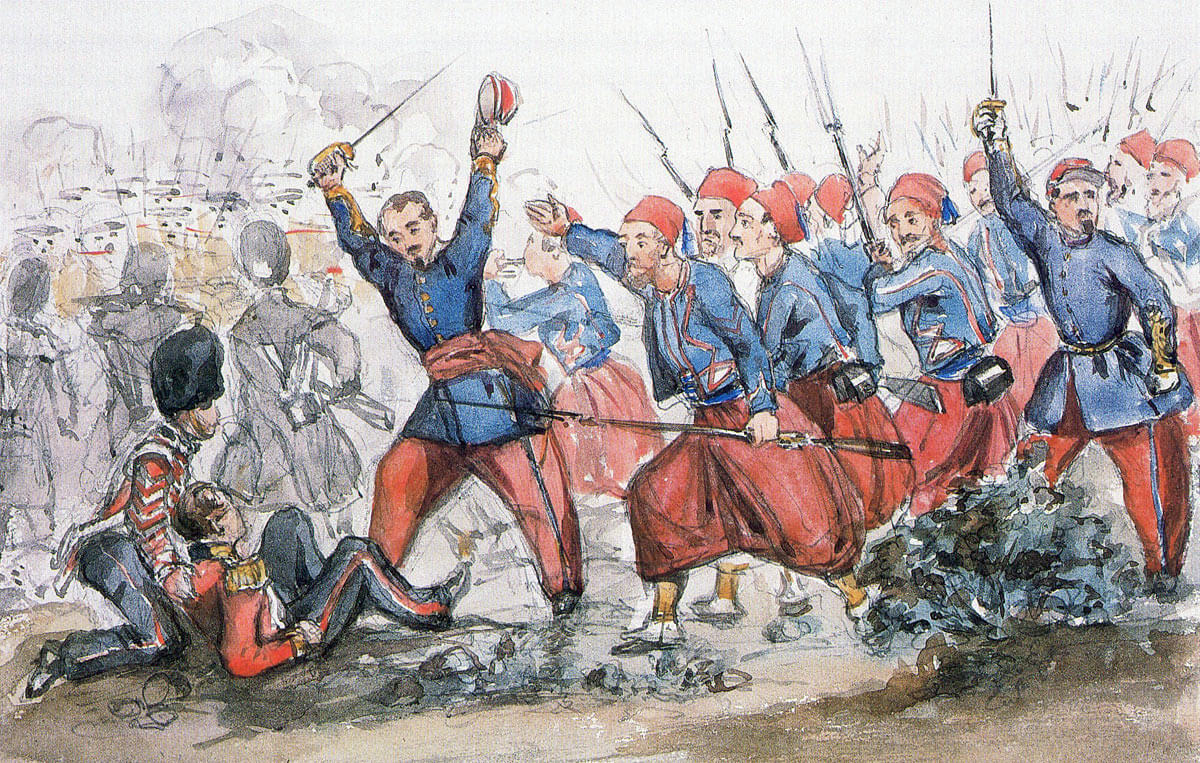
French Zouaves coming to the relief of the British Guards at the Battle of Inkerman on 5th November 1854 in the Crimean War
During the day, the 100 Russian guns on Shell Hill provided a substantial support for their infantry. Towards the end of the battle two large British guns, 18 pounders of modern construction, called up by Lord Raglan from the siege park, were manhandled onto Home Ridge by teams of gunners and brought into action. These two guns, with the assistance of the field batteries along the line, overwhelmed the Russian guns, whose unprotected crews had been subjected to long range rifle fire.
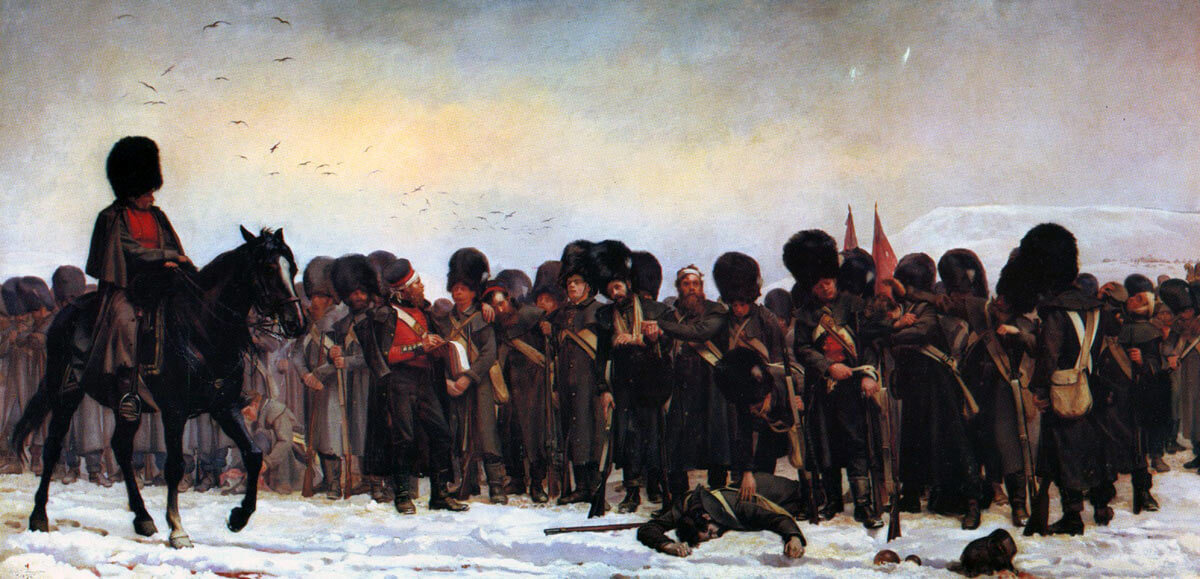
Roll call of the Grenadier Guards after the Battle of Inkerman on 5th November 1854 in the Crimean War: the mounted officer is Captain Higginson: picture by Lady Butler
Hamley described the end of the fighting saying: ‘This extraordinary battle closed with no final charge nor victorious advance on the one side, no desperate stand nor tumultuous flight on the other. The Russians, when hopeless of success, seemed to melt from the lost field.’
The exhausted English regiments, with their French colleagues, were left on a field strewn with casualties; the main points of the fighting, the Sandbag Battery and the Barrier, heaped with bodies. The regiments stood down and returned to the siege positions around Sevastopol or to their encampments.
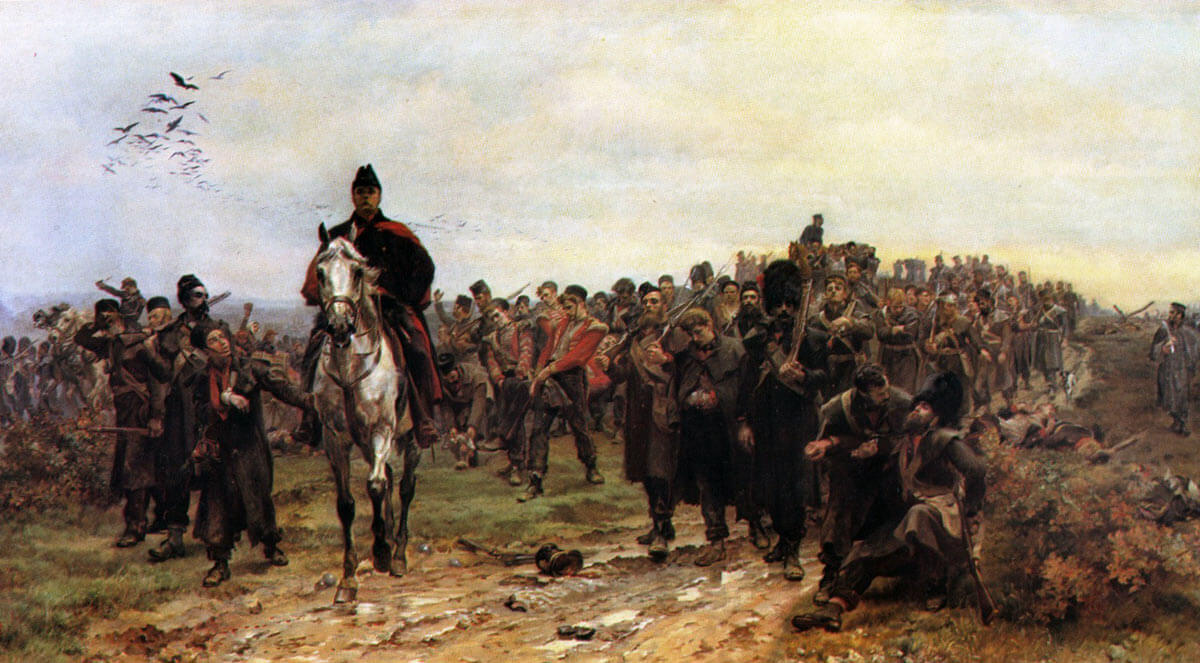
The 20th Regiment and Foot Guards returning from the Battle of Inkerman on 5th November 1854 in the Crimean War: picture by Lady Butler
Casualties (killed, wounded or captured) at the Battle of Inkerman: The British suffered 2,357 casualties. The French suffered 929 casualties. The Russians suffered 12,000 casualties.
British regimental casualties at the Battle of Inkerman:
Staff: 17 officers (General Cathcart killed: General Buller wounded)
17th Lancers: 2 men.
Royal Artillery: 6 officers and 89 men.
Grenadier Guards: 9 officers and 225 men.
Coldstream Guards: 13 officers and 181 men.
Scots Fusilier Guards: 9 officers and 168 men.
1st Regiment: 1 man.
7th Royal Fusiliers: 5 officers and 62 men.
19th Regiment: 1 officer and 4 men.
20th Regiment: 9 officers and 162 men.
21st Regiment: 7 officers and 114 men.
23rd Regiment: 2 officers and 38 men.
30th Regiment: 7 officers and 130 men.
33rd Regiment: 3 officers and 61 men.
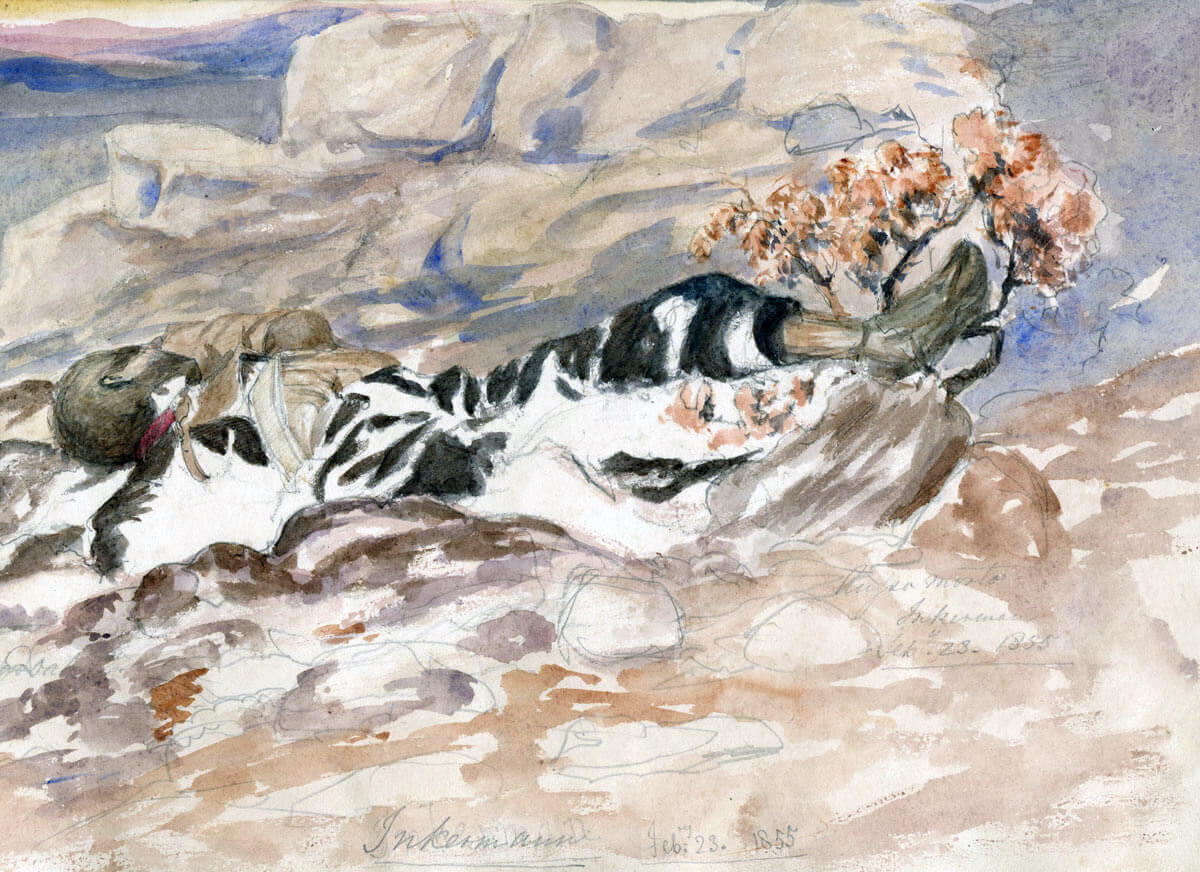
Soldier’s body from the Battle of Inkerman on 5th November 1854 in the Crimean War: picture by Lieutenant Colonel Dawkins of the Coldstream Guards
41st Regiment: 11 officers and 156 men.
47th Regiment: 2 officers and 64 men.
50th Regiment: 2 officers and 29 men.
55th Regiment: 5 officers and 66 men.
57th Regiment: 5 officers and 88 men.
63rd Regiment: 10 officers and 105 men.
68th Regiment: 4 officers and 49 men.
77th Regiment: 1 officer and 57 men.
88th Regiment: 2 officers and 102 men.
95th Regiment: 4 officers and 131 men.
The Rifle Brigade: 6 officers and 144 men.
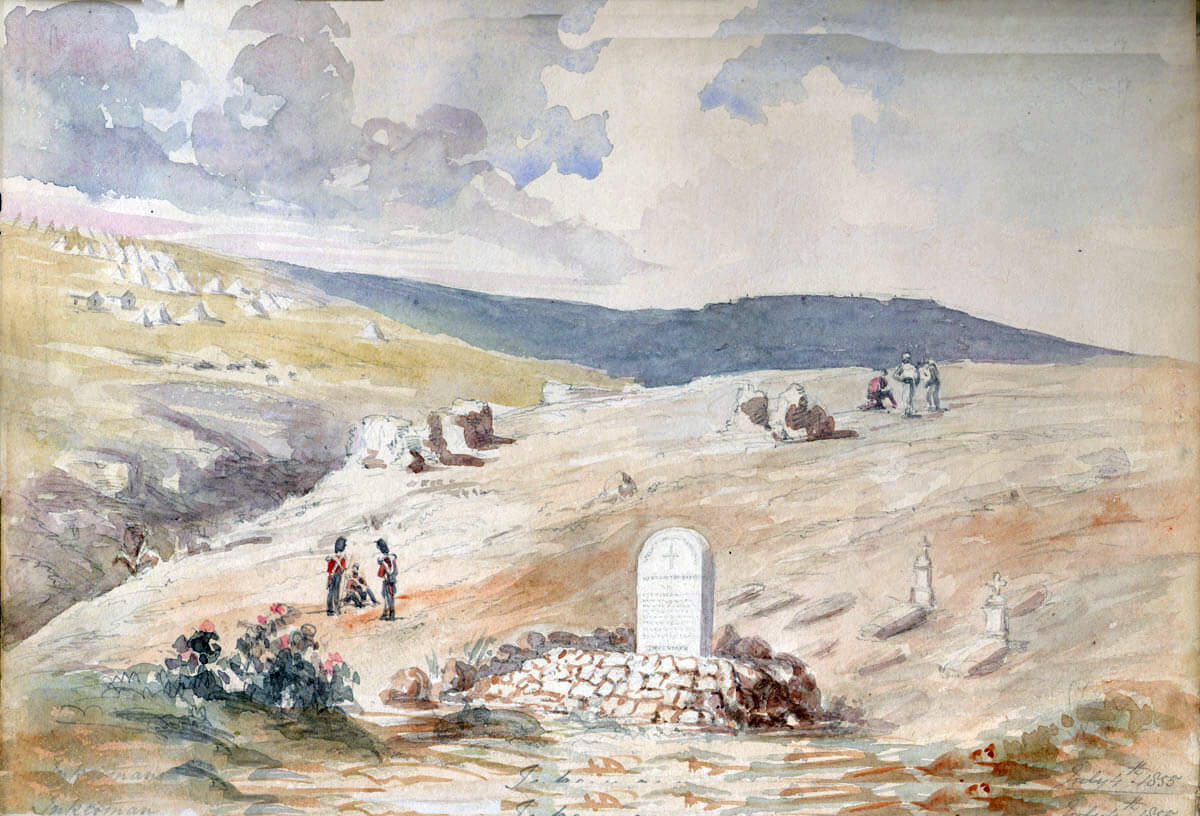
Graves from the Battle of Inkerman on 5th November 1854 in the Crimean War; picture by Lieutenant Colonel Dawkins of the Coldstream Guards
Follow-up to the Battle of Inkerman: The Russian attack, although unsuccessful, helped to divert the allies from the siege of Sevastopol, reducing further the prospects of the city being captured before winter and condemning the British and French armies to two winters on the heights.
On 14th November 1854, a fierce storm struck the Crimea, wrecking the camps and sinking British and French ships. Much of the limited supply of winter equipment was destroyed and many men drowned.
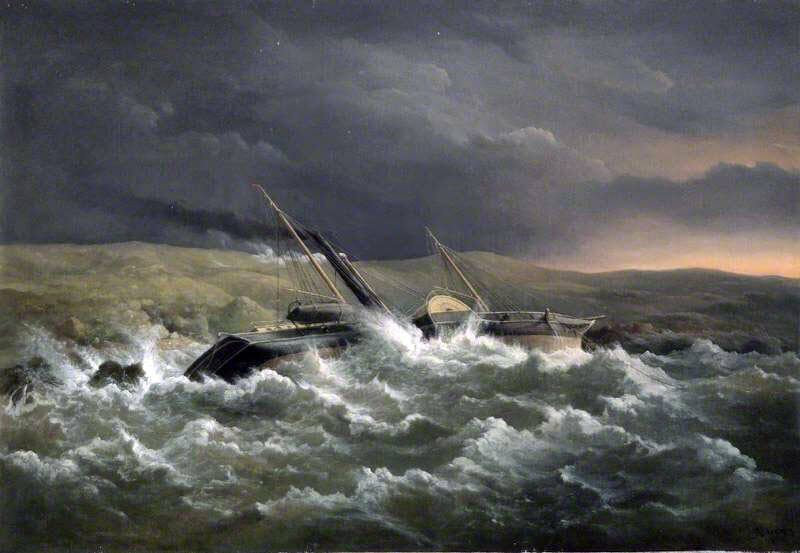
HMS Danube, wrecked in the storm on 14th November 1854 in the Crimean War
Anecdotes and traditions from the Battle of Inkerman:
- Inkerman is described as ‘The Soldier’s Battle’, a reference to the ferocity of the fighting, the importance of the role of battalions, companies and even small parties of men and the foggy isolation of the soldiers who were thrown on their own initiative.
- Twelve Victoria Crosses were awarded to British soldiers for actions in the battle.
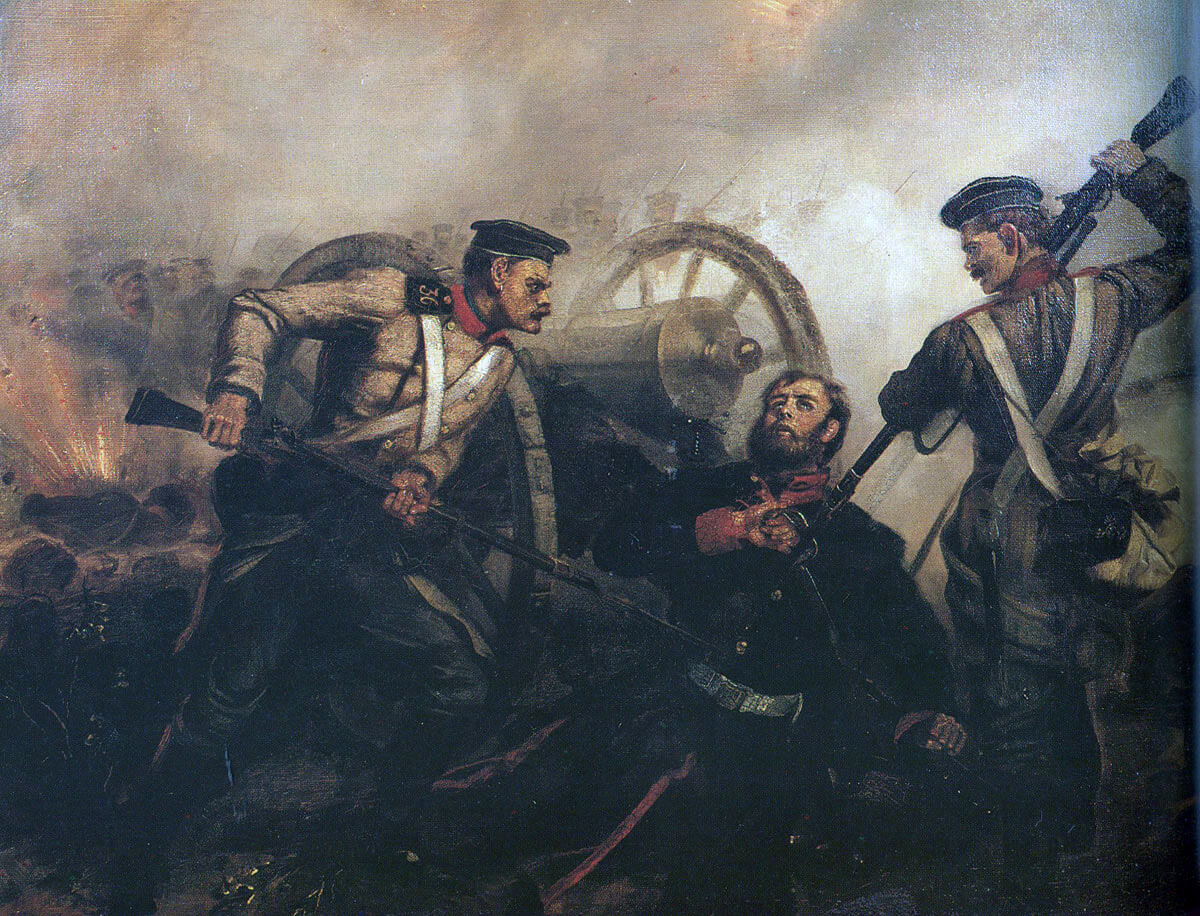
Sergeant Major Andrew Henry of the Royal Artillery under attack by Russian infantrymen at the Battle of Inkerman and winning the VC on 5th November 1854 in the Crimean War: picture by Louis Desanges
- ‘G’ Battery of the Royal Artillery, Second Division, particularly distinguished itself during the battle. The Battery fired all its ammunition at the advancing Russian columns and repelled several attacks. When overwhelmed by the Russian infantry, Sergeant Major Andrew Henry fought back with his small sword, attempting with a gunner to remove the guns. Sergeant Major Henry received twelve bayonet wounds in his chest, left arm, back, right leg and head and was left for dead. A counter attack by French infantry drove the Russians off the guns which were secured. Sergeant Major Henry was awarded the Victoria Cross and the Battery was given the title ‘Inkerman Battery’, which it still holds. This episode of the battle is a fine example of how the Victorian British soldier would not give way.
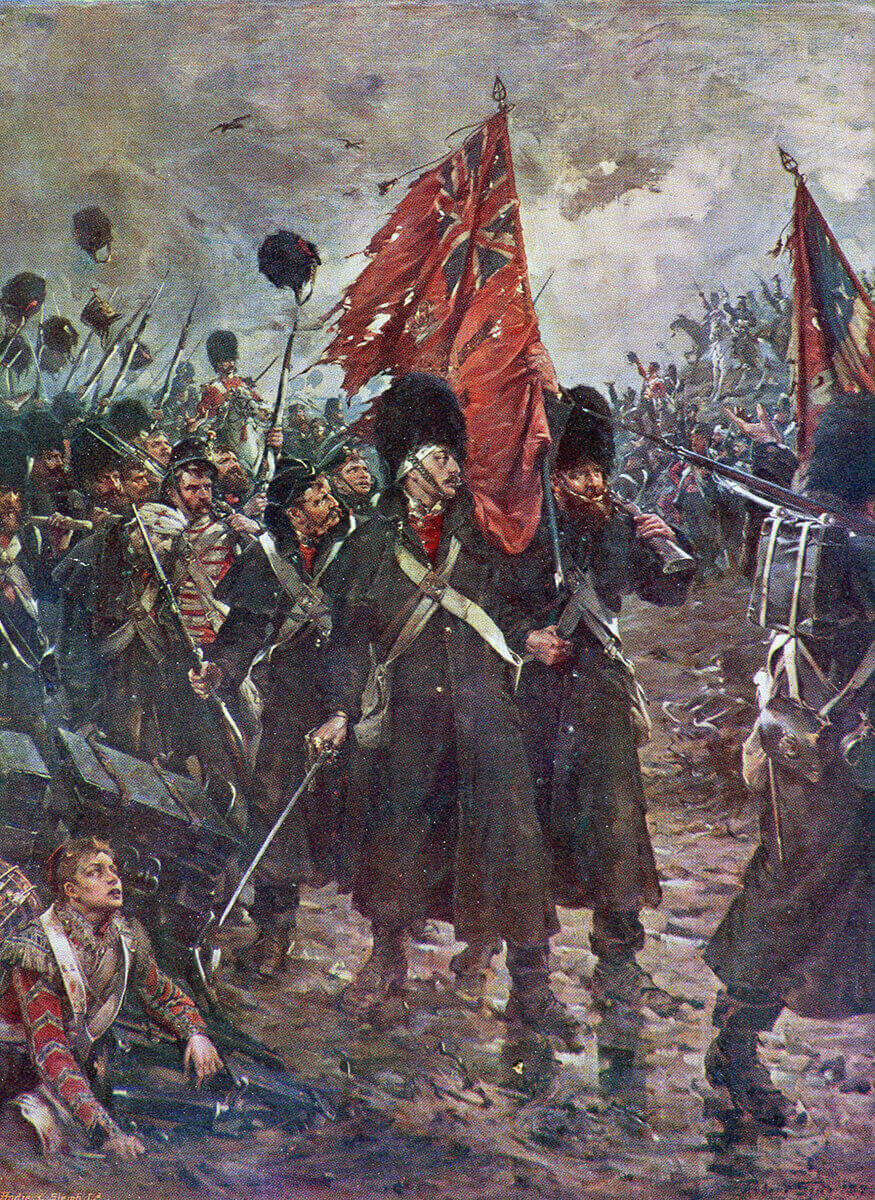
Guards at the Battle of Inkerman on 5th November 1854 in the Crimean War: picture by Robert Gibb
- Inkerman is an iconic battle for the Grenadier Guards. Higginson states that the Grenadiers were the only regiment to take their colours into the battle and describes their apprehension that the Russians might capture the colours of Queen Victoria’s premier Foot Guard regiment. The Grenadiers suffered more than 100 dead in total casualties of 9 officers and 225 men. One of the regiment’s companies, in commemoration of the battle, carries the title ‘Inkerman Company’, as does a company at the Royal Military Academy, Sandhurst.
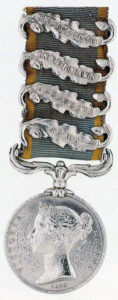
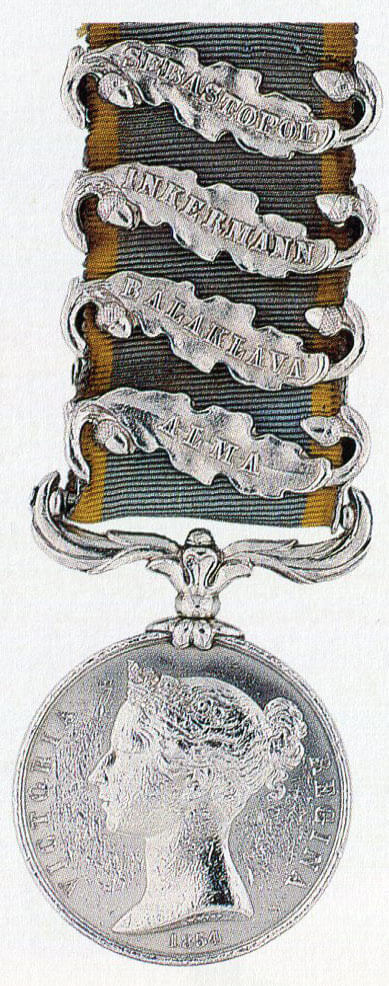
Crimean War Medal 1854 to 1856 with clasps for the Alma, Balaclava, Inkerman and Sevastopol
- The Grenadier’s Captain Percy received the Victoria Cross for his conduct in the battle, extracting 50 men of his regiment from the midst of the Russians.
- The other two Foot Guards regiments suffered heavily. The Coldstream lost 8 officers killed and 5 wounded, with 181 men as casualties. The Scots Fusilier Guards suffered casualties of 9 officers and 168 men. Of the Guards Brigade’s 1,331 men 605 became casualties in the battle.
- Lady Butler’s picture ‘The Roll Call,’ showing the Grenadiers after the battle, caused a sensation at the Royal Academy in 1874. Her picture ‘The return from Inkerman’ depicts soldiers of the Coldstream Guards and the 20th Regiment trudging back from the battle.
- While emphasis tends to be given to the conduct of the Foot Guards at Inkerman, the battle showed every regiment involved, both British and French, to have behaved in the best traditions of their respective services.
References for the Battle of Inkerman:
Sir John Fortescue’s History of the British Army
The War in the Crimea by General Sir Edward Hamley
British Battles Volume III by James Grant
The previous battle in the Crimean War is the Battle of Balaclava
The next battle in the Crimean War is the Siege of Sevastopol