The disastrous defeat of the Americans on 27th August 1776 leading to the loss of New York and the retreat to the Delaware River
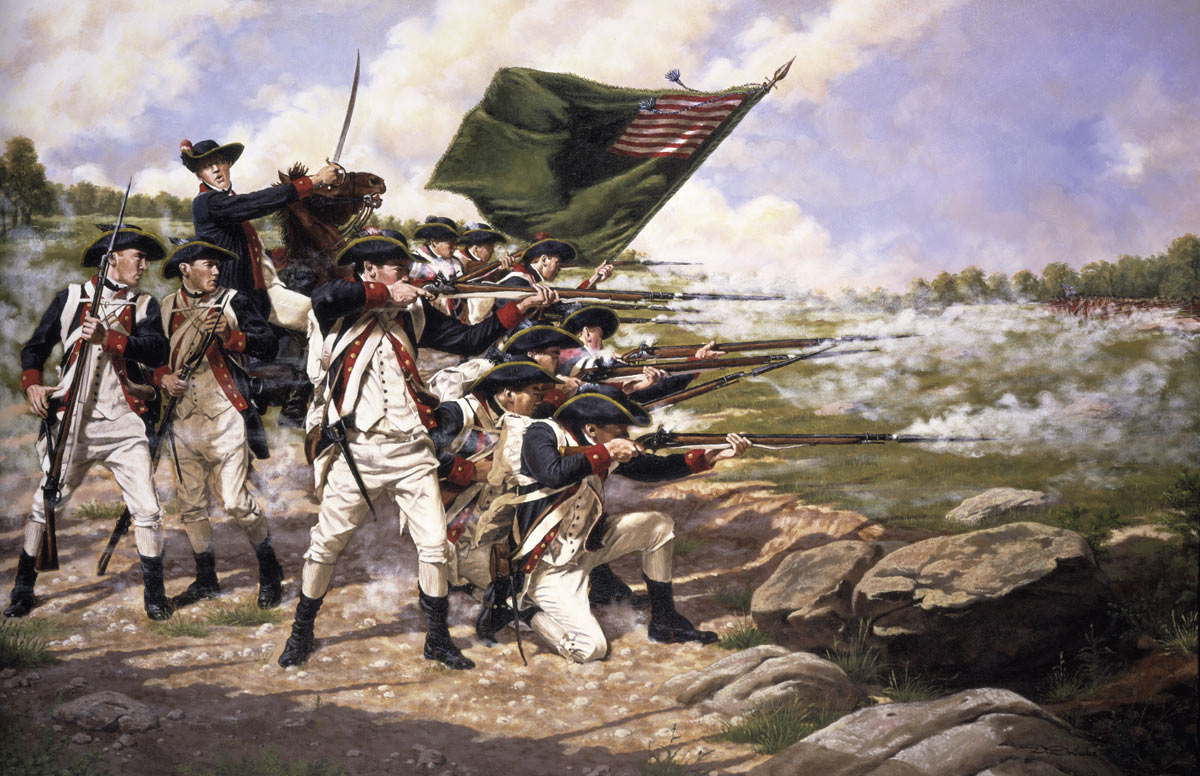
American Continental troops, Delaware Regiment, at the Battle of Long Island on 27th August 1776 in the American Revolutionary War: picture by Domenick D’Andrea
The previous battle of the American Revolutionary War is the Battle of Sullivan’s Island
The next battle of the American Revolutionary War is the Battle of Harlem Heights
To the American Revolutionary War index
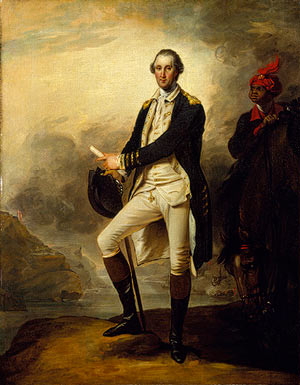
George Washington: Battle of Long Island on 27th August 1776 in the American Revolutionary War: picture by John Trumbull
Battle: Long Island
War: American Revolution
Date: 27th August 1776
Place: New York, United States of America
Combatants at the Battle of Long Island: British and the American Continental Army
Generals at the Battle of Long Island: Major General William Howe led the British and Hessian troops against General George Washington and the American Continental Army.
Size of the armies at the Battle of Long Island: 20,000 British and Hessian Troops against around 10,000 Americans.
Uniforms, arms and equipment at the Battle of Long Island: The British wore red coats, with bearskin caps for the grenadiers, tricorne hats for the battalion companies and caps for the light infantry. The Hessians wore blue coats. The Hessian grenadiers wore the Prussian style brass fronted mitre cap.
The Americans were without issue of standard uniforms and dressed as best they could.

Long Island: Battle of Long Island on 27th August 1776 in the American Revolutionary War
Both sides were armed with muskets and bayonets. Many men of the Pennsylvania regiments carried rifled weapons. Both sides were supported by artillery.

British Light Dragoon Officer: Battle of Long Island on 27th August 1776 in the American Revolutionary War
The only cavalry at the Battle of Long Island was the British 17th Light Dragoons and some small Americans mounted groups.
Winner of the Battle of Long Island: The British won the battle of Long Island, driving the Americans from Brooklyn and forcing them to evacuate New York.
British Regiments at the Battle of Long Island:
17th Light Dragoons
Foot: composite battalions of grenadiers, light infantry and Foot Guards (1st, 2nd and 3rd Guards), 4th, 5th, 10th, 15th, 22nd, 27th, 28th, 33rd, 35th, 37th, 38th, 42nd (Black Watch), 43rd, 44th, 45th, 49th, 52nd, 55th and 63rd Regiments of Foot and Fraser’s Highlanders.
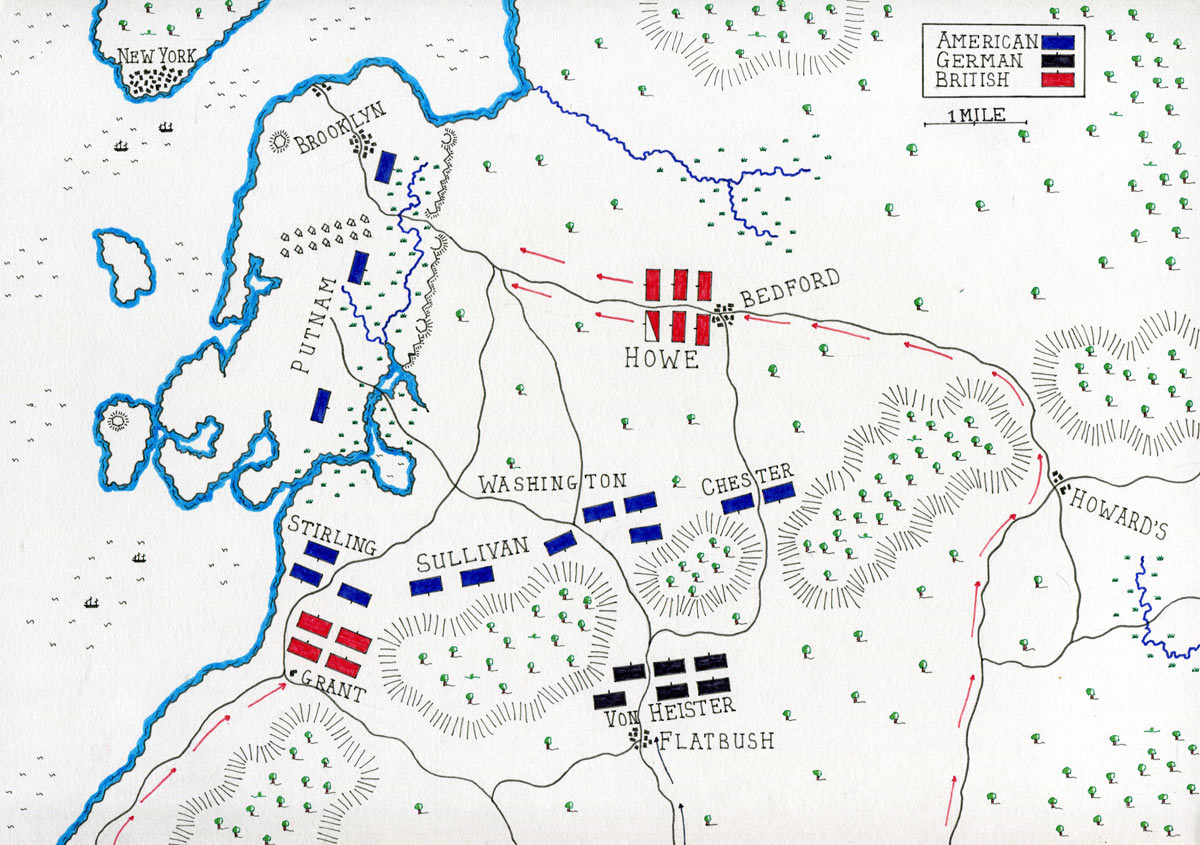
Map of the Battle of Long Island on 27th August 1776 in the American Revolutionary War: map by John Fawkes
Account of the Battle of Long Island:
Following the withdrawal of the British army from Boston on 17th March 1776, General George Washington, in the expectation that General Howe would attack New York, which was held for the Congress, marched much of his army south to that city from Boston.
In fact, the British sailed north from Boston to Halifax in Nova Scotia and it was not until the summer of 1776 that Howe launched his attack on New York.
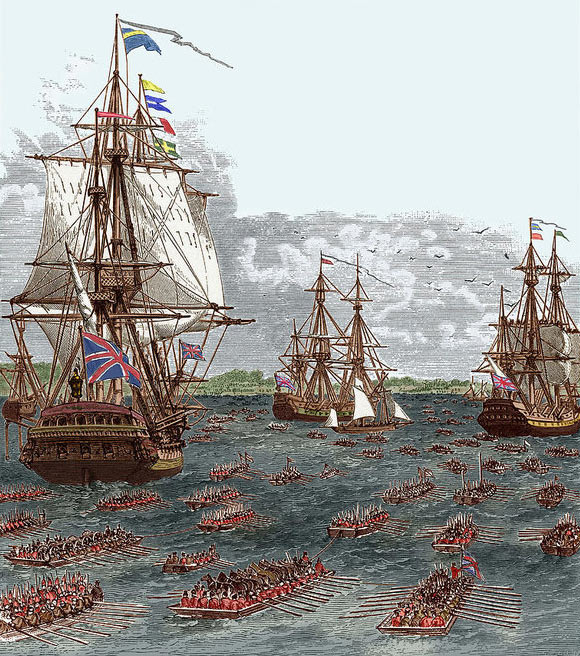
British troops landing from the fleet: Battle of Long Island on 27th August 1776 in the American Revolutionary War
The British fleet reached the entrance to the Hudson River on 29th June 1776 and Howe landed on Staten Island on 3rd July. The Congress declared independence for the American Colonies on the next day, 4th July 1776.
Reinforcements began to arrive from Britain and Major General Clinton returned from his abortive attempt to capture Charleston, South Carolina.
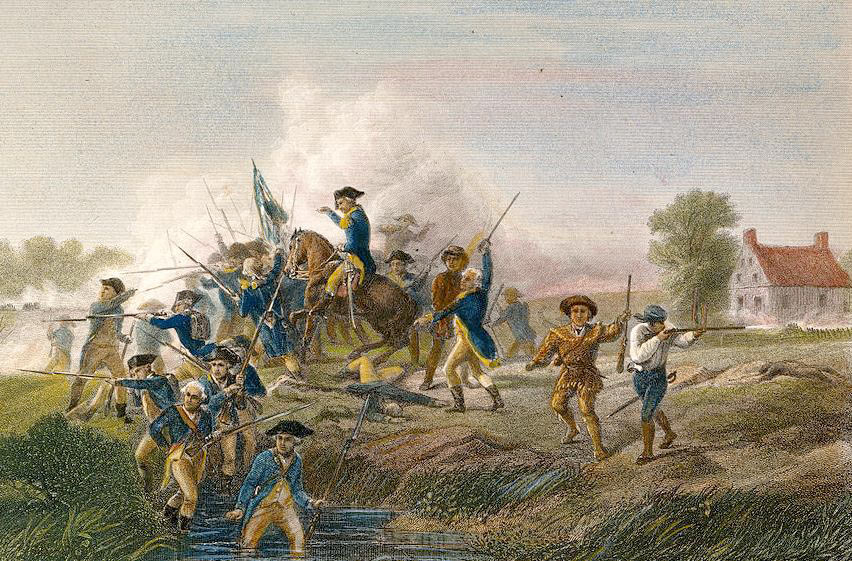
Lord Stirling, American officer, with his 1st Maryland Regiment, at the Battle of Long Island on 27th August 1776 in the American Revolutionary War: picture by Charles Henry Granger: the ‘Old Stone House’ is in the distance
In the meantime, the Americans built batteries on Manhattan and Long Island to prevent the British fleet penetrating past New York.
Of his 18,000 men, Washington positioned around 10,000 in fortifications on Brooklyn Heights, facing the sea and inland, to defend the approach to Manhattan. This force was commanded by Major General Israel Putnam. Part of the American force held the fortified area along the coast while the main body took up positions along the high ground inland.
Putnam had served through the French and Indian Wars in various ranger companies and at the Battle of Bunker Hill. He was a tough and popular man, but elderly and of limited ability in a high-ranking command.
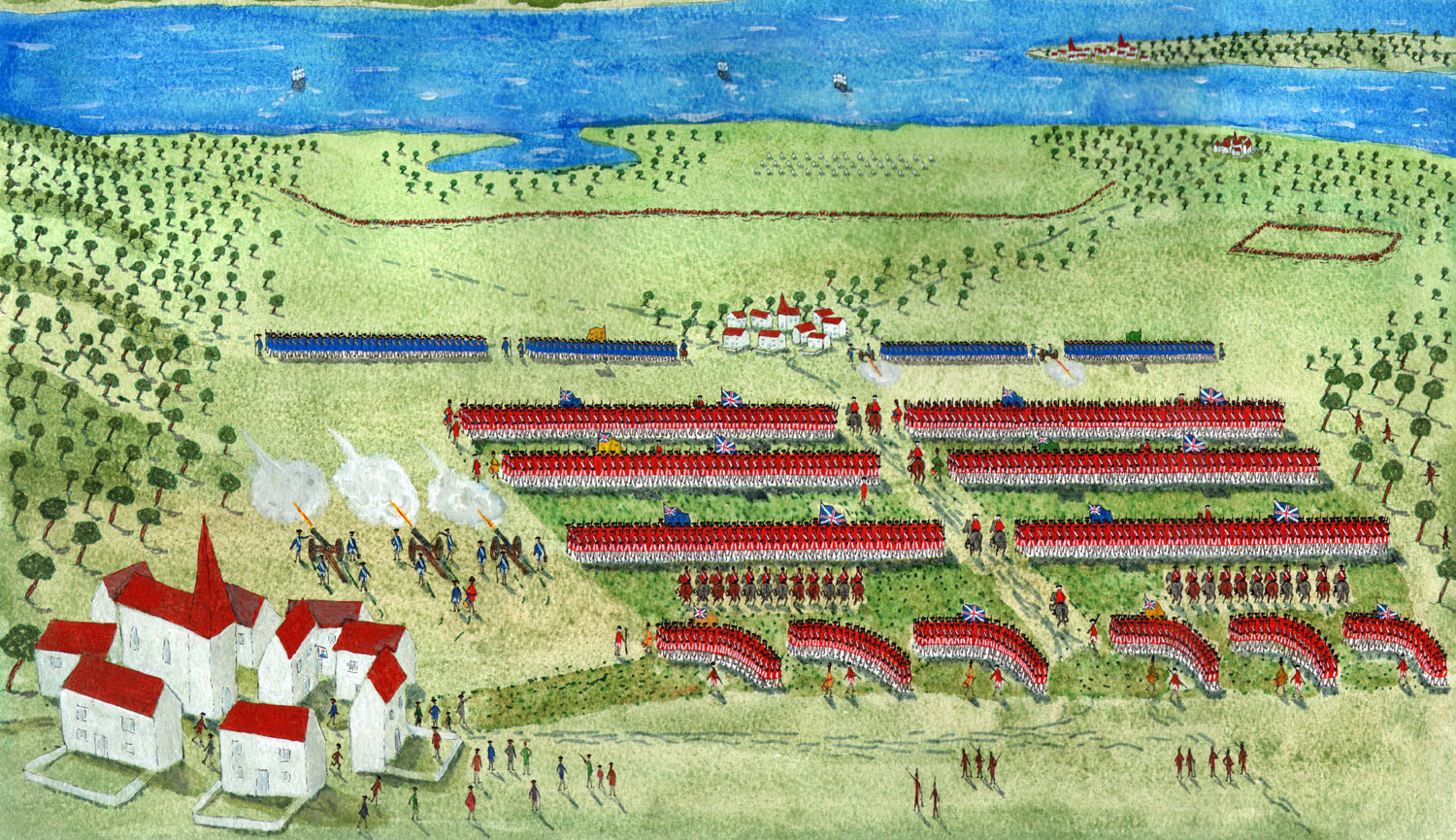
The British attack: Battle of Long Island on 27th August 1776 in the American Revolutionary War: picture by John Fawkes
On 22nd August 1776, the British force landed on Long Island to the south of the American fortifications.
On 26th August 1776, the main body of the British troops marched north-east, below the line of high ground held by the Americans to begin their attack. Information revealed to the British that the most northern of the three roads across the high ground was not guarded. Howe took his troops over this road and attacked the division on the American left, commanded by Sullivan, in the flank and rear, while German troops attacked in front. Sullivan’s troops were forced to leave their positions with much loss and retreat behind the main Brooklyn fortifications.
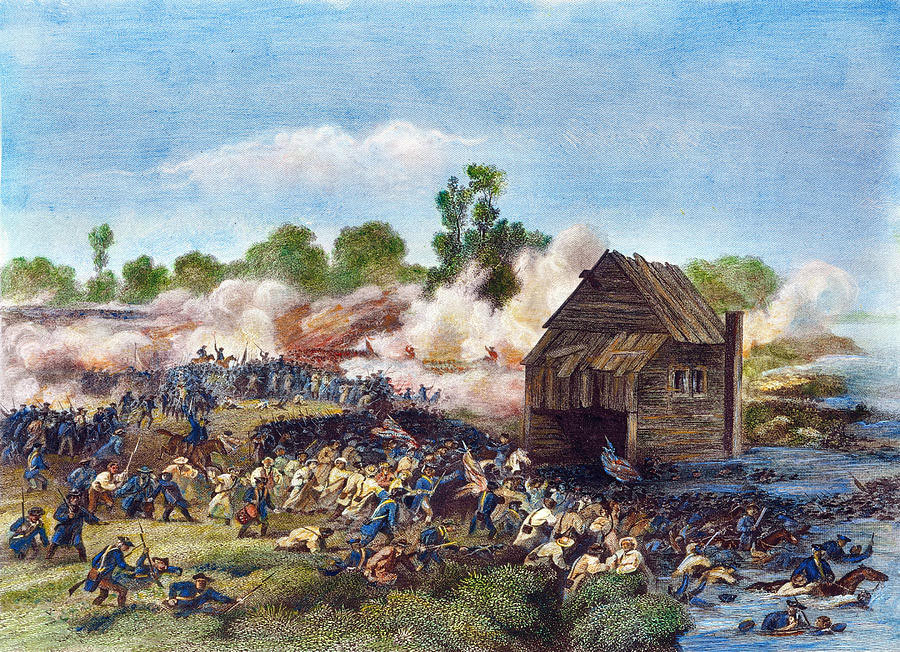
Battle of Long Island on 27th August 1776 in the American Revolutionary War: picture by Alonzo Chapell
On the right of the American position, Clinton attacked with a smaller force. The American commander, Lord Stirling, and his men resisted for some hours, until the British appeared in their rear from the other flank. Stirling’s force then fell back to the fortified line.
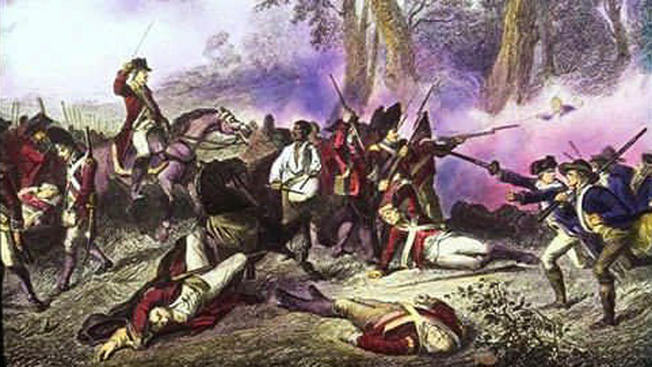
Battle of Brooklyn: Battle of Long Island on 27th August 1776 in the American Revolutionary War
On 28th August 1776, Washington brought reinforcements over to Long Island from New York, but with the increasing threat from the Royal Navy, he withdrew from Brooklyn on 29th August. Howe failed to interfere with the withdrawal.
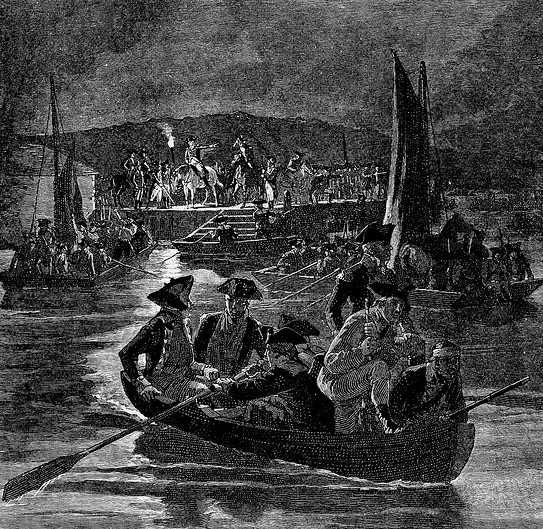
American withdrawal across the river to New York: Battle of Long Island on 27th August 1776 in the American Revolutionary War
On 15th September 1776, Washington was forced to leave New York. Again, Howe failed to interfere with the withdrawal, losing the opportunity to capture Washington and much of the Continental Army
Washington was forced to conduct a fighting withdrawal to the Delaware River where he wintered.
Casualties at the Battle of Long Island: British casualties were around 400 men killed and wounded, while the Americans lost around 2,000 men killed, wounded and captured, and several guns.
Follow-up to the Battle of Long Island: The loss of Long Island and New York constituted the worst period of the war for Washington and the American cause for independence. Morale in parts of the Continental Army collapsed and whole companies deserted. George Washington showed his quality by recovering from the disaster and rebuilding the Continental army.

Old Stone House: Battle of Long Island on 27th August 1776 in the American Revolutionary War
Anecdotes from the Battle of Long Island:
- James Alexander, Lord Stirling, of Bernard’s Township, New Jersey, was a prominent American officer in the American Revolutionary War and claimant to the Scottish title of Earl of Stirling. At the Battle of Long Island, Stirling held up the British advance with his 1st Maryland Regiment, at the Old Stone House near Gowanus Creek, enabling Washington to evacuate the rest of the American army across the river to New York. Stirling was captured by the British but exchanged. Stirling became one of Washington’s most important subordinates, but died shortly before the end of the war.
- The Old Stone House, the scene of Lord Stirling’s fight with British troops, has been reconstructed, using some original materials, and can be seen in Brooklyn, NYC.
References for the Battle of Long Island:
History of the British Army by Sir John Fortescue
The War of the Revolution by Christopher Ward
The American Revolution by Brendan Morrissey

George Washington and the American evacuation from Brooklyn: Battle of Long Island on 27th August 1776 in the American Revolutionary War
The previous battle of the American Revolutionary War is the Battle of Sullivan’s Island
The next battle of the American Revolutionary War is the Battle of Harlem Heights
To the American Revolutionary War index