The iconic engagement for the Queen’s Corps of Guides with the death of Major Wigram Battye, fought on 2nd April 1879 in the Second Afghan War
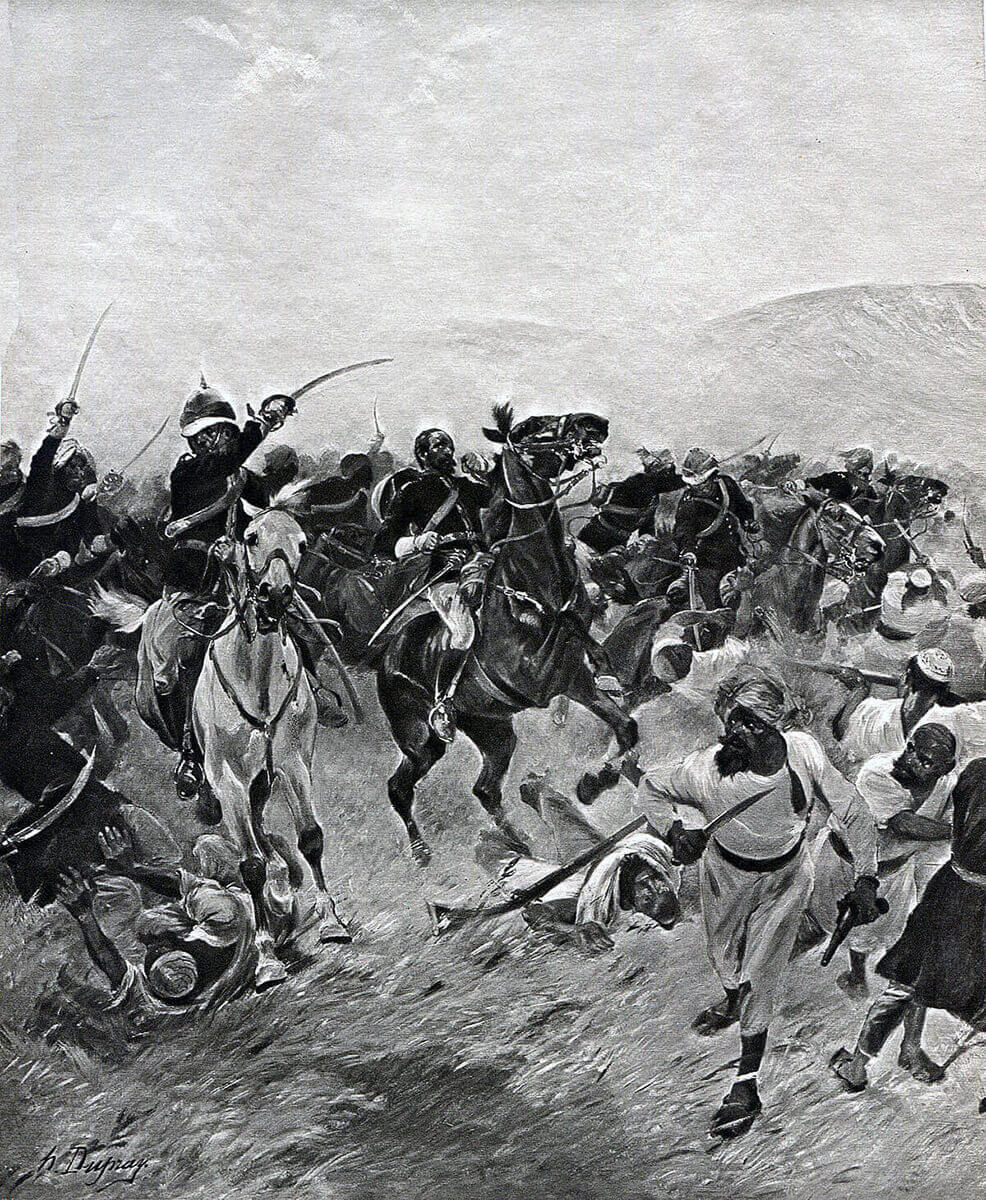
Death of Major Wigram Battye of the Queen’s Own Corps of Guides at the Battle of Futtehabad on 2nd April 1879 in the Second Afghan War: picture by Henri Dupray
The previous battle of the Second Afghan War is the Battle of Peiwar Kotal
The next battle of the Second Afghan War is the Battle of Charasiab
To the Second Afghan War index
Battle: Futtehabad
War: Second Afghan War
Date of the Battle of Futtehabad: 2nd April 1879
Place of the Battle of Futtehabad: South West of Jellalabad in North Eastern Afghanistan.
Combatants at the Battle of Futtehabad: British and Indian troops against Khugiani and other Afghan tribesmen.
Generals at the Battle of Futtehabad: Brigadier General Gough against unknown tribal leaders.
Size of the armies: 1,000 British and Indian troops against 5,000 Khugiani tribesmen.
Uniforms, arms and equipment at the Battle of Futtehabad:
The British and Indian forces were made up, predominantly, of native Indian regiments from the armies of the three British presidencies, Bengal, Bombay and Madras, with smaller regional forces, such as the Hyderabad contingent, and the newest, the powerful Punjab Frontier Force.
The Mutiny of 1857 had brought great change to the Indian Army. Prior to the Mutiny, the old regiments of the presidencies were recruited from the higher caste Brahmins, Hindus and Muslims of the provinces of central and eastern India, principally Oudh. Sixty of the ninety infantry regiments of the Bengal Army mutinied in 1857 and many more were disbanded, leaving few to survive in their pre-1857 form. A similar proportion of Bengal Cavalry regiments disappeared.
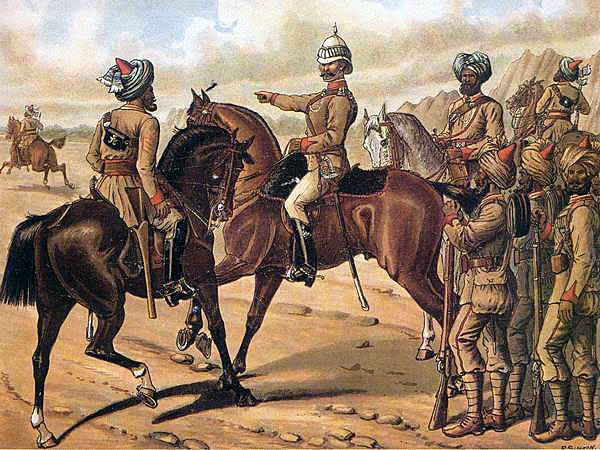
Queen’s Own Corps of Guides: Battle of Futtehabad on 2nd April 1879 in the Second Afghan War: picture by Richard Simkin
The British Army overcame the mutineers with the assistance of the few loyal regiments of the Bengal Army and the regiments of the Bombay and Madras Presidencies, which on the whole did not mutiny. But principally, the British turned to the Gurkhas, Sikhs, Muslims of the Punjab and Baluchistan and the Pathans of the North-West Frontier for the new regiments with which Delhi was recaptured and the Mutiny suppressed.
After the Mutiny, the British developed the concept of ‘the Martial Races of India’. Certain Indian races were more suitable to serve as soldiers, went the argument, and those were, coincidentally, the races that had saved India for Britain. The Indian regiments that invaded Afghanistan in 1878, although mostly from the Bengal Army, were predominantly recruited from the martial races; Jats, Sikhs, Muslim and Hindu Punjabis, Pathans, Baluchis and Gurkhas.
Prior to the Mutiny, each Presidency army had a full quota of field and horse artillery batteries. The only Indian artillery units allowed to exist after the Mutiny were the mountain batteries. All the horse, field and siege batteries were, from 1859, found by the British Royal Artillery.
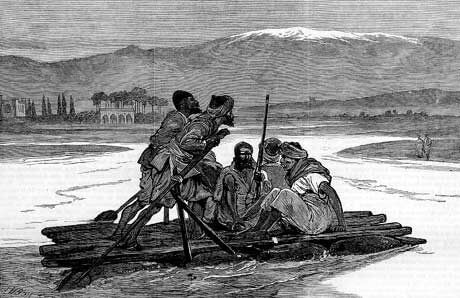
Crossing the Kabul River: Battle of Futtehabad on 2nd April 1879 in the Second Afghan War
In 1878, the regiments were beginning to adopt khaki for field operations. The technique for dying uniforms varied widely, producing a range of shades of khaki, from bottle green to a light brown drab.
As regulation uniforms were unsatisfactory for field conditions in Afghanistan, the officers in most regiments improvised more serviceable forms of clothing.
Every Indian regiment was commanded by British officers, in a proportion of some 7 officers to 650 soldiers, in the infantry. This was an insufficient number for units in which all tactical decisions of significance were taken by the British and was particularly inadequate for less experienced units.
The British infantry carried the single shot, breech loading, .45 Martini-Henry rifle. The Indian regiments still used the Snider; also a breech loading single shot rifle, but of older pattern and a conversion of the obsolete muzzle loading Enfield weapon.
The cavalry were armed with sword, lance and carbine, Martini-Henry for the British troopers, Snider for the Indian sowars.
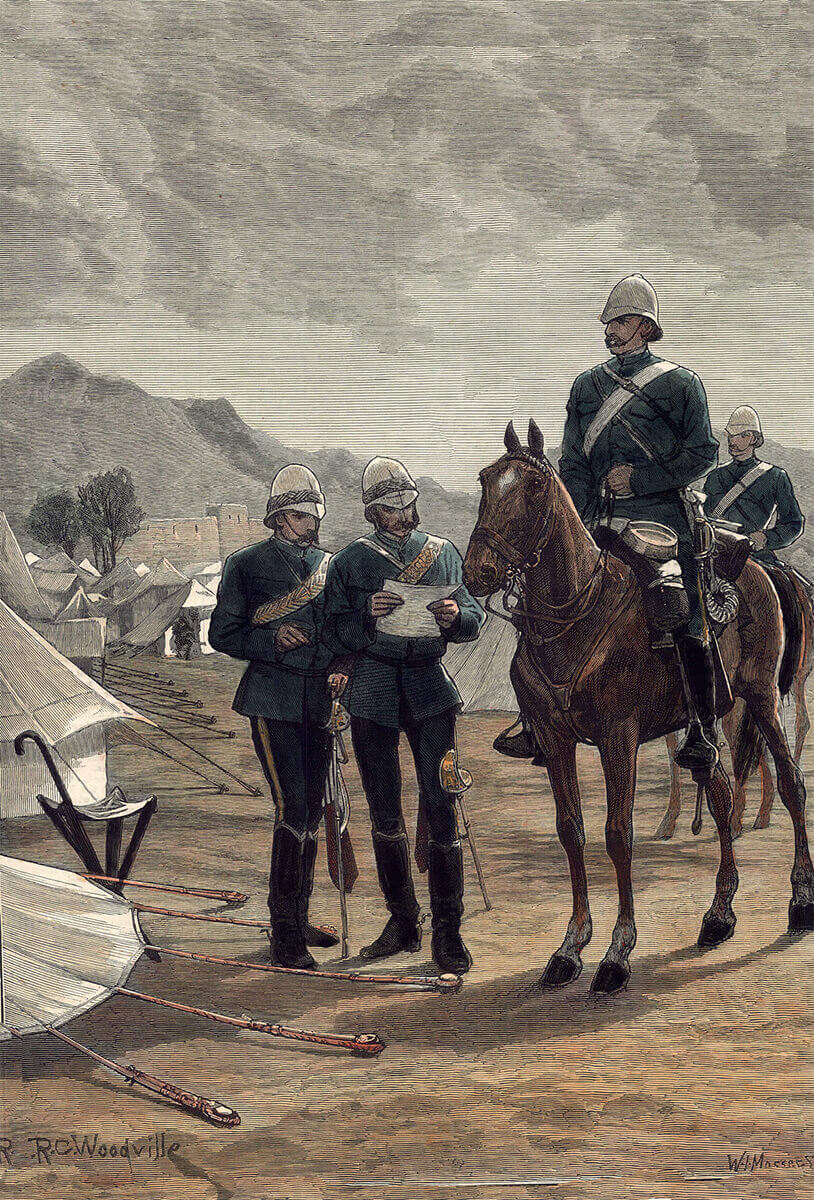
10th Hussars: Battle of Futtehabad on 2nd April 1879 in the Second Afghan War: picture by Richard Caton Woodville
The British artillery, using a variety of guns, many smooth bored muzzle loaders, was not as effective as it could have been, if the authorities had equipped it with the breech loading steel guns being produced for European armies. Artillery support was frequently ineffective and on occasions the Afghan artillery proved to be better equipped than the British.
The army in India possessed no higher formations above the regiment in times of peace, other than the staffs of static garrisons. There was no operational training for staff officers. On the outbreak of war, brigade and divisional staffs had to be formed and learn by experience.
The British Army had, in 1870, replaced long service with short service for its soldiers. The system was not yet universally applied, so that some regiments in Afghanistan were short service and others still manned by long service soldiers. The Indian regiments were all manned by long service soldiers. The universal view seems to have been that the short service regiments were weaker both in fighting effectiveness and disease resistance than the long service.
Winner of the Battle of Futtehabad: The British and Indian force.
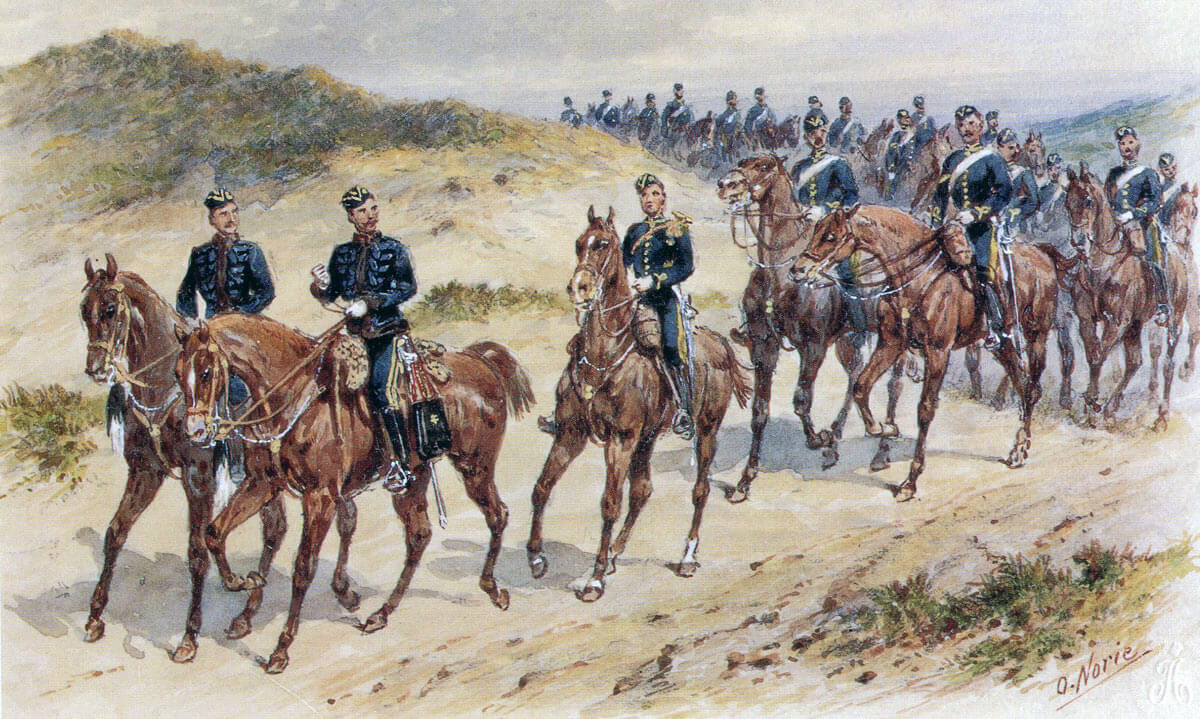
10th Royal Hussars on exercise in England after the war: Battle of Futtehabad on 2nd April 1879 in the Second Afghan War: picture by Orlando Norie
British Regiments at the Battle of Futtehabad:
British Regiments:
Royal Horse Artillery.
10th Hussars: now the King’s Royal Hussars.
HM 17th Foot, later the Leicestershire Regiment and now the Royal Anglian Regiment.
HM Rifle Brigade now the Royal Green Jackets.
Indian Regiments:
Bombay Hazara Mountain Battery.
11th Bengal Lancers
Queen’s Own Guides Cavalry
20th Bengal Native Infantry (Brownlow’s Punjabis)
27th Bengal Native Infantry (Punjabis)
45th Bengal Native Infantry (Rattray’s Sikhs)
4th Gurkha Regiment
Bengal Sappers and Miners.
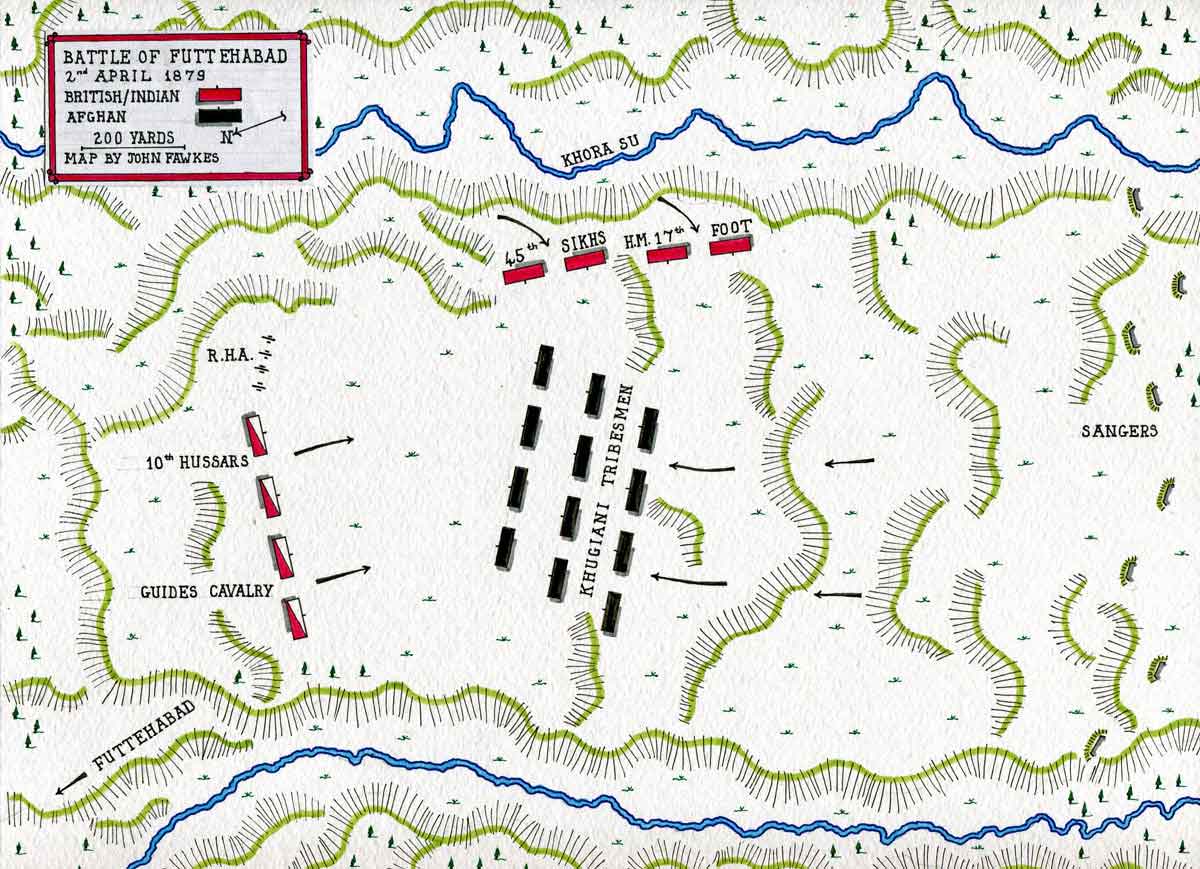
Map of the the Battle of Futtehabad on 2nd April 1879 in the Second Afghan War: map by John Fawkes
Account of the Battle of Futtehabad:
The battle at Futtehabad was a classic example of late Victorian colonial warfare; a small, but well-armed and disciplined force led with courage and resource against fanatical tribesmen, enraged at the incursions into their lands by foreigners.
The battle was also symptomatic of the difficulties faced by the three British/Indian Field Forces invading Afghanistan in the Second Afghan War: the Peshawar Valley Field Force, the Kurrum Field Force and the South Afghanistan Field Force. The field forces captured fixed positions along the routes of invasion with relative ease; the most determined resistance coming from the tribesmen raiding communications links to India. The hard lesson was that Afghan tribesmen never stop attacking an invader.
Following the successful battle at Ali Masjid at the head of the Khyber Pass in November 1878, the Peshawar Valley Field Force, commanded by Lieutenant General Sir Sam Browne, advanced to the Afghan town of Jellalabad on the Kabul River. There the invasion of Afghanistan halted over the winter, while the British gathered their resources for the final advance on Kabul and waited for the Ameer of Afghanistan to sue for peace.
The substantial army in Jellalabad and its supply line suffered frequent attacks by the Afghan tribes in the area; the tribesmen, at the best of times troublesome subjects to the Ameer of Afghanistan, seizing every opportunity to attack the foreign invaders.
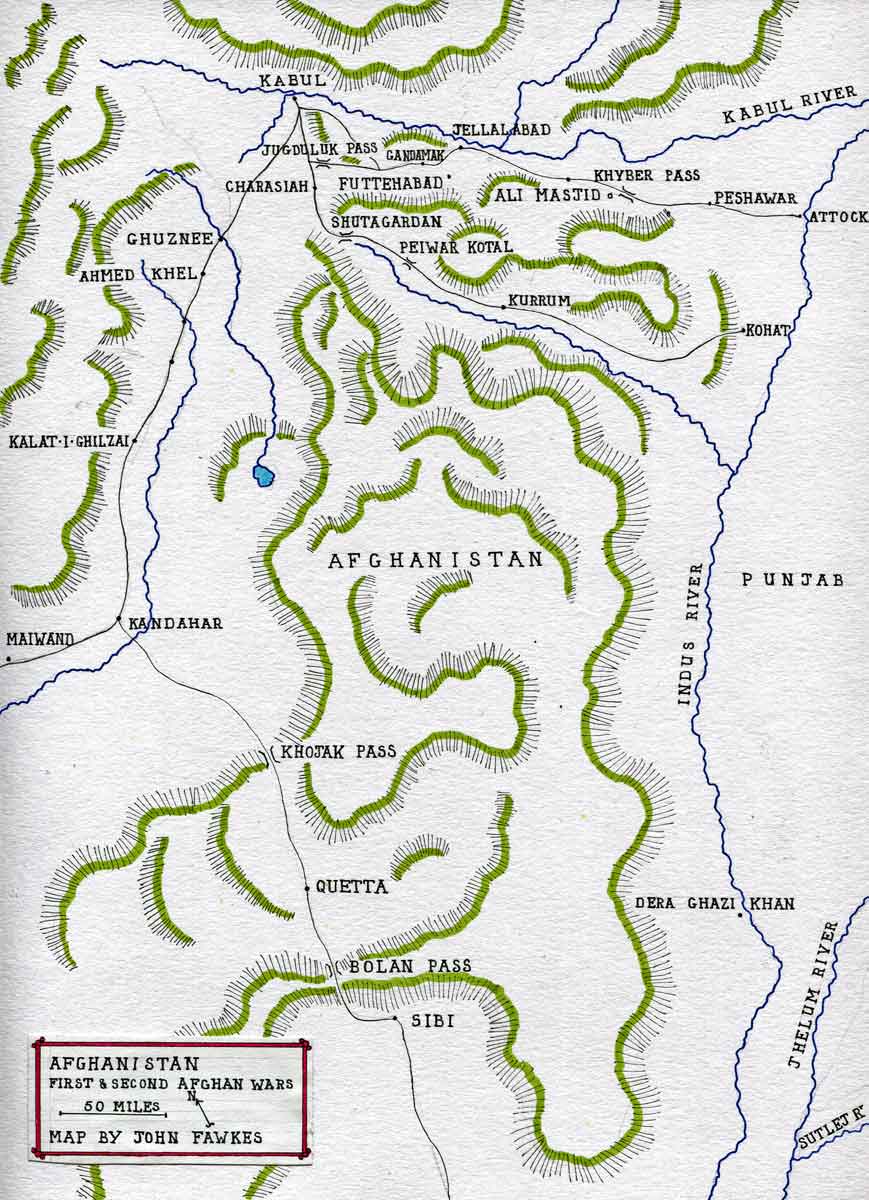
Map of Afghanistan by John Fawkes
At the end of March 1879, General Browne received intelligence that a force of some 1,500 Afghan tribesmen was present in the area known as the Laghman, on the north bank of the Kabul River, to the west of Jellalabad, intent on inflaming local tribes against the British and Indian force.
Simultaneously, the Kugiani tribe was reported to be assembling in the area of Futtehabad, to the south-west of Jellalabad. The two threats appeared to be coordinated.
General Browne sent out three forces from Jellalabad: the first comprising a squadron of 10th Hussars and a squadron of 11th Bengal Cavalry, to cross the Kabul River to the east of Jellalabad and march west and surprise the Afghans in the Laghman: the second force, under Brigadier General Macpherson, to march west along the south bank of the river and cut off the southward retreat of the Afghans from Laghman.
The third force under Brigadier General Gough would deal with the Kugianis at Futtehabad.
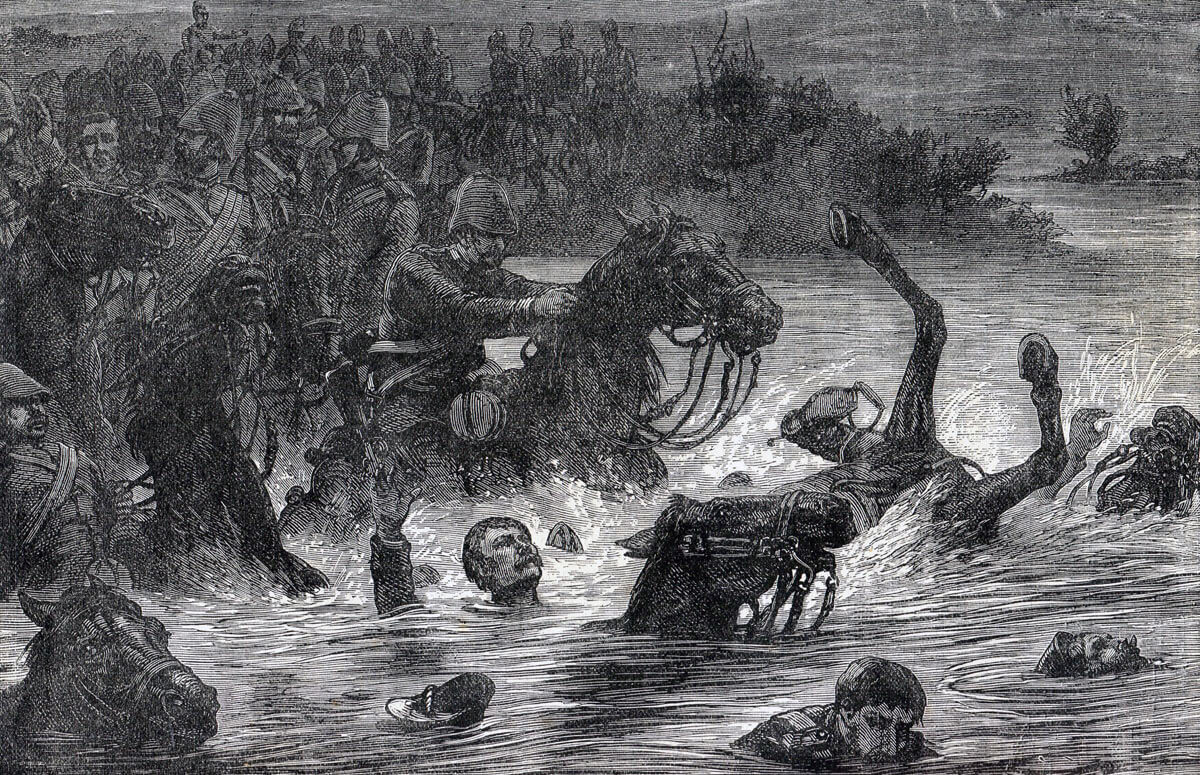
10th Royal Hussars in trouble in the Kabul River on 31st March 1879: Battle of Futtehabad on 2nd April 1879 in the Second Afghan War
Macpherson’s force and the cavalry marched out of Jellalabad on 31st March 1879. The cavalry route across the Kabul River was by a ford; about a mile across, via an island, its path far from obvious. In the second section of the river the squadron of the 10th Hussars lost its way and floundered into fast deep water. 47 officers and men of the squadron of 75 all ranks were swept away and drowned, a substantial loss. A second squadron of the regiment was sent out from Jellalabad and the force continued on its march, only to find when it reached the Laghman that the Afghan force had disappeared.
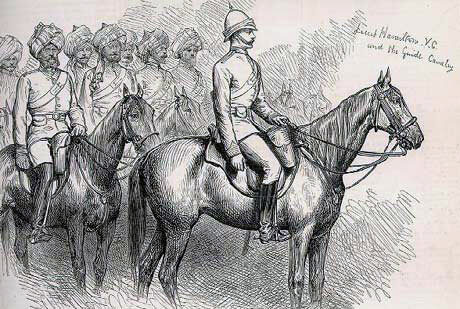
Lieutenant Walter Hamilton of the Queen’s Own Guides who won the Victoria Cross at the Battle of Futtehabad on 2nd April 1879 in the Second Afghan War
Brigadier General Gough’s force marched out in the early hours of 1st April 1879; comprising 2 squadrons of 10th Hussars and Guide’s Cavalry, 400 men of HM 17th Foot, 300 men each of the 27th and 45th Bengal Native Infantry and 4 guns of the Royal Horse Artillery.
Soon after dawn on 1st April 1879, a cavalry patrol reported a gathering of 5,000 hostile Kugiani tribesmen at the village of Khuja to the South of Futtehabad. Gough left a force of infantry to protect his supply column and advanced to the attack, notwithstanding that his force was outnumbered five to one.
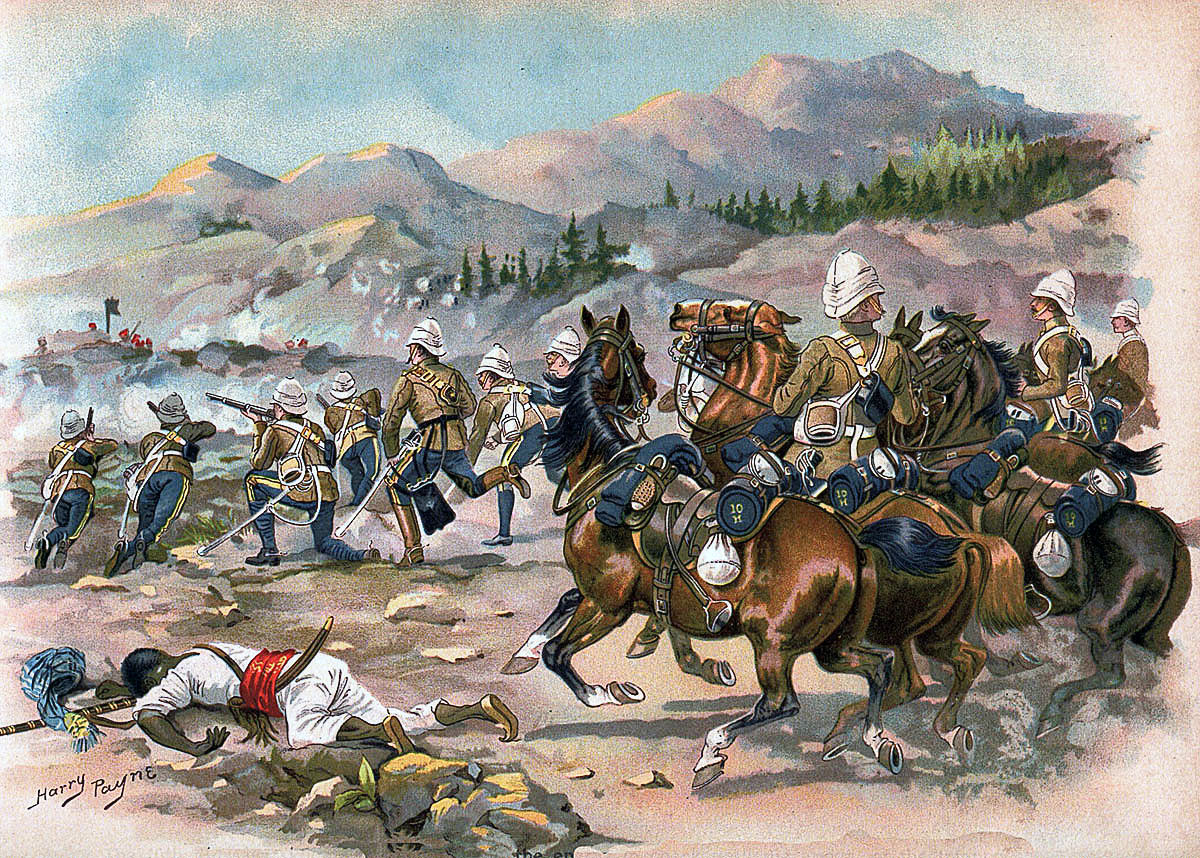
HM 10th Royal Hussars at the Battle of Futtehabad on 2nd April 1879 in the Second Afghan War: picture by Harry Payne
Gough found the Kugiani tribesmen entrenched behind an extensive sanger wall at the top of a long sloping escarpment, each flank of the approach blocked by an impassable mountain torrent.
The immutable doctrine of warfare against native forces in India was that the British/Indian force must attack whatever the odds. If they showed weakness, every tribe in the area would rise.
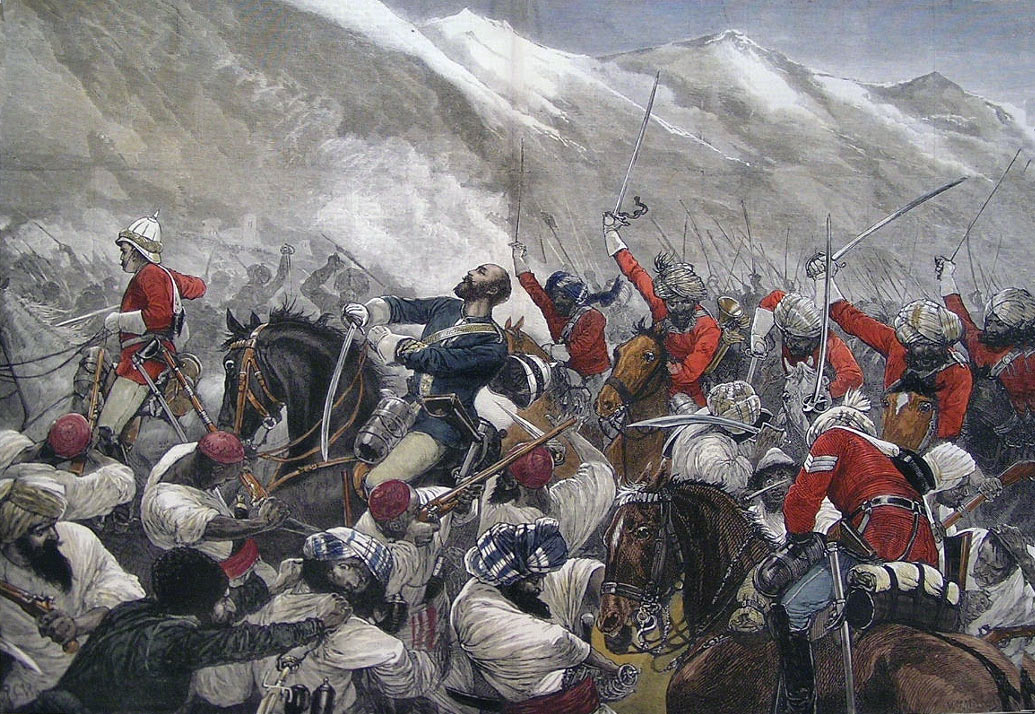
Death of Major Wigram Battye of the Queen’s Own Corps of Guides at the Battle of Futtehabad on 2nd April 1879 in the Second Afghan War: picture by Richard Caton Woodville
Gough sent forward his small cavalry force with the Royal Horse Artillery guns. Gunfire was opened on the Afghans at 1,600 yards and again at 1,200 yards. The force then withdrew. The effect on the Kugianis was as Gough had planned: they emerged from the fortified position and pursued the cavalry and guns, hurrying past the waiting infantry positioned on their right flank. A heavy fire was opened on the tribesmen and the cavalry turned and charged the Afghans, driving the tribesmen back, in headlong retreat.
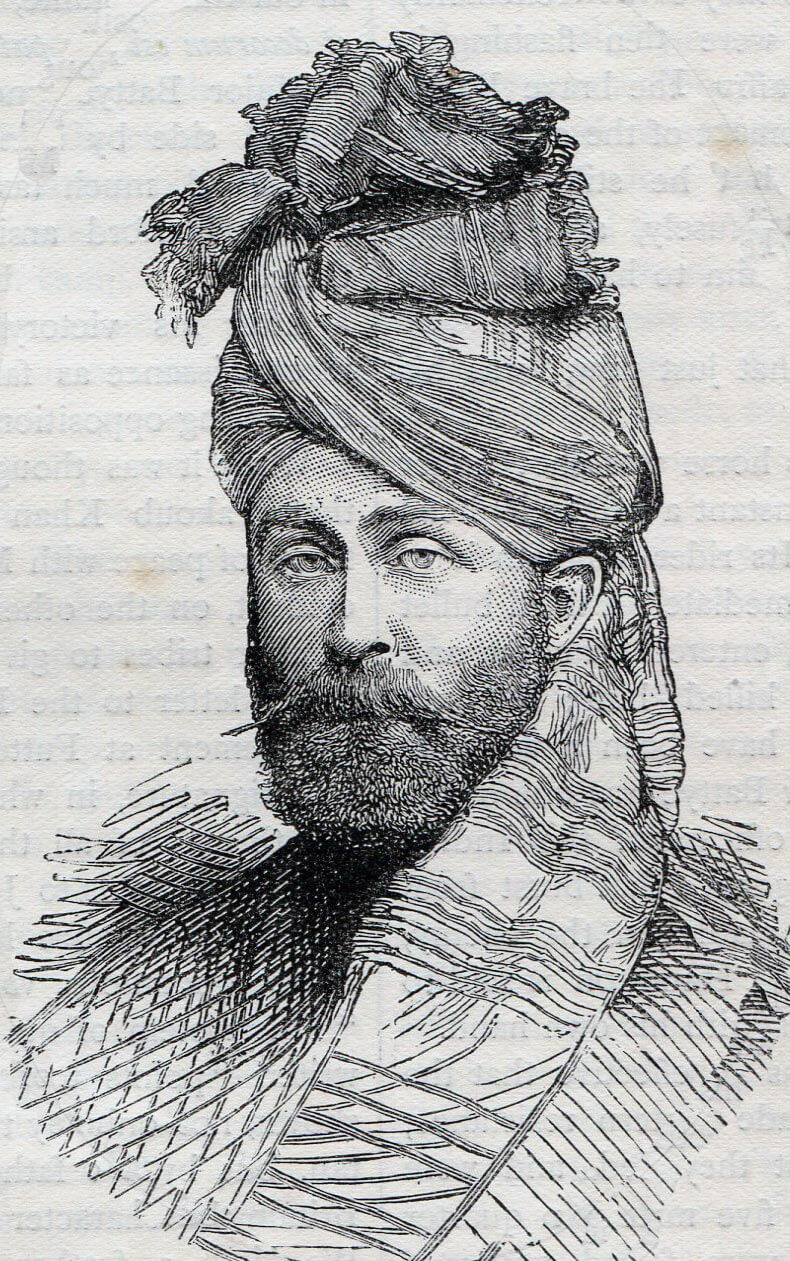
Major Wigram Battye, Queen’s Own Corps of Guides, killed at the Battle of Futtehabad on 2nd April 1879 in the Second Afghan War
In the course of the charge, Major Wigram Battye, commanding the Guides, was fatally shot in the thigh and chest. He passed command to Lieutenant Walter Hamilton. The Guides with the 10th Hussars pressed home the charge, pursuing the Kugianis back to the sanger wall and beyond. Hamilton rescued a dismounted Guides trooper from a group of tribesmen and for his part in the charge won the Victoria Cross.
The mounted soldiers were greatly impressed by the courage of the tribesmen who, when surrounded, fought to the death with whatever weapons they carried, in many cases just a knife.
Following the battle, Gough’s brigade was joined by the rest of the Second Brigade under Brigadier General Tytler and the Kugiani town of Khuja was burnt, ending the threat from the tribe for the moment. The force then returned to Jellalabad.
Casualties at the Battle of Futtehabad:
British and Indian casualties were 6 killed and 40 wounded. The Khugianis suffered 300 dead and around 900 wounded.
Follow-up to the Battle of Futtehabad:
A number of tribesmen were made prisoner. Initially it was the requirement of the political officers with the British/Indian force that these prisoners be shot. The military officers objected. In the event a group of five mullahs was executed.
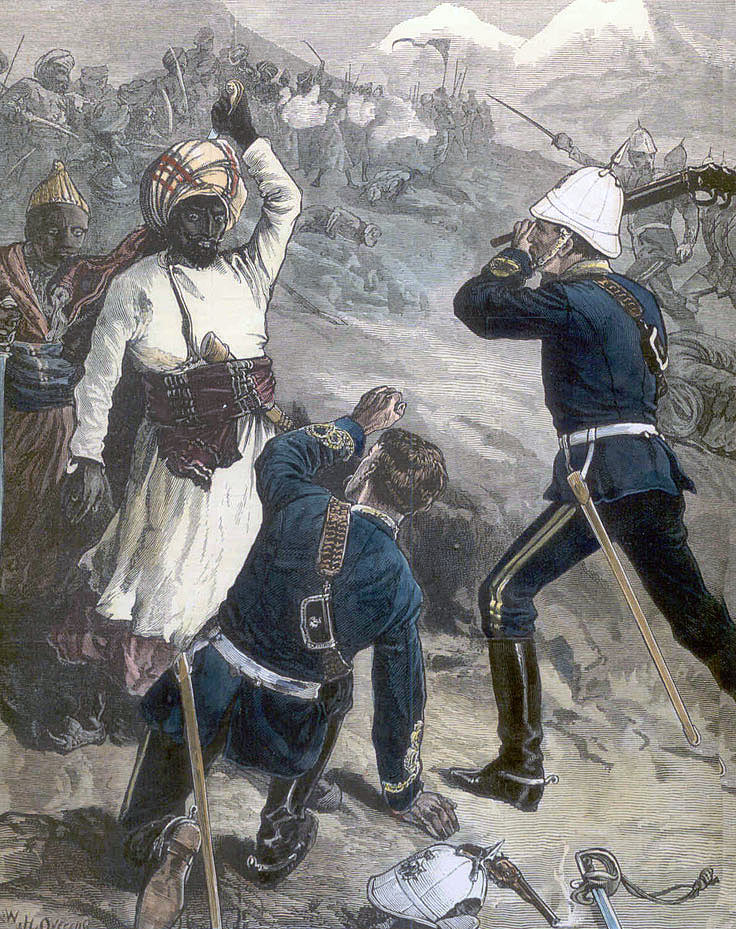
Lieutenant Fisher of the 10th Royal Hussars rescuing Lieutenant Wood of his regiment at the Battle of Futtehabad on 2nd April 1879 in the Second Afghan War
Anecdotes and traditions from the Battle of Futtehabad:
- Futtehabad is an iconic battle for the Queen’s Own Corps of Guides, culminating in the death of Major Wigram Battye, during the mounted charge by the Guides and the 10th Hussars and the winning of the Victoria Cross by Lieutenant Walter Hamilton. It is said that Battye’s men, Pathans of the North-West Frontier tribes and Sikhs, refused to allow the ambulance staff to touch his body, insisting in carrying it themselves back to camp.
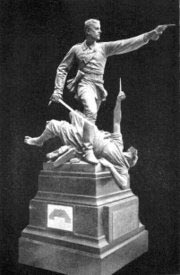
Statue of Lieutenant Walter Hamilton VC dying in Kabul: Battle of Futtehabad on 2nd April 1879 in the Second Afghan War
- Lieutenant Walter Hamilton, an Irishman of 22 years, was awarded the Victoria Cross and, with the ending of the first phase of the war, given command of the small party of Queen’s Own Guides Cavalry and Infantry that escorted Major Cavagnari to Kabul. On 3rd September 1879 mutinous Afghan troops from the Herati regiments, scorning their western colleagues who had lost the war to the British and Indians, stormed the Residency in the Bala Hissar in Kabul and killed Cavagnari and his escort of Guides, after a ferocious battle. Hamilton is commemorated by a statue in Dublin.
References for the Battle of Futtehabad:
The Road to Kabul; the Second Afghan War 1878 to 1881 by Brian Robson.
Recent British Battles by Grant.
The Afghan Wars by Archibald Forbes
The previous battle of the Second Afghan War is the Battle of Peiwar Kotal
The next battle of the Second Afghan War is the Battle of Charasiab
To the Second Afghan War index