Admiral Sir John Jervis’s naval victory on 14th February 1797 over the much larger Spanish Fleet that threatened Britain; a victory made more decisive by Nelson’s inspired initiative
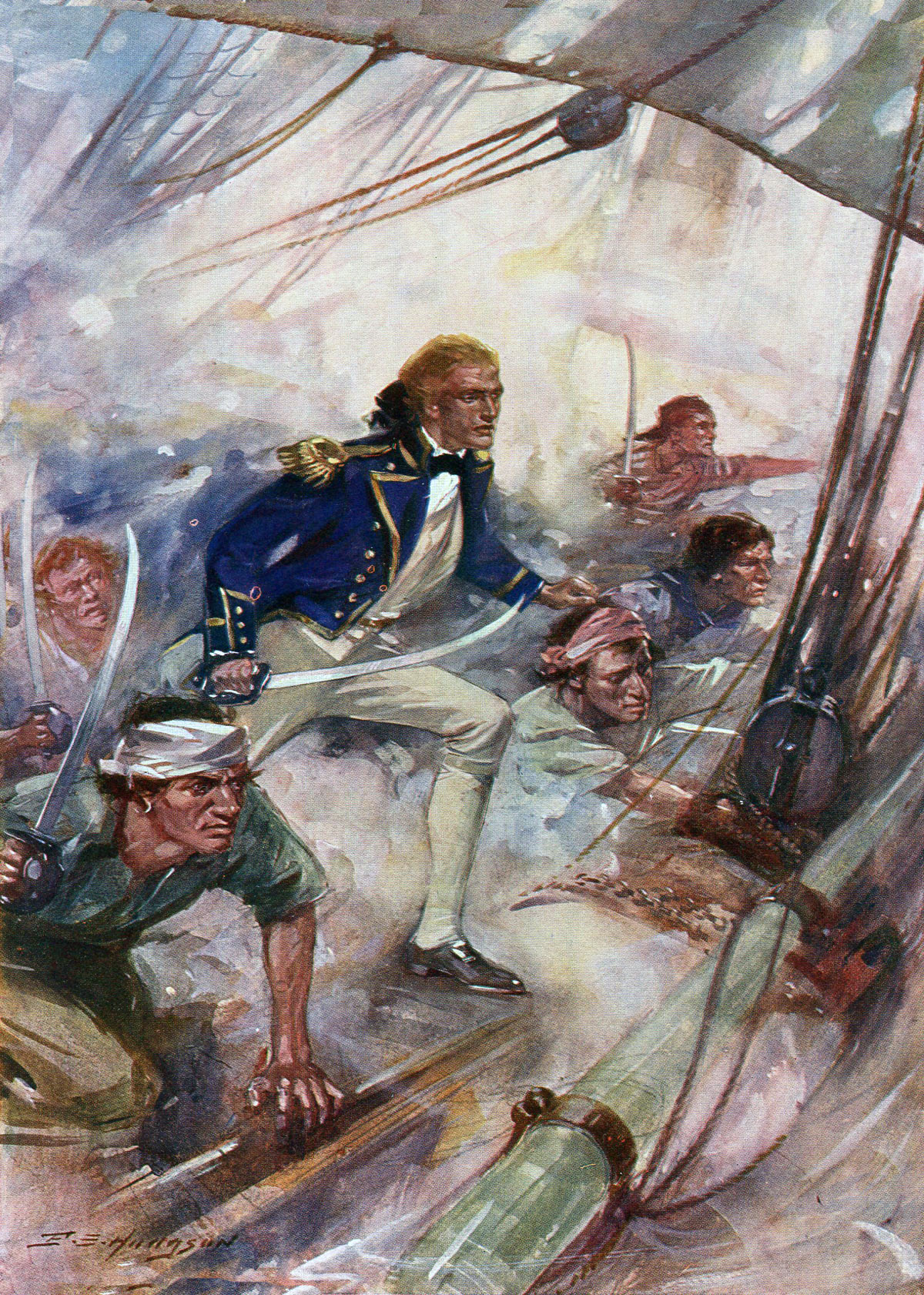
Nelson boarding the San Josef at the Battle of Cape St Vincent on 14th February 1797 in the Napoleonic Wars: picture by E.S. Hodgson
The previous battle in the British Battles series is the Sortie from Bayonne
The next battle of the Napoleonic Wars is the Battle of the Nile
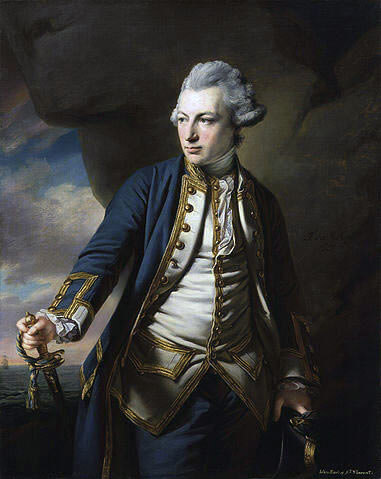
Admiral Sir John Jervis British commander at the Battle of Cape St Vincent on 14th February 1797 in the Napoleonic Wars: picture by Francis Cotes
War: Napoleonic Wars.
Date of the Battle of Cape St Vincent: 14th February 1797.
Place of the Battle of Cape St Vincent: Off the south-west coast of Portugal, to the north-west of the Spanish naval port of Cadiz.
Combatants at the Battle of Cape St Vincent: The British Fleet against the Spanish Fleet.
Commanders at the Battle of Cape St Vincent: Admiral Sir John Jervis against Admiral Don Jose de Cordova.
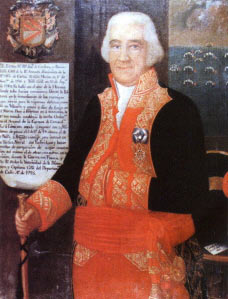
Admiral Don Jose de Cordova Spanish commander at the Battle of Cape St Vincent on 14th February 1797 in the Napoleonic Wars
Winner of the Battle of Cape St Vincent: The British Fleet won the battle, capturing two of the Spanish three deckers and two other line of battle ships and severely damaging several other ships of the Spanish Fleet.
The Fleets at the Battle of Cape St Vincent:
British Fleet: 14 line of battle ships, 5 frigates, sloop and cutter: total of 1,350 guns.
His Majesty’s Ships Victory (Captain Calder, 100 guns), Britannia (Vice Admiral Thompson: Captain Foley, 100 guns), Barfleur (Vice Admiral Waldegrave: Captain Dacres, 98 guns), Prince George (Rear Admiral Parker: Captain Irwin, 98 guns), Blenheim (Captain Frederick,: 90 guns), Namur (Captain Whitshed, 90 guns), Culloden (Captain Troubridge, 74 guns), Orion (Captain Saumarez, 74 guns), Colossus (Captain Murray, 74 guns), Irresistible (Captain Martin, 74 guns), Egmont (Captain Sutton, 74 guns), Goliath (Captain Knowles, 74 guns), Captain (Commodore Nelson: Captain Miller, 74 guns), Excellent (Captain Collingwood, 74 guns) and Diadem (Captain Towry, 64 guns).
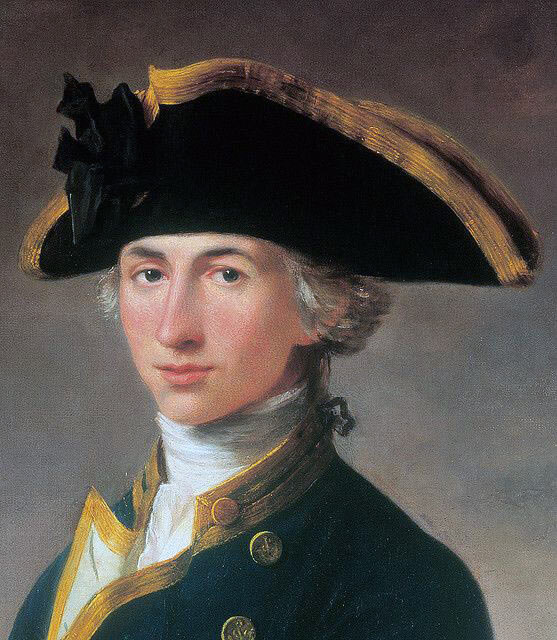
Commodore Horatio Nelson: Battle of Cape St Vincent on 14th February 1797 in the Napoleonic Wars
Frigates: Minerve (Captain Cockburn, 38 guns), Lively (Captain Lord Garlies, 32 guns), Niger (Captain Foote, 32 guns), Southampton (Captain Macnamara, 32 guns), La Bonne Citoyenne (Captain Lindsay, 20 guns), Raven, sloop (Commander Prowse, 18 guns), Fox, cutter (Lieutenant Gibson, 10 guns),
The Spanish Fleet: 28 line of battle ships and 7 frigates with 2,644 guns.
Spanish ships: Santissima Trinidad, 130 guns, Concepcion, 112 guns, Conde de Regla, 112 guns, Mexicano, 112 guns, Principe de Asturias, 112 guns, Salvador del Mundo, 112 guns, San Josef, 112 guns, San Jose, 112 guns, Neptuno, 80 guns, San Nicolas, 80 guns, Atlante, 74 guns, Bahama, 74 guns, Conquistador, 74 guns, Firme, 74 guns, Glorioso, 74 guns, Oriente, 74 guns, Pelayo, 74 guns, San Antonia, 74 guns, San Domingo, 74 guns, San Fermin, 74 guns, San Francisco de Paula, 74 guns, San Genaro, 74 guns, San Ildefenso, 74 guns, San Juan Nepomuceno, 74 guns, San Pablo, 74 guns, San Isidoro, 74 guns, Soberano, 74 guns and Terrible, 74 guns.
Frigates: Ceres, 34 guns, Atocha, 34 guns, Diana, 34 guns, Matilda, 34 guns, Mercedes, 34 guns, Perla, 34 guns and Santa Brigida, 34 guns.
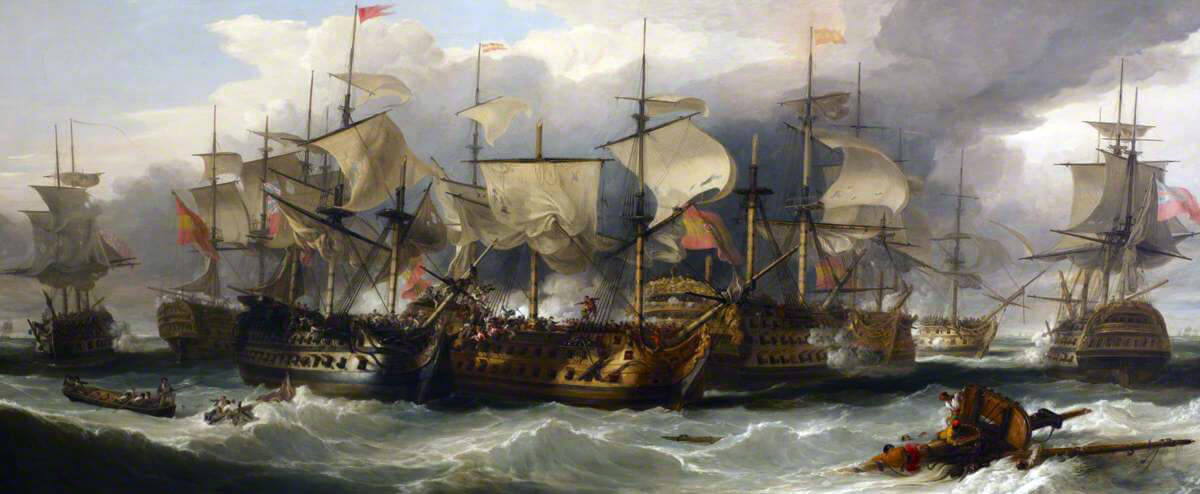
HMS Captain alongside San Nicholas and San Josef at the Battle of Cape St Vincent on 14th February 1797 in the Napoleonic Wars: picture by William Allan
Ships and Armaments at the Battle of Cape St Vincent: Sailing warships of the 18th and 19th Century carried their main armaments in broadside batteries along the sides. Ships were classified according to the number of guns carried or the number of decks carrying batteries. The size of gun on the line of battle ship was up to 32 pounder, firing heavy iron balls or chain and link shot designed to wreck rigging.
Ships manoeuvred to deliver broadsides in the most destructive manner; the greatest effect being achieved by firing into an enemy’s stern or bow, so that the cannon balls travelled the length of the ship wreaking havoc and destruction. The first broadside, loaded before action began and often double shotted, was always the most effective. To achieve greatest, impact the British ships held their fire until alongside the Spanish ships. In some instances, broadsides were fired at ranges of less than 10 metres.
Ships carried a variety of smaller weapons on the top deck and in the rigging, from swivel guns firing grape shot or cannister (bags of musket balls) to hand held muskets and pistols, each crew seeking to annihilate the enemy’s officers and sailors on deck.
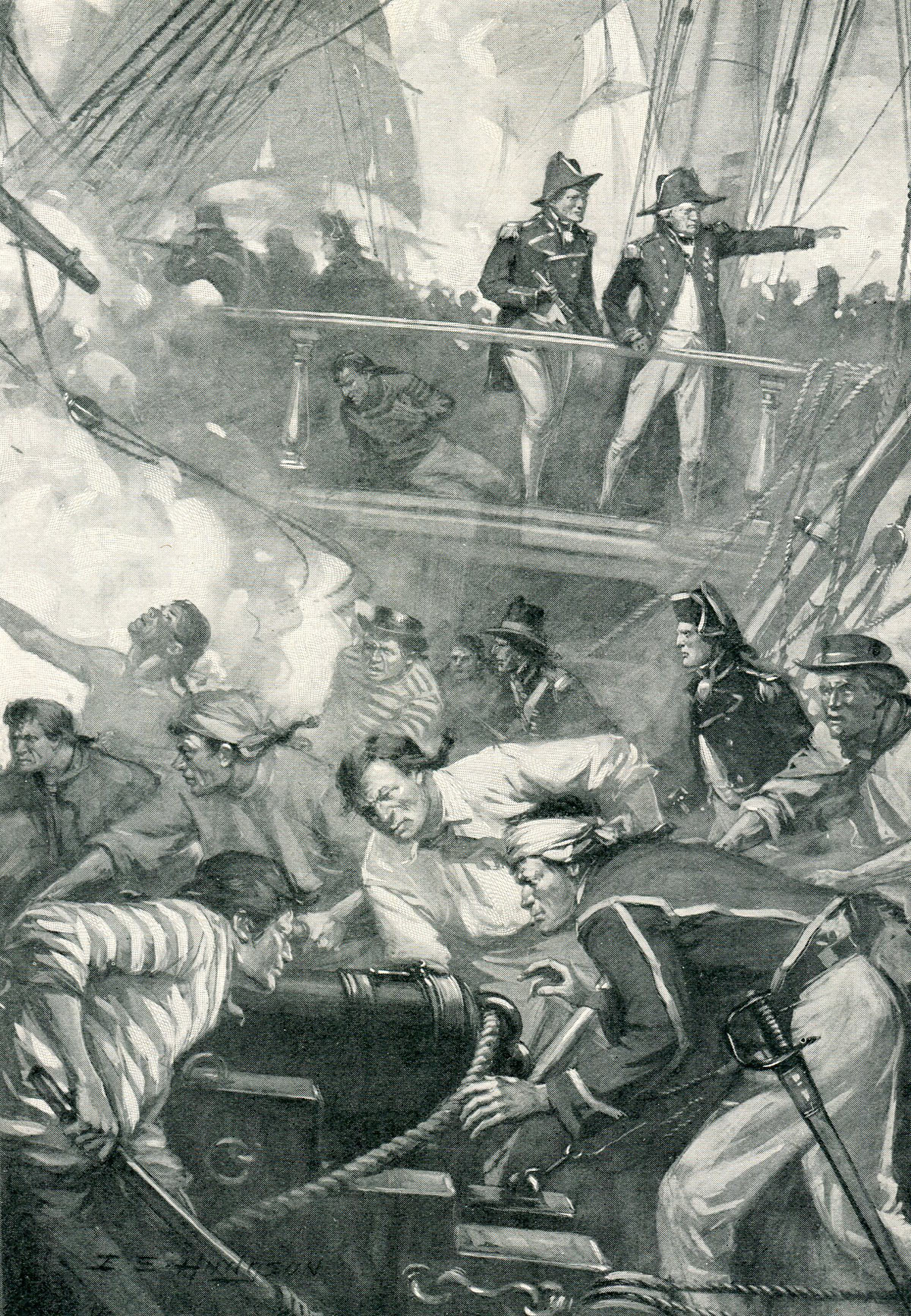
Royal Navy guns in action at the Battle of Cape St Vincent on 14th February 1797 in the Napoleonic Wars: picture by E.S. Hodgson
British captains expected their ships to clear for action in 10 minutes. Cabin walls were dismantled; gun crews formed up; the gunner and his mates opened the magazine and distributed ammunition to the guns; decks were wetted and sprinkled with sand; the surgeon laid out his implements in the cockpit; the marines assembled to take post on the decks or in the rigging. The final act of preparation was for the gun ports to be opened and the guns run out, the truck wheels rumbling through the ship.
Wounds in Eighteenth Century naval fighting were terrible. Cannon balls ripped off limbs or, striking wooden decks and bulwarks, drove splinter fragments across the ship causing, horrific wounds. Falling masts and rigging inflicted crush injuries. Sailors stationed aloft fell into the sea from collapsing masts and rigging, often to be drowned. Heavy losses were caused if a ship sank.
Regular ships’ crews of all nations were tough men. The British, with continual blockade service against the French and Spanish, were particularly well drilled, British gun crews firing three broadsides or more to every two fired by the Spanish.
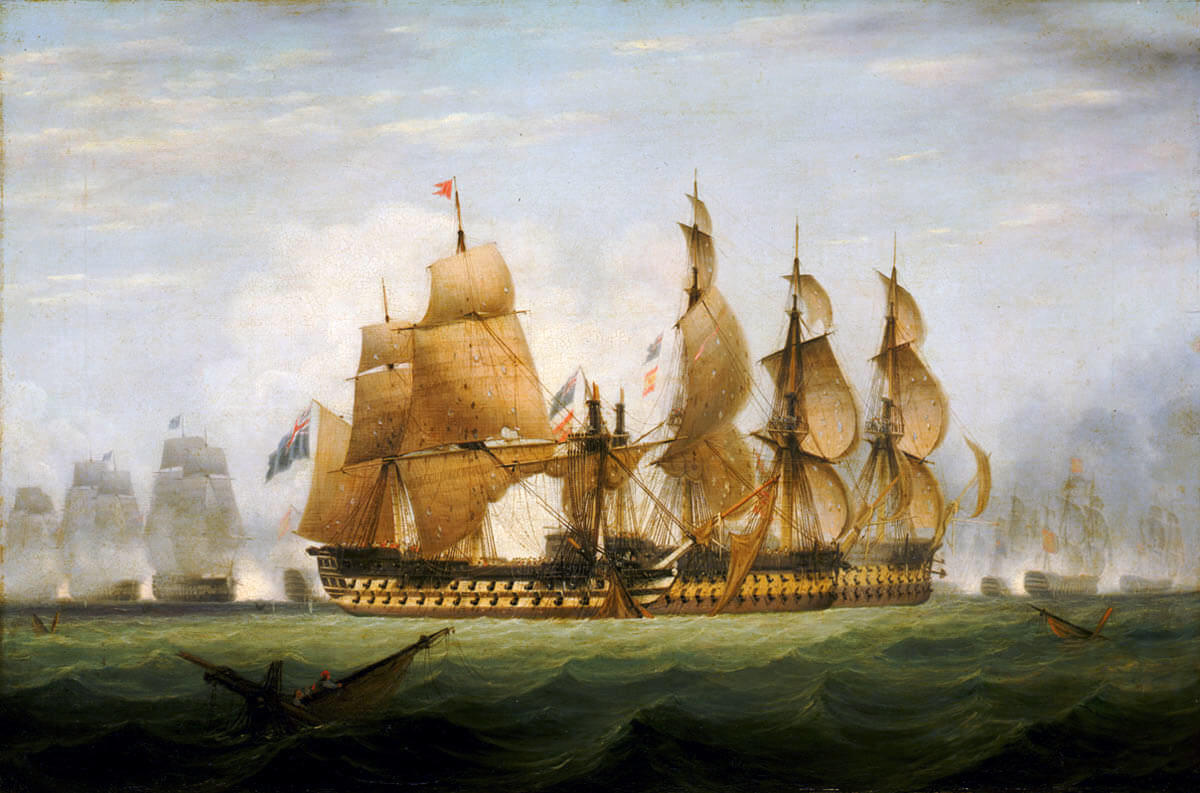
Battle of Cape St Vincent on 14th February 1797 in the Napoleonic Wars
The Spanish ships were particularly handicapped by lack of sea time in which to train their seamen. Admiral de Cordova’s fleet set sail at short notice, with crews made up by pressed and untrained landsmen. Several Spanish ships had insufficient manpower to fire all the guns. Guns on the San Jose were found after the battle with the tampions still fitted in the muzzles.
British captains were responsible for recruiting their ship’s crew. Men were taken wherever they could be found, largely by means of the press gang. All nationalities served on British ships including French and Spanish.
Life on a warship, particularly the large ships of the line, was crowded and hard. Discipline was enforced with extreme violence, small infractions punished with public lashings. The food, far from good, deteriorated as ships spent time at sea. Drinking water was in constant short supply and usually brackish. Shortage of citrus fruit and fresh vegetables meant that scurvy easily and quickly set in. The great weight of guns and equipment and the necessity to climb rigging in adverse weather conditions frequently caused serious injury.
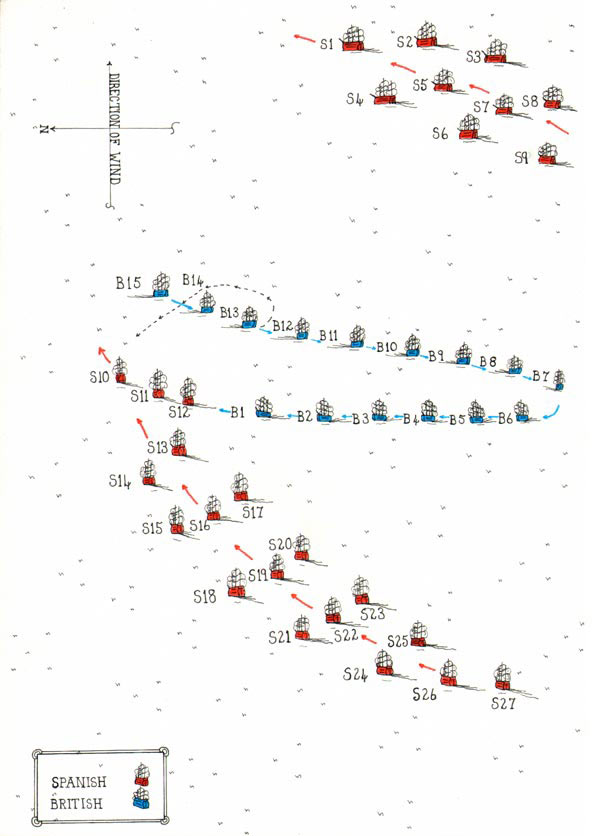
Map of the Battle of Cape St Vincent on 14th February 1797 in the Napoleonic Wars: map by John Fawkes
Royal Navy Ships: B1 Victory, B2 Britannia, B3 Barfleur, B4 Prince George, B5 Blenheim, B6 Namur, B7 Culloden, B8 Orion, B9 Colossus, B10 Irresistible, B11 Egmont, B12 Goliath, B13 Captain, B14 Excellent, B15 Diadem.
Spanish Navy Ships: S10 San Nicolas, S11 San Josef, S12 Santissima Trinidad, S13 Salvador del Mundo
Account of the Battle of Cape St Vincent:
On 4th February 1797, the Spanish Fleet set sail from Cartagena on the Mediterranean coast of Spain for Cadiz, the principal Atlantic port, with the intention of sailing on to the French port of Brest to join the French Fleet. The combined fleets would create a powerful threat to Britain.
After passing through the straits of Gibraltar, strong easterly gales blew the Spanish Fleet out into the Atlantic. The Spanish Fleet headed back towards Cadiz, once the wind veered westerly.
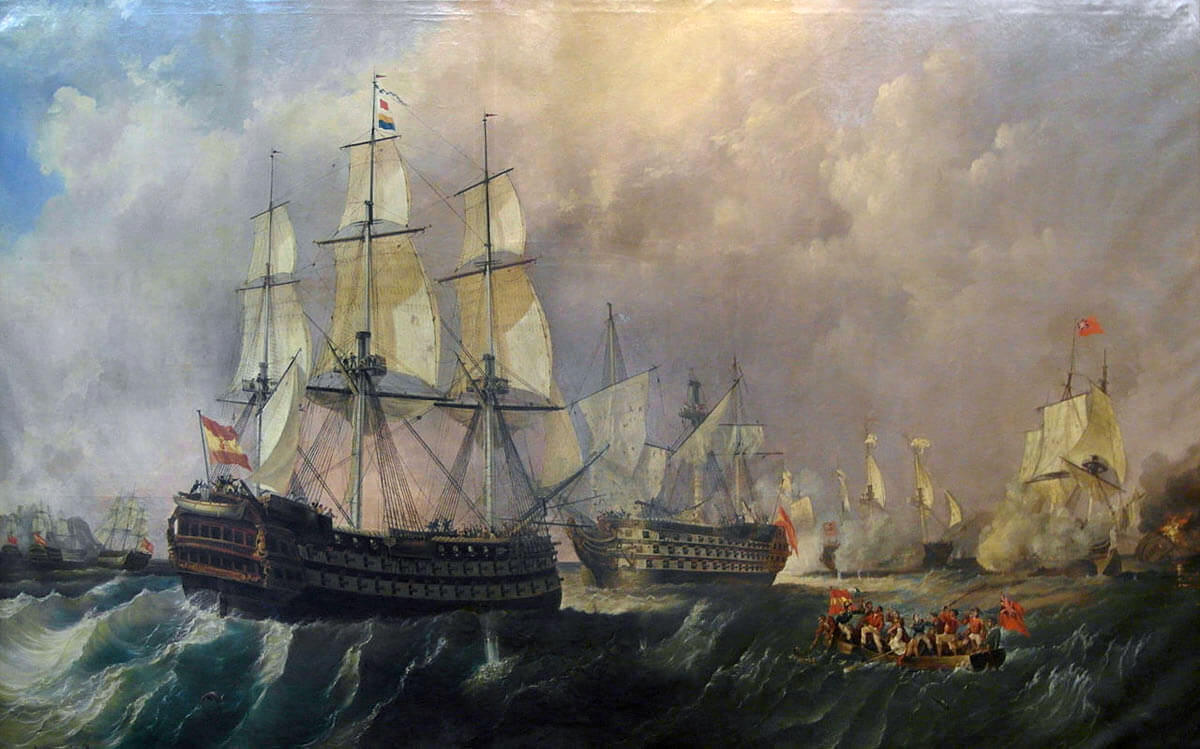
Infante Don Pelayo supporting Santissima Trinidad under attack by British ships at the Battle of Cape St Vincent on 14th February 1797 in the Napoleonic Wars
Admiral Don Joseph de Cordova, the Spanish commander, learnt from a passing American vessel that Admiral Sir John Jervis’s British Fleet off Cape St Vincent comprised only 9 ships. De Cordova with his 35 ships, including several of the largest battle ships at sea, resolved to take advantage of the enormous disparity and attack the British. However, after the American’s sighting 6 further ships joined the British Fleet.
The knowledge that the Spanish Fleet was at sea, with the likelihood of a fleet action, brought Commodore Horatio Nelson hurrying from Gibraltar in the frigate Minerve to join Jervis.
On the night of 11th February 1797, Nelson sailed unobserved through the Spanish Fleet.
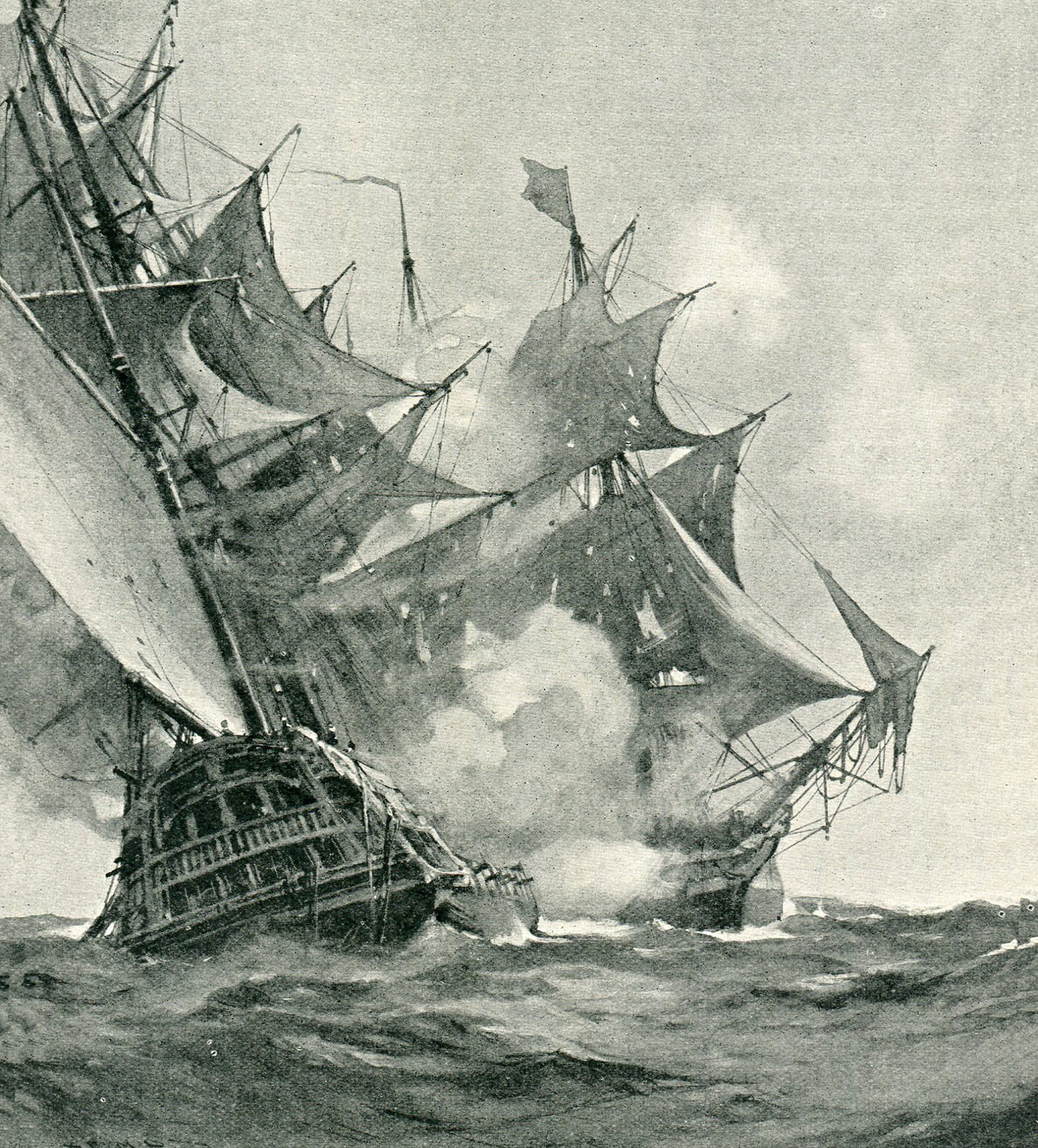
‘Let the weakest fend off’: Battle of Cape St Vincent on 14th February 1797 in the Napoleonic Wars: picture by C.M. Pedder
Reaching the British Fleet off Cape St Vincent on 13th February 1797, Nelson informed his admiral that the Spanish Fleet was approaching and Jervis prepared for battle. Nelson moved his commodore’s pendant from Minerve to HMS Captain, 74 guns.
Dawn on 14th February 1797 found the opposing fleets converging; the British sailing south, closed up, alerted by the repeated firing of Spanish signal guns during the foggy morning, the Spanish ships sailing east in irregular formation and scattered.
The mist concealed from the Spanish the true number of British ships, even once the sun had risen.
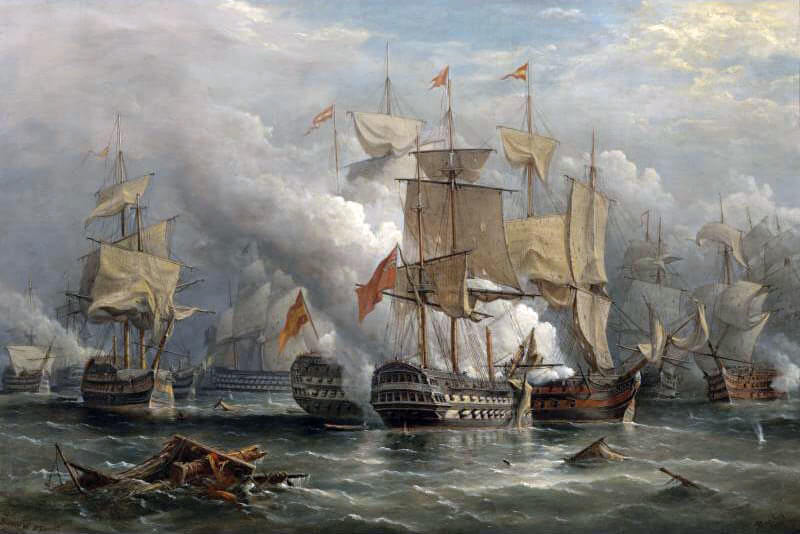
Battle of Cape St Vincent on 14th February 1797 in the Napoleonic Wars: picture by Richard Bridges Beechey
As De Cordova emerged from the fog, Jervis saw the number of Spanish ships that his fleet faced; twice the number of British ships. The Spanish ships were in two straggling divisions, one in front of the other.
Jervis’s plan, the forerunner of Nelson’s aggressive attack at Trafalgar, was to take his fleet in line ahead through the Spanish formation, cutting the Spanish Fleet in two.
The battle began at about 11.30am.
Jervis ordered the British Fleet into line ahead formed on the flagship, Victory, with Troubridge’s Culloden leading the line. Nelson in Captain was third from the rear.
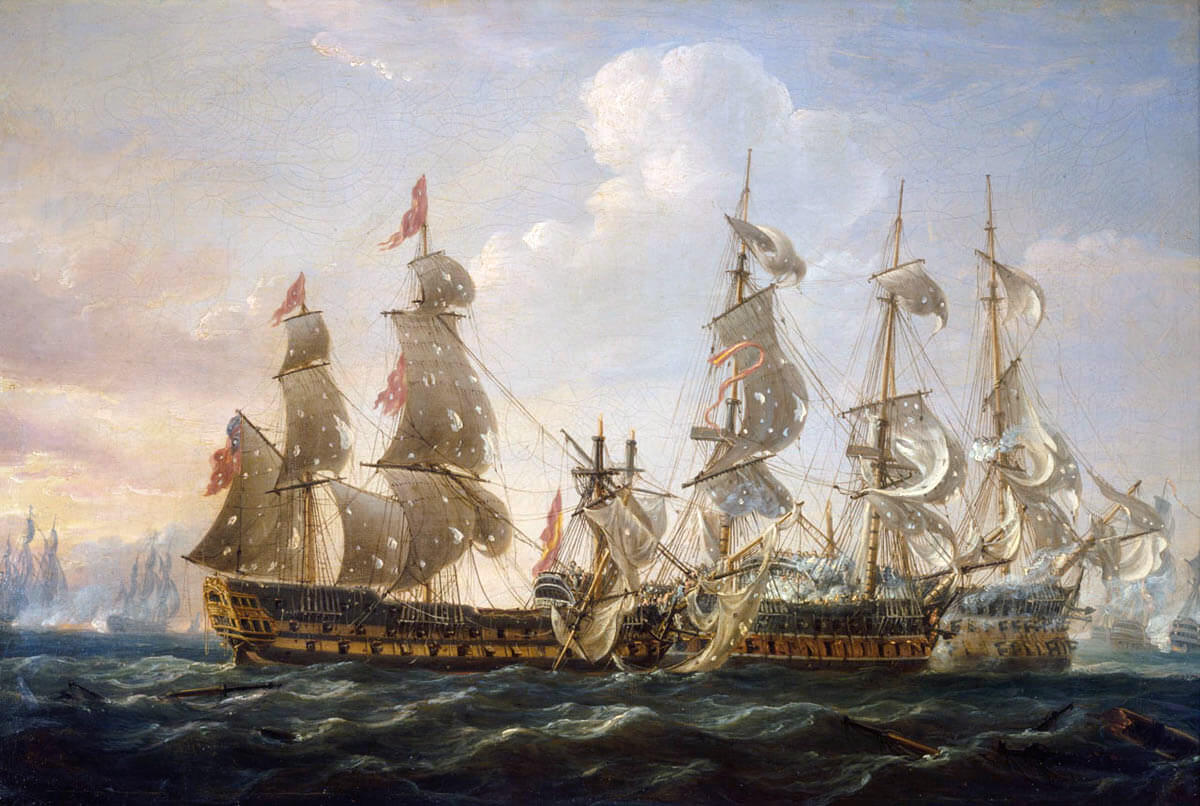
HMS Captain attacking the San Nicolas and the San Josef at the Battle of Cape St Vincent on 14th February 1797 in the Napoleonic Wars
Culloden headed for the gap between the two divisions of the Spanish Fleet, cutting off the leading 9 Spanish ships.
As the British ships entered the gap between the two Spanish squadrons, Culloden opened fire, followed by the succeeding ships, the guns being double shotted for the first broadsides.
Each of the two Spanish divisions turned to the north, apparently to sail down the flanks of the British Fleet and escape. To conform Culloden tacked to lead the British line in pursuit of the larger Spanish division.
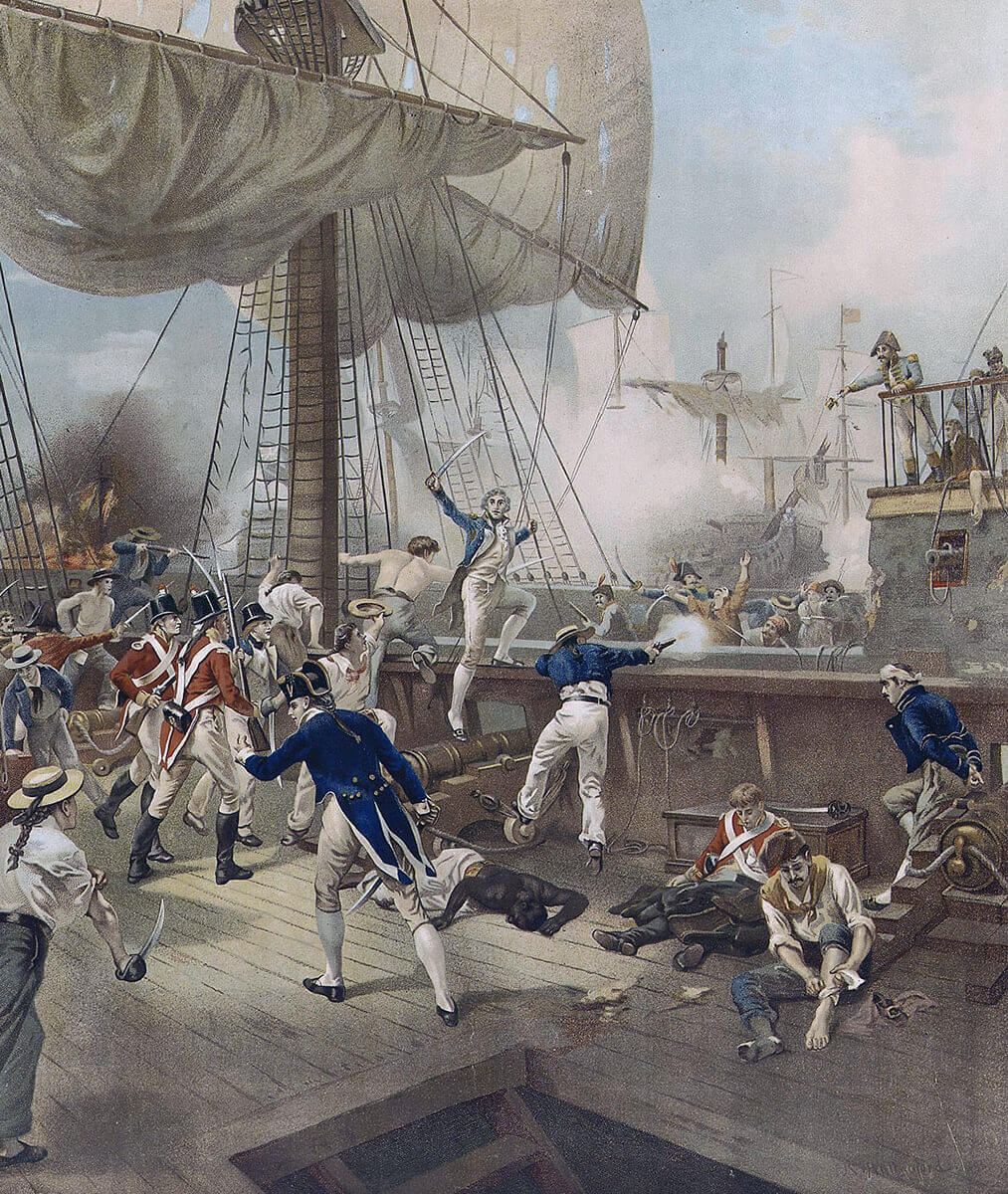
‘All Hands to Board’: Nelson boarding the San Nicolas at the Battle of Cape St Vincent on 14th February 1797 in the Napoleonic Wars: picture by Robert Hillingford
Immediately the difficulty became apparent to Nelson at the rear of the line: The British ships would be forced to pursue the Spanish, their admiral now aware that the British Fleet was significantly stronger than he had expected, even though his force was double its strength. It was unlikely that the pursuit could produce the decisive battle Jervis looked for.
Nelson acted in the ruthlessly aggressive and decisive manner that was his hallmark. Disobeying the admiral’s order to sail in line ahead conforming to Victory, Nelson turned the 74 gun Captain hard to port and, cutting back through the British line between Diadem and Excellent, sailed straight for the van of the Spanish division, attacking the 130 gun Santissima Trinidad, the largest ship afloat and the Spanish flagship.
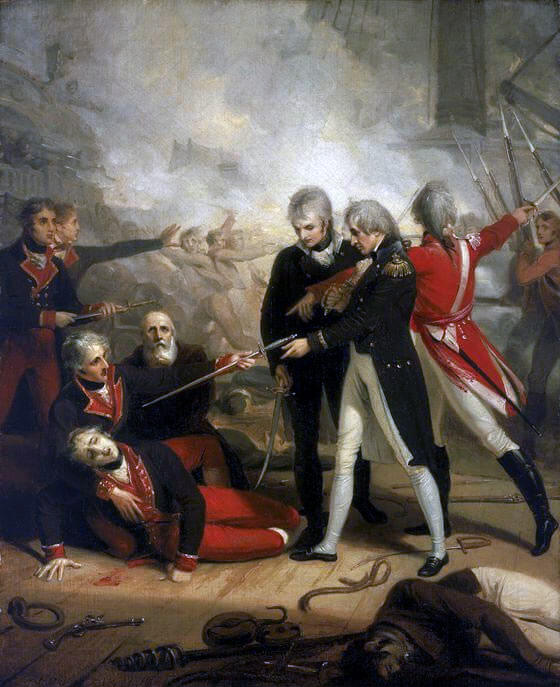
Nelson accepting the surrender of the San Nicolas at the Battle of Cape St Vincent on 14th February 1797 in the Napoleonic Wars: picture by R. Golding
Santissima Trinidad, joined by San Josef, 112 guns, Salvador del Mundo, 112 guns, San Nicolas, 80 guns and San Isidoro, 74 guns, engaged Captain.
Nelson’s ship was quickly incapacitated by the heavy Spanish gunfire.
Culloden, leading the British Fleet in pursuit of the Spanish, rushed to Nelson’s assistance, as did the last ship in the line, Excellent, the three British ships battling with the van of the Spanish division until the remaining British ships came up and the engagement became general.
Blenheim, 90 guns, joined the action between the three British ships, Captain, Culloden and Excellent, and their Spanish adversaries, accompanied by Diadem.
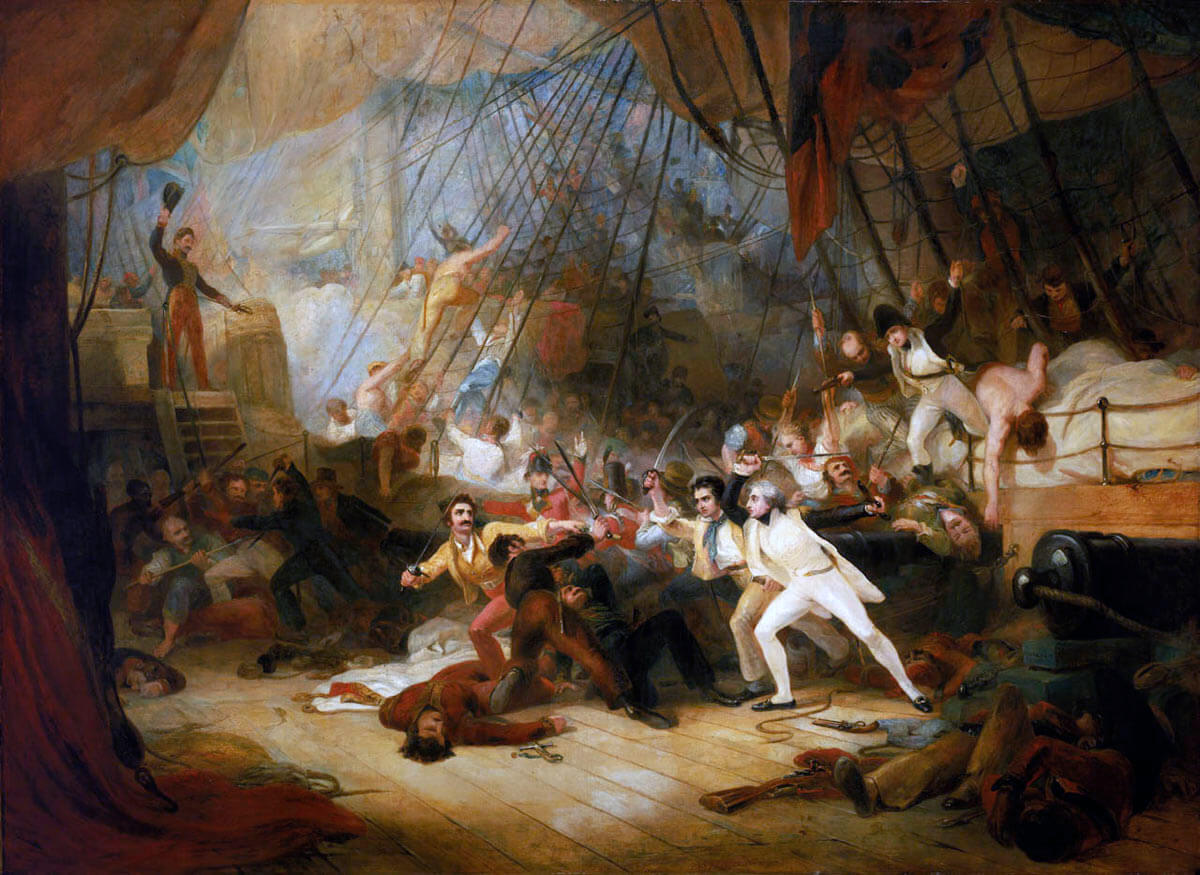
Nelson boarding the San Josef at the Battle of Cape St Vincent on 14th February 1797 in the Napoleonic Wars: picture by George Jones
Excellent engaged Salvador del Mundo and San Isidoro, causing each of these ships to cease action and haul down their colours. Collingwood on Excellent pushed on without securing the two ships to assist the hard pressed Captain.
Collingwood engaged the 80 gun San Nicolas with a heavy fire from a distance of 10 feet, causing the Spanish ship to swing away abruptly and foul the 112 gun, three decker San Josef, before Collingwood took Excellent on to engage Santissima Trinidad.
Nelson saw his further opportunity. Although the Spanish broadsides had dismasted Captain, Nelson directed Captain Miller to put the ship alongside the damaged San Nicolas and himself led a strong boarding party onto the Spanish ship.

Nelson boarding the San Josef at the Battle of Cape St Vincent on 14th February 1797 in the Napoleonic Wars
Among the boarders were soldiers from the 69th Regiment and several ‘Old Agamemnons’.
The captain of San Nicolas was in the act of surrendering to Nelson, after a vigorous struggle, when the crew of San Josef in the towering ship alongside opened fire on the deck. Calling for reinforcements from Captain, Nelson boarded the second Spanish ship and took her, receiving the surrender from the captain, the admiral being a casualty.
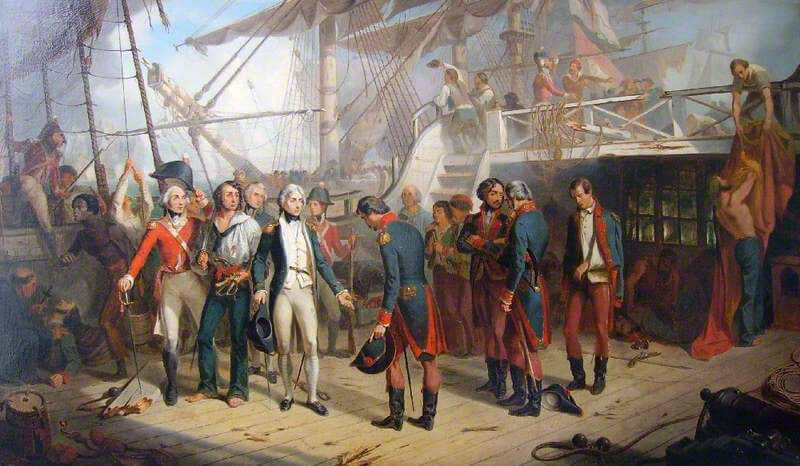
Nelson accepting the surrender of the San Josef at the Battle of Cape St Vincent on 14th February 1797 in the Napoleonic Wars
Looking to take further part in the battle, Nelson transferred to Minerve and called for a launch to take him to the nearest ship of the line, Irresistible. By the time Nelson reached Irresistible, the battle was ending and the Spanish Fleet was heading for Cadiz.

Nelson accepting the surrender of the San Josef at the Battle of Cape St Vincent on 14th February 1797 in the Napoleonic Wars: picture by Daniel Orme
The heavy damage to the British ships and the presence of the unengaged 9 ships of the Spanish van ruled out any pursuit and Jervis had to be satisfied with the capture of 4 Spanish ships, 2 being first rates, while lamenting that no other captain had taken the initiative to capture the badly damaged Santissima Trinidad in the way Nelson had taken the San Nicolas and the San Josef.
The action was a decisive victory. The Spanish Fleet failed to join the French in Brest in its threat to mainland Britain, remaining bottled up in Cadiz by Jervis’s resumed blockade.
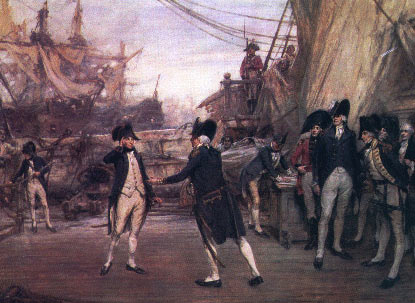
Nelson greeted by Admiral Jervis after the the Battle of Cape St Vincent on 14th February 1797 in the Napoleonic Wars
Nelson went on board Victory to report to Jervis who hugged and thanked him for the brilliant exercise of initiative that had led to such a success.
Casualties at the Battle of Cape St Vincent: British casualties were 300 men killed and wounded. Spanish casualties were 1,000 men killed, wounded and captured.
The captured Spanish ships were San Josef, Salvador del Mundo, San Nicolas and San Isidoro.
The Spanish flagship Santissima Trinidad and several other Spanish ships were badly damaged.
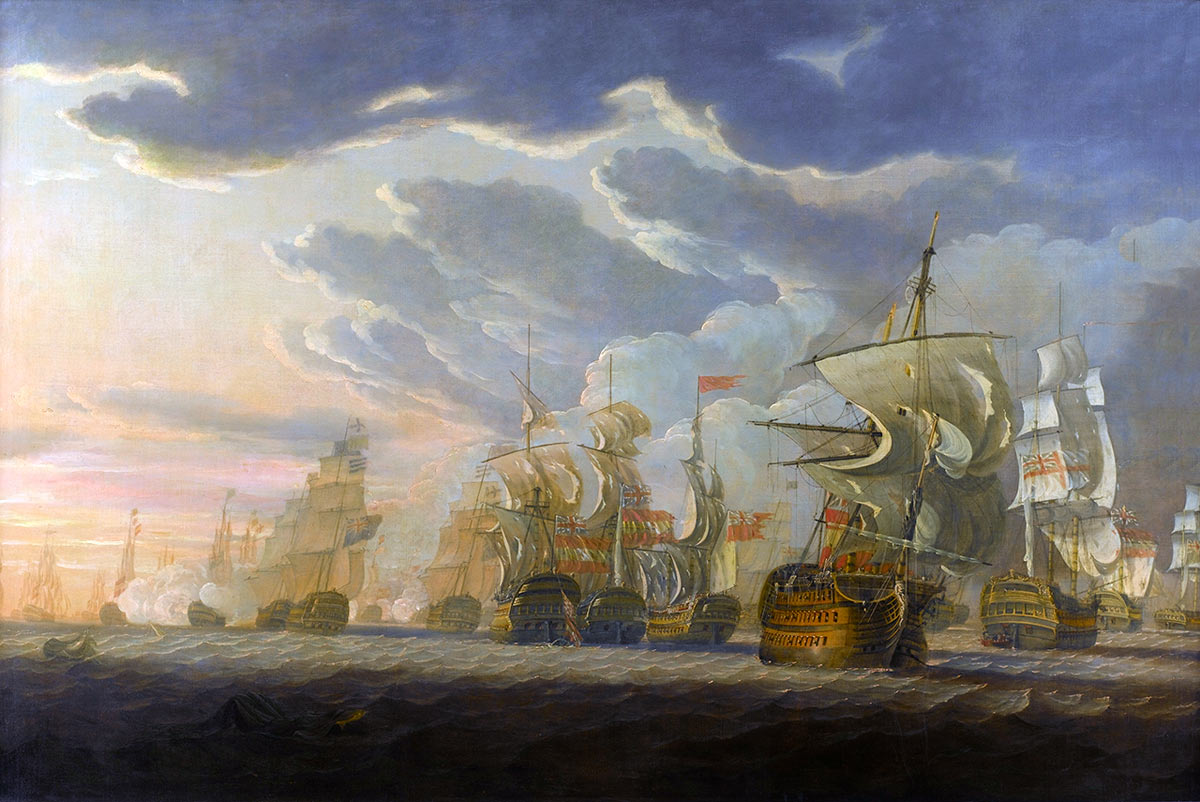
Spanish ships San Josef and San Nicolas flying the Union Jack after surrendering to HMS Captain at the Battle of Cape St Vincent on 14th February 1797 in the Napoleonic Wars: picture by Robert Clevely
Anecdotes and traditions from the Battle of Cape St Vincent:
- At the beginning of the battle, as the Spanish Fleet emerged from the mist, Jervis listened to the reports from his flag captain reading the signals flown by the British frigate Bonne Citoyenne: Flag Captain: ‘There are 8 sail of the line, Sir John.’ Jervis: ‘Very well sir.’ Flag Captain: ‘There are 20 sail of the line, Sir John.’ Jervis: ‘Very well sir.’ Flag Captain: ‘There are 25 sail of the line…… 27 sail of the line…. Sir John, near double our own.’ Jervis: ‘Enough of that, sir. If there are 50 sail, I will go through them.’
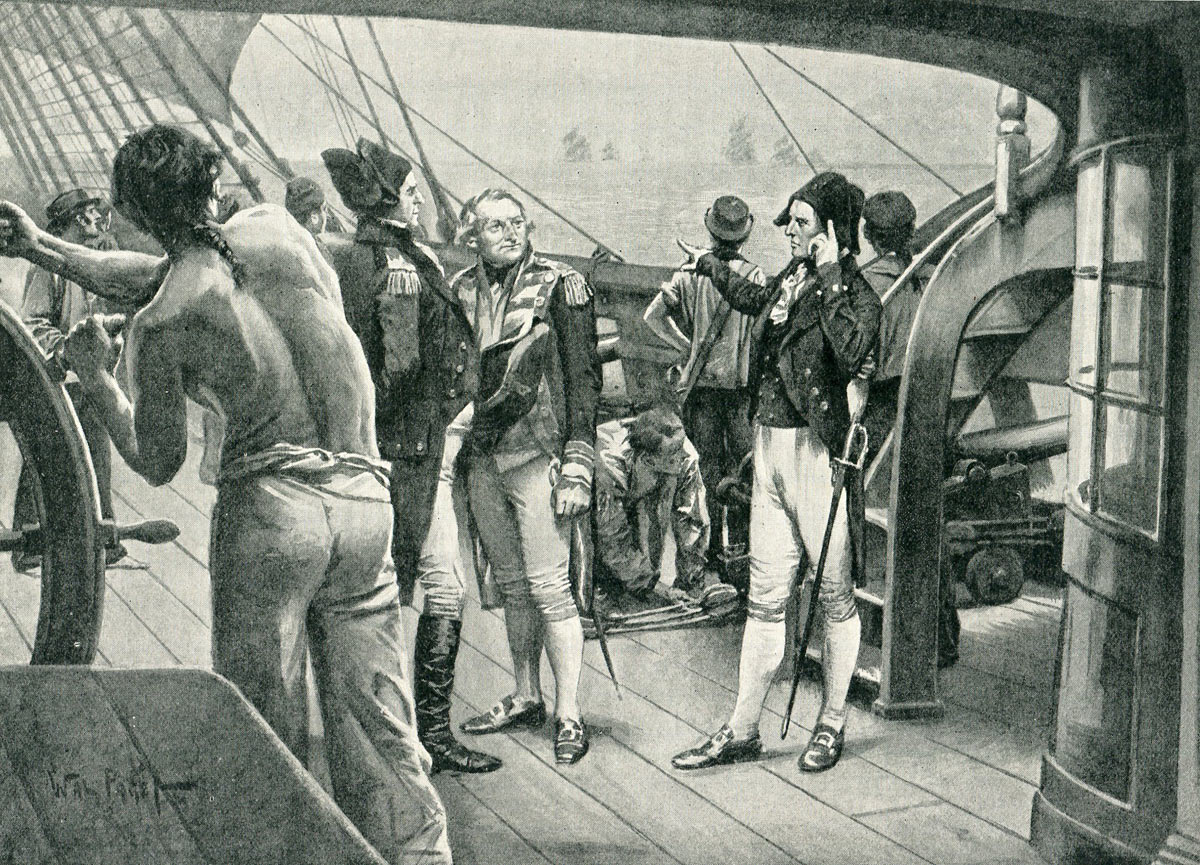
‘There are 25 sail of the line…… 27 sail of the line…. Sir John, near double our own.’ Jervis: ‘Enough of that, sir. If there are 50 sail, I will go through them’: Battle of Cape St Vincent on 14th February 1797 in the Napoleonic Wars: picture by Wal Paget
- Nelson led the boarding party onto San Nicolas with the cry ‘Westminster Abbey or victory.’ He used a similar form of words at the Battle of the Nile, perhaps showing his obsession with a glorious death in battle, finally achieved at Trafalgar.
- The Royal Navy referred to Nelson’s extraordinary feat in capturing the two Spanish ships as ‘Nelson’s Patent Bridge for Boarding’ i.e. capturing one enemy ship by crossing another.
- Admiral Sir John Jervis became Earl St Vincent, the title selected for him by King George III. The other admirals received baronetcies or, in Waldegrave’s case, an Irish peerage. Nelson was made a Companion of the Bath, having specifically asked not to be made a baronet due to his lack of means. Notification of his promotion to Rear Admiral of the Blue arrived immediately after the battle.
- The Spanish admiral was arrested on his arrival at Cadiz, taken under military escort to Madrid and dismissed the service by King Charles IV. Several of the Spanish captains were tried by court martial and dismissed or reduced in rank.
- The captured Spanish ships were taken into the Royal Navy, keeping, in accordance with tradition in most navies, their original names.

His Majesty’s Ship San Josef in Plymouth harbour after her capture at the Battle of Cape St Vincent on 14th February 1797 in the Napoleonic Wars
References for the Battle of Cape St Vincent:
Life of Nelson by Robert Southey
Nelson by Carola Oman
British Battles on Land and Sea edited by Sir Evelyn Wood
British Battles by Grant
The previous battle in the British Battles series is the Sortie from Bayonne
The next battle of the Napoleonic Wars is the Battle of the Nile