The battle of the Second Afghan War, fought on 2nd December 1878, in which General Frederick Roberts forced the western end of the Khyber Pass
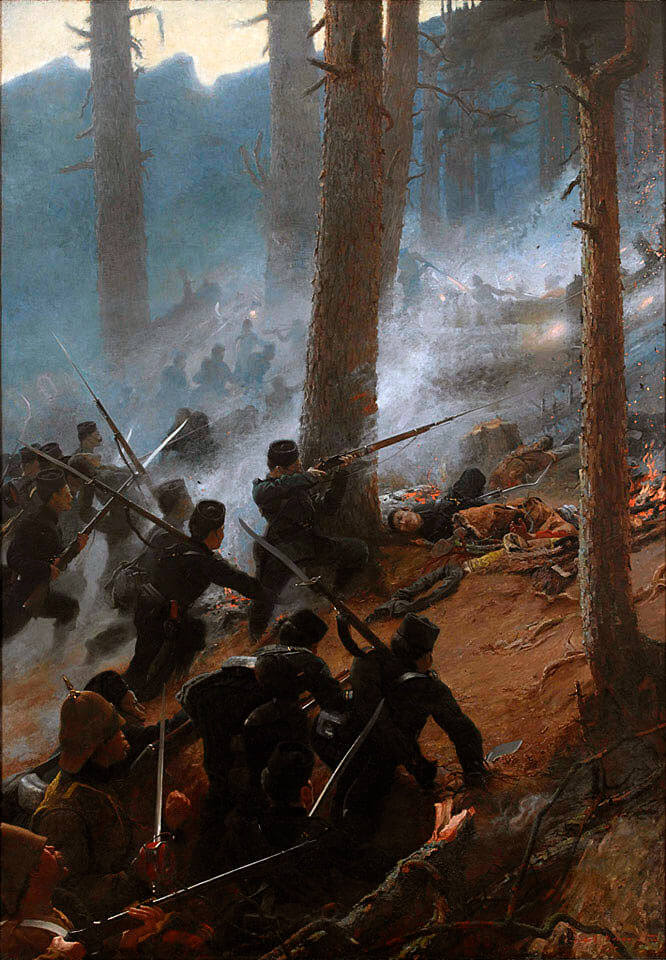
5th Gurkhas storming the Spingawi at the Battle of Peiwar Kotal on 2nd December 1878 in the Second Afghan War: picture by Vereker Hamilton
The previous battle of the Second Afghan War is the Battle of Ali Masjid
The next battle of the Second Afghan War is the Battle of Futtehabad
To the Second Afghan War index
Battle: Peiwar Kotal.
War: Second Afghan War.
Date of the Battle of Peiwar Kotal: 2nd December 1878.
Place of the Battle of Peiwar Kotal: At the western end of the Kurrum Valley on the border between Afghanistan and India.
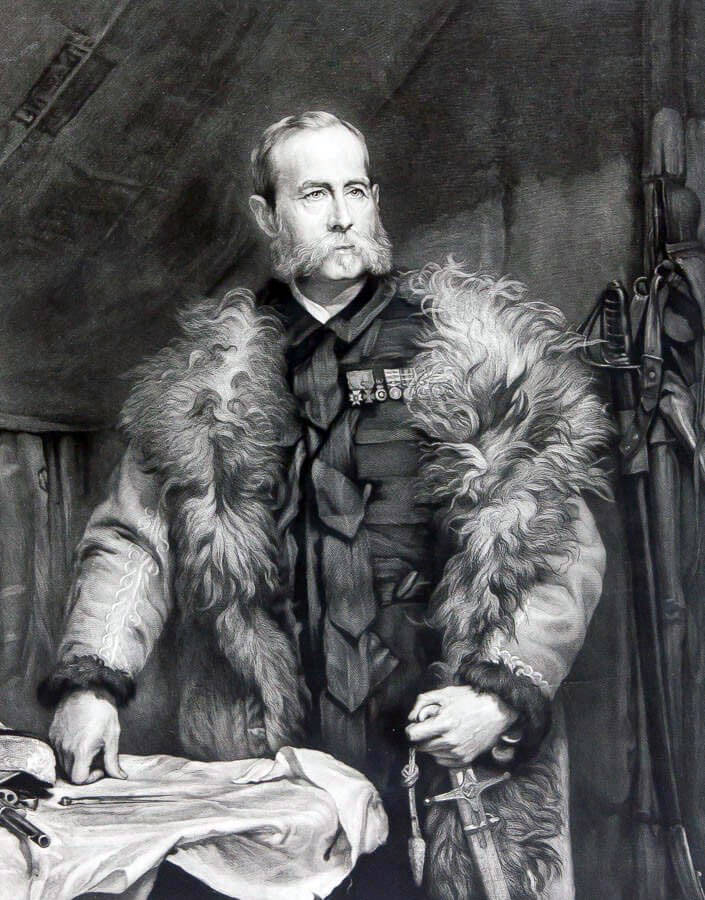
Major General Sir Frederick Roberts VC, British and Indian commander at the Battle of Peiwar Kotal on 2nd December 1878 in the Second Afghan War
Combatants at the Battle of Peiwar Kotal: British and Indian troops against Afghan troops and tribesmen.
Generals at the Battle of Peiwar Kotal: Major General Frederick Roberts VC against an unknown Afghan commander.
Size of the armies at the Battle of Peiwar Kotal: General Robert’s Kurrum Field Force comprised 4,000 men and 13 guns, against 4,000 Afghans with 25 guns.
Uniforms, arms and equipment at the Battle of Peiwar Kotal:
The British and Indian forces were made up, predominantly, of native Indian regiments from the armies of the three British presidencies, Bengal, Bombay and Madras, with smaller regional forces, such as the Hyderabad contingent, and the newest, the powerful Punjab Frontier Force.
The Mutiny of 1857 had brought great change to the Indian Army. Prior to the Mutiny, the old regiments of the presidencies were recruited from the higher caste Brahmins, Hindus and Muslims of the provinces of central and eastern India, principally Oudh. Sixty of the ninety infantry regiments of the Bengal Army mutinied in 1857 and many more were disbanded, leaving few to survive in their pre-1857 form. A similar proportion of Bengal Cavalry regiments disappeared.
The British Army overcame the mutineers with the assistance of the few loyal regiments of the Bengal Army and the regiments of the Bombay and Madras Presidencies, which on the whole did not mutiny. But principally, the British turned to the Gurkhas, Sikhs, Muslims of the Punjab and Baluchistan and the Pathans of the North-West Frontier for the new regiments with which Delhi was recaptured and the Mutiny suppressed.
After the Mutiny, the British developed the concept of ‘the Martial Races of India’. Certain Indian races were more suitable to serve as soldiers, went the argument, and those were, coincidentally, the races that had saved India for Britain. The Indian regiments that invaded Afghanistan in 1878, although mostly from the Bengal Army, were predominantly recruited from the martial races; Jats, Sikhs, Muslim and Hindu Punjabis, Pathans, Baluchis and Gurkhas.
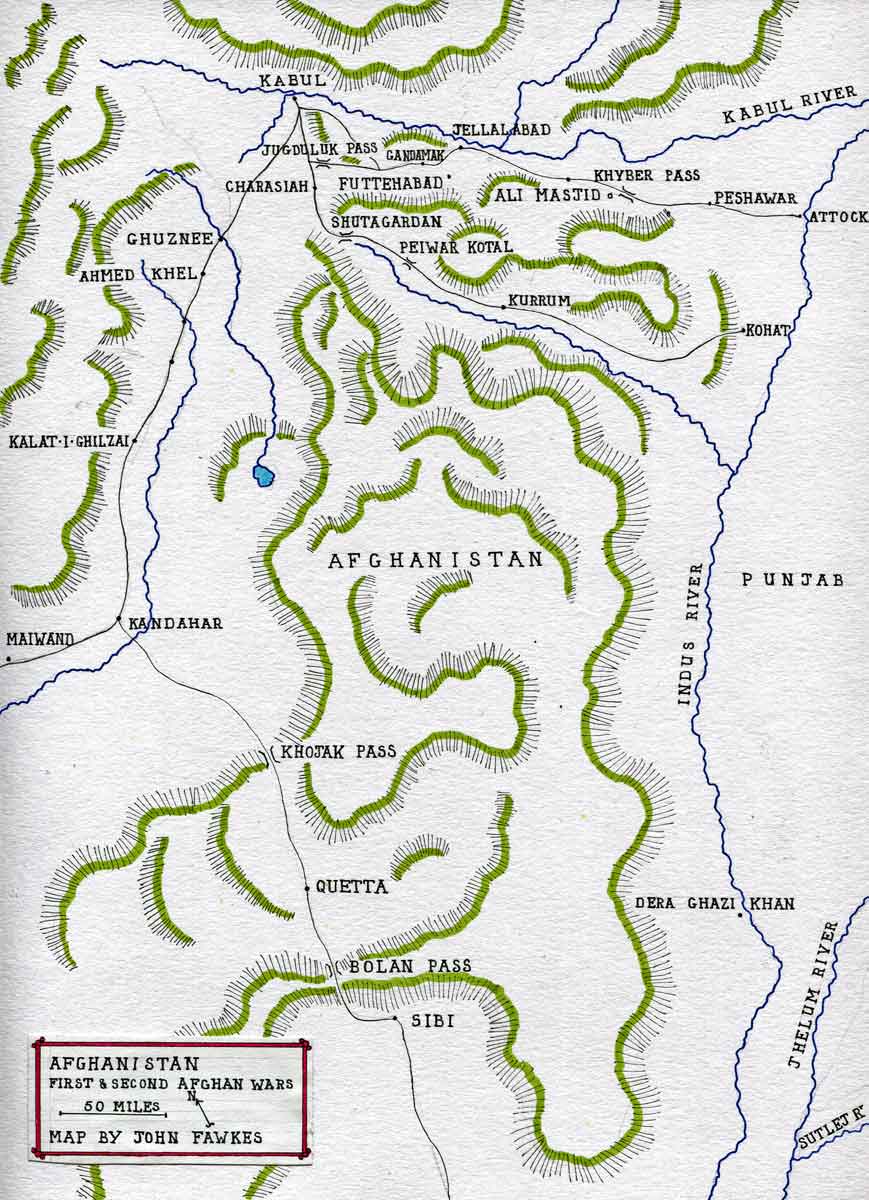
Map of Afghanistan by John Fawkes
Prior to the Mutiny, each Presidency army had a full quota of field and horse artillery batteries. The only Indian artillery units allowed to exist after the Mutiny were the mountain batteries. All the horse, field and siege batteries were, from 1859, found by the British Royal Artillery.
In 1878, the regiments were beginning to adopt khaki for field operations. The technique for dying uniforms varied widely, producing a range of shades of khaki, from bottle green to a light brown drab.
As regulation uniforms were unsatisfactory for field conditions in Afghanistan, the officers in most regiments improvised more serviceable forms of clothing.
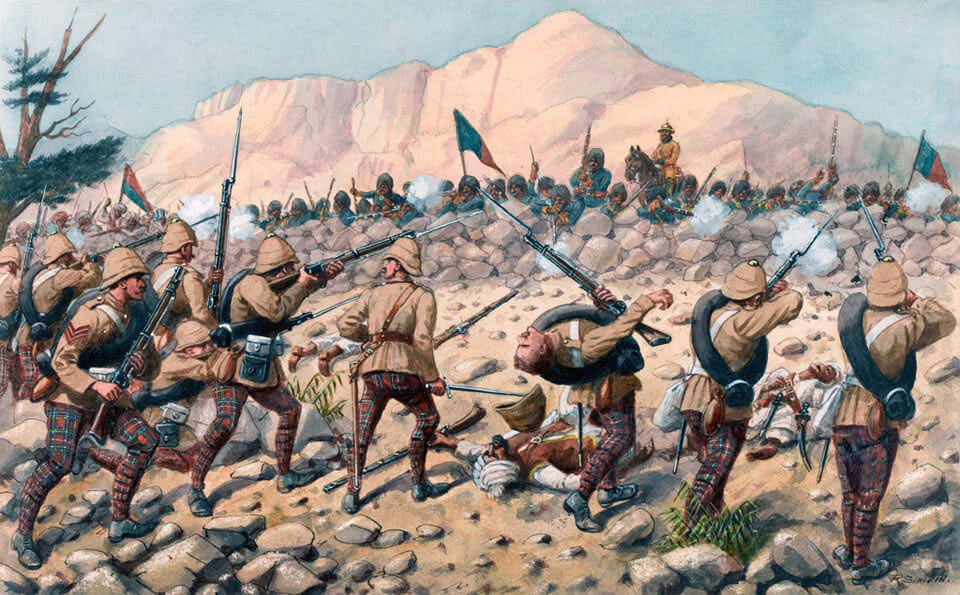
72nd Highlanders at the Battle of Peiwar Kotal on 2nd December 1878 in the Second Afghan War: picture by Richard Simkin
Every Indian regiment was commanded by British officers, in a proportion of some 7 officers to 650 soldiers, in the infantry. This was an insufficient number for units in which all tactical decisions of significance were taken by the British and was particularly inadequate for less experienced units.
The British infantry carried the single shot, breech loading, .45 Martini-Henry rifle. The Indian regiments still used the Snider; also a breech loading single shot rifle, but of older pattern and a conversion of the obsolete muzzle loading Enfield weapon.
The cavalry were armed with sword, lance and carbine, Martini-Henry for the British troopers, Snider for the Indian sowars.
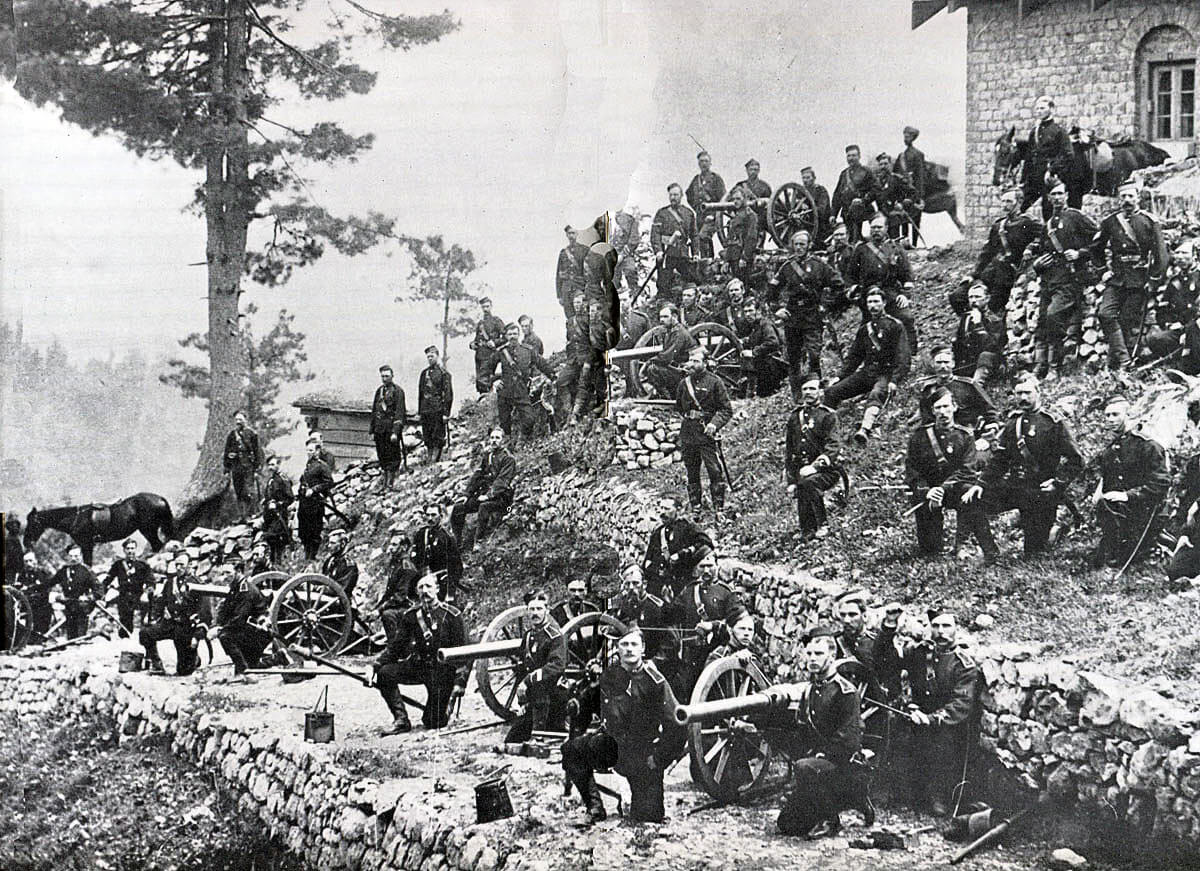
British mountain gun battery: Battle of Peiwar Kotal on 2nd December 1878 in the Second Afghan War
The British artillery, using a variety of guns, many smooth bored muzzle loaders, was not as effective as it could have been, if the authorities had equipped it with the breech loading steel guns being produced for European armies. Artillery support was frequently ineffective and on occasions the Afghan artillery proved to be better equipped than the British.
The army in India possessed no higher formations above the regiment in times of peace, other than the staffs of static garrisons. There was no operational training for staff officers. On the outbreak of war, brigade and divisional staffs had to be formed and learn by experience.
The British Army had, in 1870, replaced long service with short service for its soldiers. The system was not yet universally applied, so that some regiments in Afghanistan were short service and others still manned by long service soldiers. The Indian regiments were all manned by long service soldiers. The universal view seems to have been that the short service regiments were weaker both in fighting effectiveness and disease resistance than the long service.
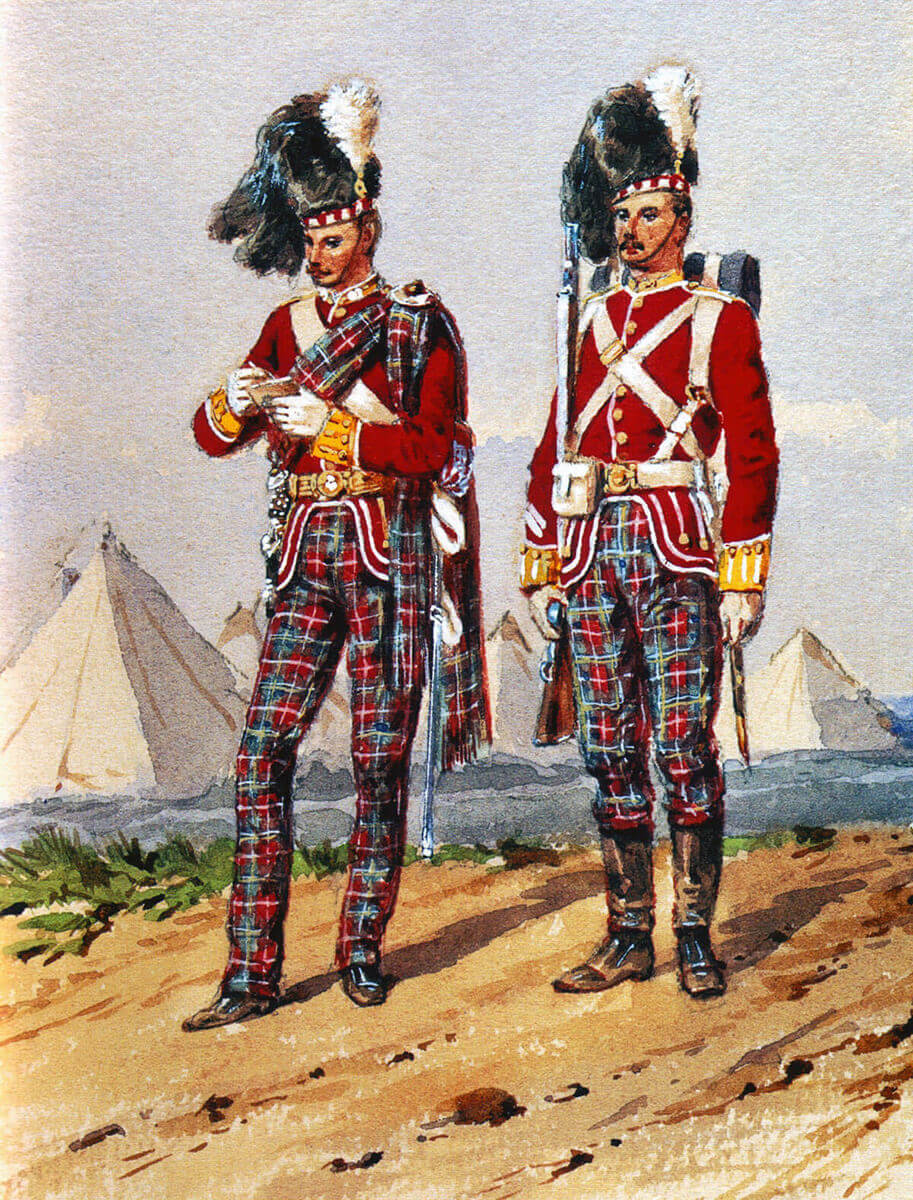
72nd Highlanders, the Duke of Albany’s Own, in Home Service Dress: Battle of Peiwar Kotal on 2nd December 1878 in the Second Afghan War: picture by Orlando Norie
Winner of the Battle of Peiwar Kotal: The British and Indians.
British and Indian Regiments at the Battle of Peiwar Kotal:
British Regiments:
10th Hussars, now the King’s Royal Hussars
Royal Artillery
Royal Horse Artillery
8th King’s Regiment, later the King’s Liverpool Regiment and now the King’s Regiment.
72nd Highlanders, later the Seaforth Highlanders and now the Highlanders.
Indian Regiments:
12th Bengal Cavalry
5th Punjab Cavalry (later 25th Cavalry)
21st Bengal Native Infantry (Punjabis)
23rd Bengal Native Infantry (Punjab Pioneers)
29th Bengal Native Infantry (Punjabis)
2nd Punjab Infantry, Punjab Frontier Force.
5th Punjab Infantry, Punjab Frontier Force (Vaughan’s Rifles(FF)
5th Gurkhas
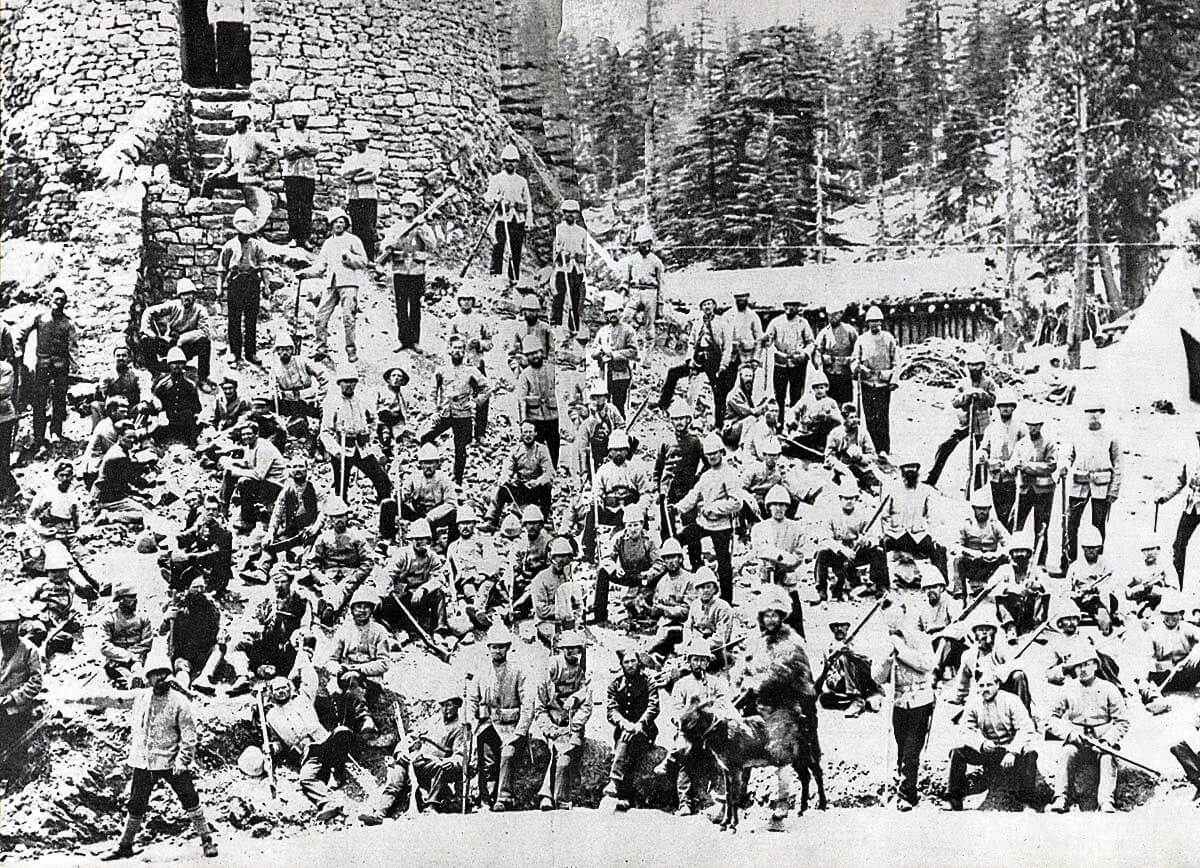
8th King’s Regiment in Afghanistan after the Battle of Peiwar Kotal on 2nd December 1878 in the Second Afghan War
The order of battle of the Kurrum Field Force at the Battle of Peiwar Kotal:
Commander: Major General Frederick Roberts VC.
1 Squadron, 10th Hussars.
12th Bengal Cavalry.
F Battery RHA (on elephants)
3 guns of G Battery RA.
No 1 Mountain Battery.
First Brigade: commanded by Brigadier-General Cobbe.
2nd Battalion HM 8th Foot.
29th Bengal Native Infantry.
5th Punjab Infantry, Punjab Frontier Force.
Second Brigade: commanded by Brigadier-General Thelwall.
HM 72nd (Albany) Highlanders.
23rd Bengal Native Infantry (Pioneers).
2nd Punjab Infantry, Punjab Frontier Force.
5th Gurkhas.
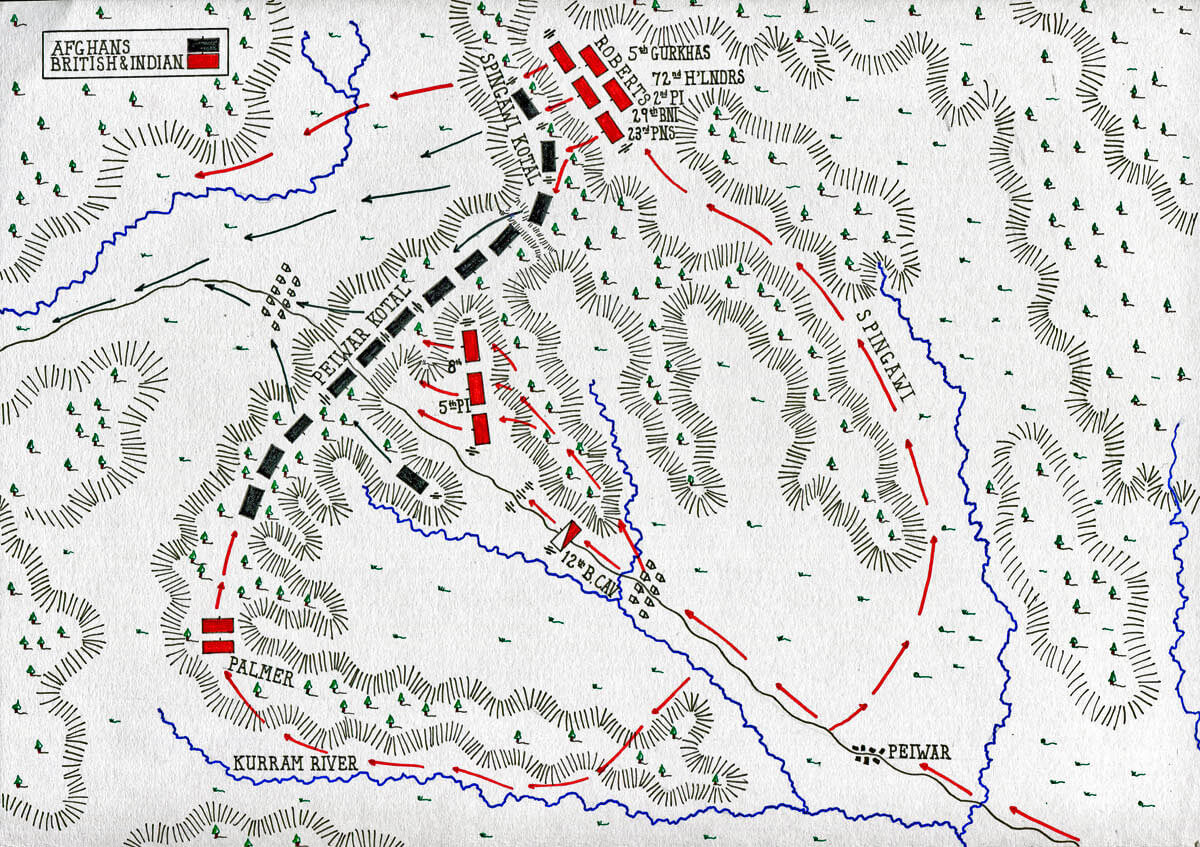
Map of the Battle of Peiwar Kotal on 2nd December 1878 in the Second Afghan War: map by John Fawkes
Account of the Battle of Peiwar Kotal:
With the expiry of the ultimatum to the Ameer of Afghanistan (see the account in the Battle of Ali Masjid) on 21st November 1878 Major General Roberts VC and his Kurrum Field Force crossed the Kurrum River, upstream of its concentration point at Thal.
The advance guard of 29th BNI and the mountain gun battery hurried to catch the Afghan garrison at Thal, but the Afghans marched away in the night, up the Kurrum Valley towards Peiwar Kotal at the head of the valley.
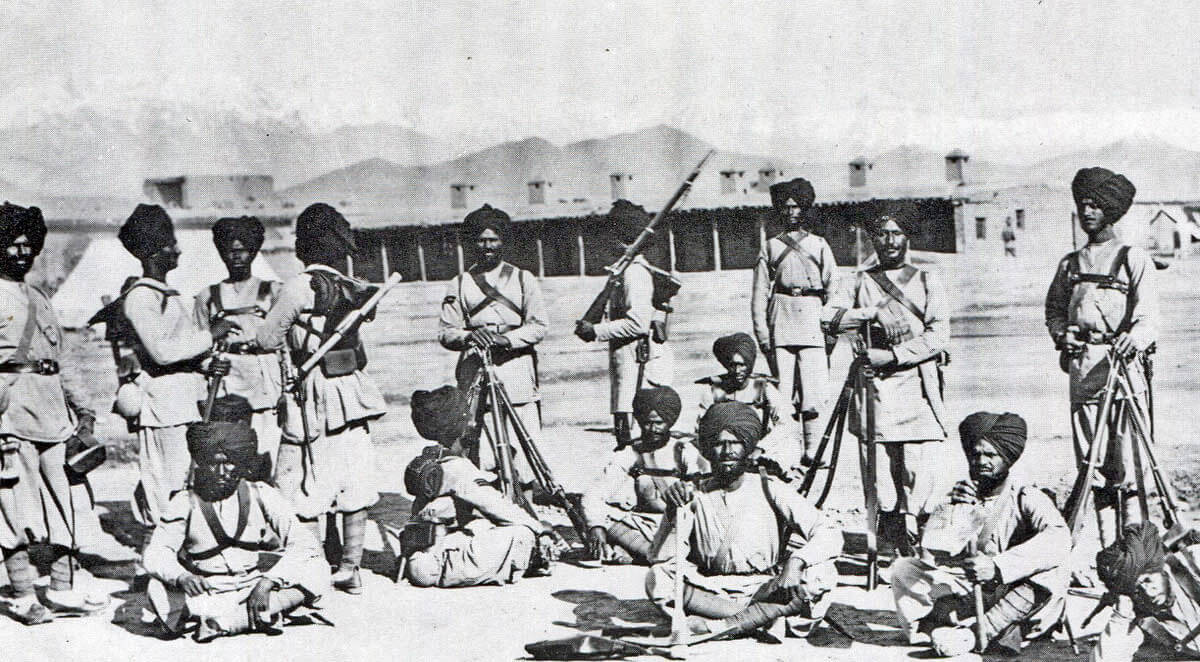
Soldiers from the 23rd Pioneers holding the Indian Order of Merit: Battle of Peiwar Kotal on 2nd December 1878 in the Second Afghan War
As Roberts’ force moved up the Kurrum Valley, the Afghans, 1,800 men with 12 guns, retreated before them until they reached Peiwar Kotal, joining the existing garrison, so that 4,000 Afghans and 23 guns held the four-mile-long fortified position centred on the Kotal or mountain pass.
On 27th November 1878, the British and Indian troops concentrated at Kurrum Fort and, the next day, began their advance on the Peiwar Kotal pass, beyond which lay the central plain of Afghanistan.
The Kurrum Field Force advanced up the pass in two columns comprising; 13th Bengal Cavalry, HM 8th Foot, HM 72nd Highlanders, 23rd BNI and 29th BNI, 2nd and 5th Punjab Infantry, 5th Gurkhas, F Battery RHA and the mountain battery.
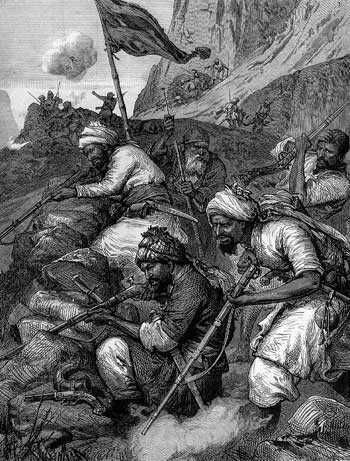
Afghan tribesmen: Battle of Peiwar Kotal on 2nd December 1878 in the Second Afghan War
Early on 28th November 1878, the force moved off to attack Peiwar Kotal, advancing up a wide slope and halting beneath the Kotal by a steep ridge, up which wound the track to the Afghan position. At the top, the track followed a dip in the high ground, the mountainsides all around heavily forested.
The sides of the valley overlooked the approach to the slope, enabling the Afghans to fire down on the British and Indian troops from each flank and the front, as they made their final advance.
Roberts hoped to take the Kotal before the Afghans could organise a full defence, the 5th Punjab Infantry and the 29th Bengal Native Infantry pushing forward along the southern side of the valley. They quickly came under a heavy fire and the attack faltered. The 5th Gurkhas moved forward in support and the three regiments pulled back down the valley and made camp. During the night, the Afghans moved a gun along a spur and opened fire, forcing the regiments to break camp and withdraw still further.
In the light of the heavy resistance, Roberts resolved on an indirect attack, leaving a small force to pin the Afghans with a feint advance on the Peiwar Kotal.
To disguise the flank movement, the British and Indians established a gun line in the valley beneath the Kotal and officers bustled about, apparently reconnoitring the Afghan positions. Late on 1st December 1878, Roberts led a powerful force into the neighbouring valley to the north of the Kurrum, the Spingawi Valley, leading to the Spingawi Kotal; the force comprising the 72nd Highlanders, 23rd and 29th Bengal Native Infantry, 5th Gurkhas, 2nd Punjab Infantry, 1st Mountain Battery and 3 more guns of G Battery; 900 men in all.
A second, smaller force of irregulars under Major Palmer, conducted a diverting operation in the mountains to the South of the Afghan positions on the Peiwar Kotal.
Movement up the steep Spingawi Valley was slow and several shots were fired unnecessarily by Indian troops. Roberts formed the view that Pathan soldiers in the leading regiment, the 29th BNI, were attempting to sabotage the attack and ordered the 5th Gurkhas into the lead.
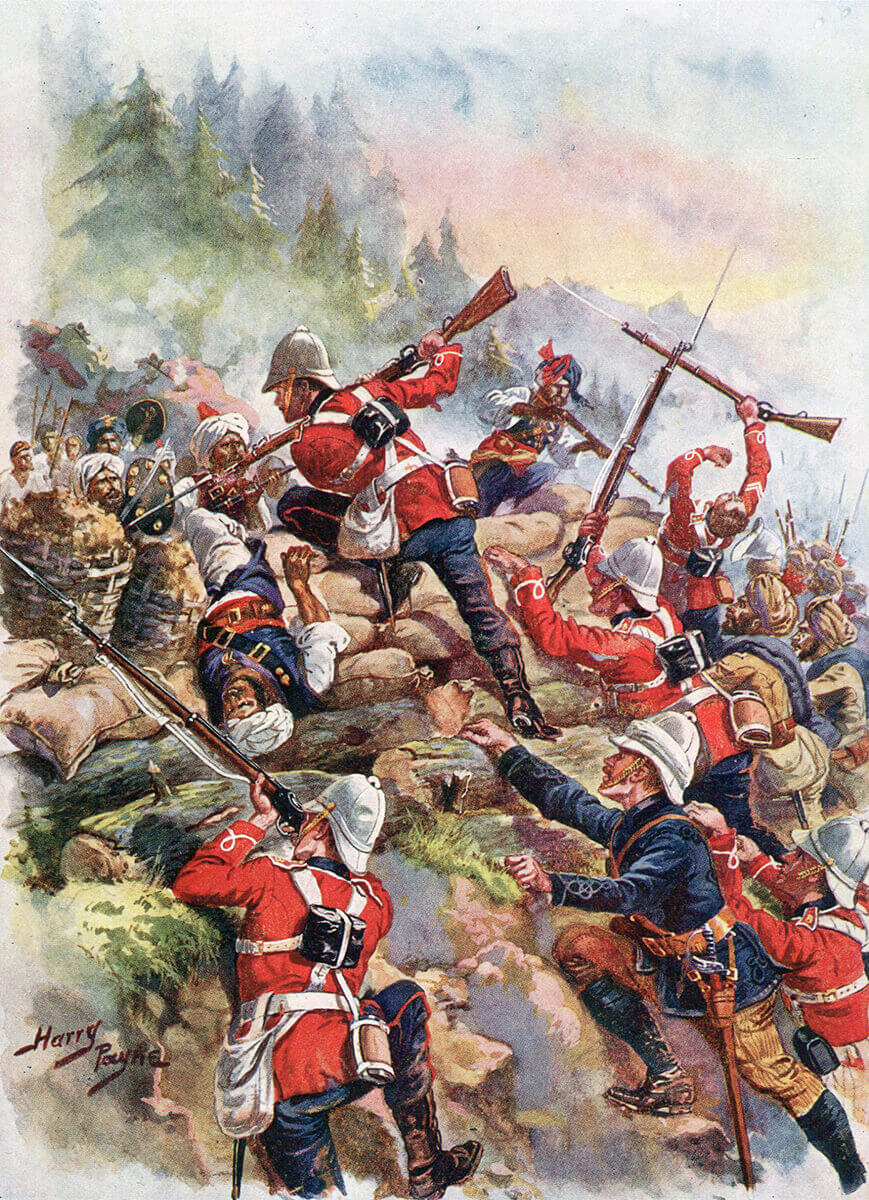
British 8th Regiment storming the Afghan positions at the Battle of Peiwar Kotal on 2nd December 1878 in the Second Afghan War: picture by Harry Payne
In the dawn of 2nd December 1878, the 5th Gurkhas and 72nd Highlanders stormed the Spingawi Kotal defences, capturing two guns.
The British and Indian troops then attacked along the ridge into the main Afghan positions, heavy fighting developing, but found themselves blocked by a ravine held on the far side by the Afghans.
The troops in the Kurrum Valley continued to attack, making their way up the northern side of the valley until close to the Peiwar Kotal itself.
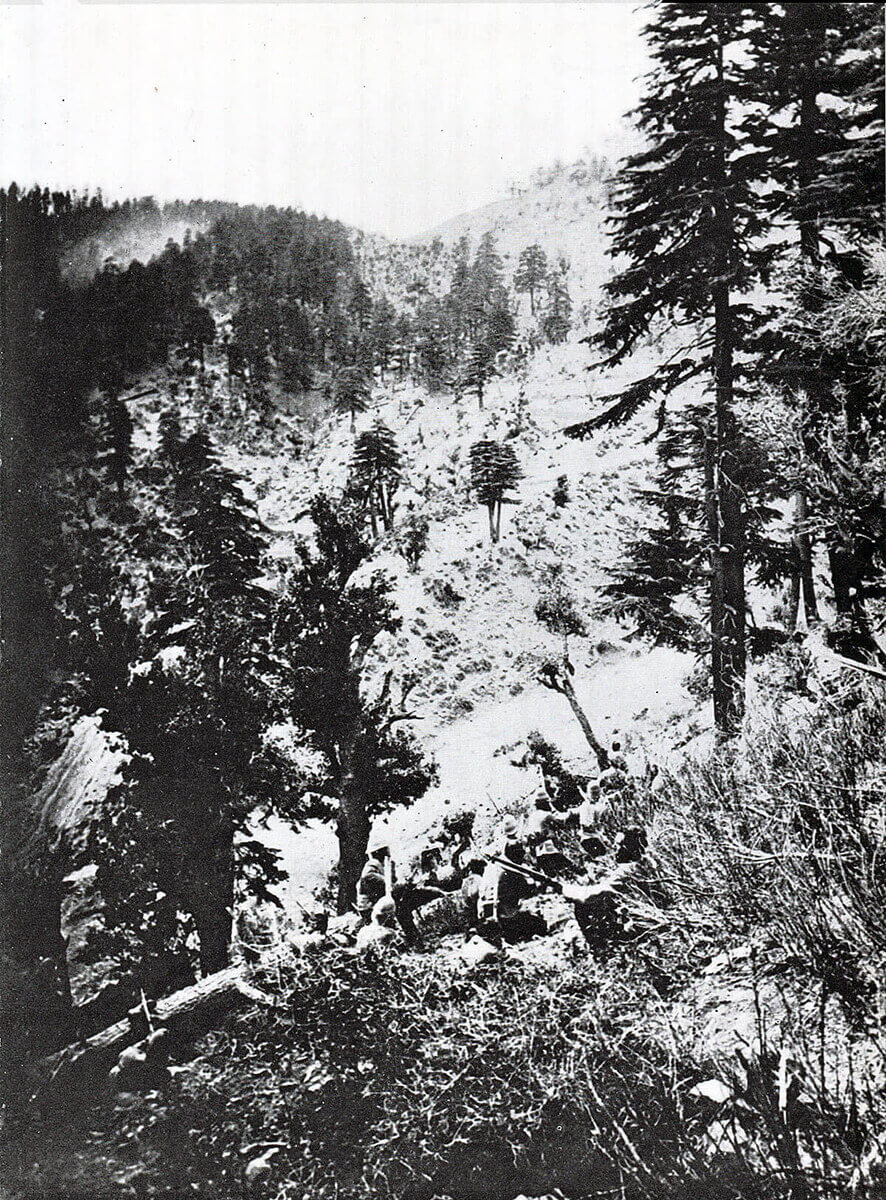
Attack on the Spingawi: Battle of Peiwar Kotal on 2nd December 1878 in the Second Afghan War
While the Gurkhas and Highlanders fought over the ravine, regiments from the Spingawi flanking attack felt their way further to the north and west, until they were behind the Afghans on the Peiwar Kotal. The mountain battery followed and opened fire on the Afghan camp and positions.
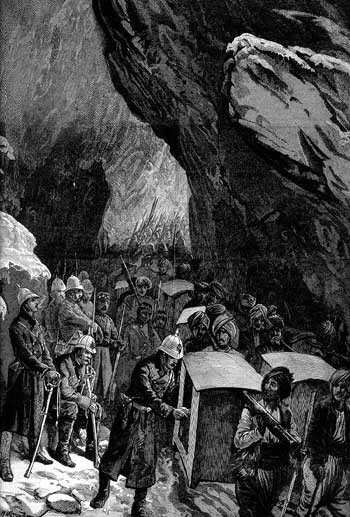
Casualties removed from the battlefield in dhoolies: Battle of Peiwar Kotal on 2nd December 1878 in the Second Afghan War
Roberts broke off the attack on the ravine and moved down the valley across the Afghan line of retreat. The fire slackened as the Afghan troops, seeing the threat to their retreat, streamed away down the track.
The 8th Foot pushed straight up onto the Peiwar Kotal, where they met Major Palmer’s levies coming up from the South. The Afghan positions on the Kotal had been taken.
The Afghan regulars retreated down the valley pursued by the 12th Bengal Cavalry, while the tribesmen dispersed into the hills.
Casualties at the Battle of Peiwar Kotal:
The British and Indian regiments suffered 92 casualties. The Afghans probably suffered around 200 casualties.
Follow-up to the Battle of Peiwar Kotal:
Roberts’ force spent four days collecting the stores and weapons left by the Afghans in the Peiwar Kotal position and sending the wounded back to Kurrum. On 6th December 1878, the force moved on to Ali Khel, from where Roberts reconnoitred the Shutagardan Pass. Robert’s Kurrum Valley Field Force then fell back from the exposed Shutagardan and wintered in the Peiwar and Kurrum positions. Once winter passed, Roberts gathered supplies and transport for the final advance on Kabul. As with Browne in the Khyber, Roberts had in fact captured sufficient territory to compel the Ameer of Afghanistan to sue for peace, which course the new Ameer Yakoub Khan duly took.
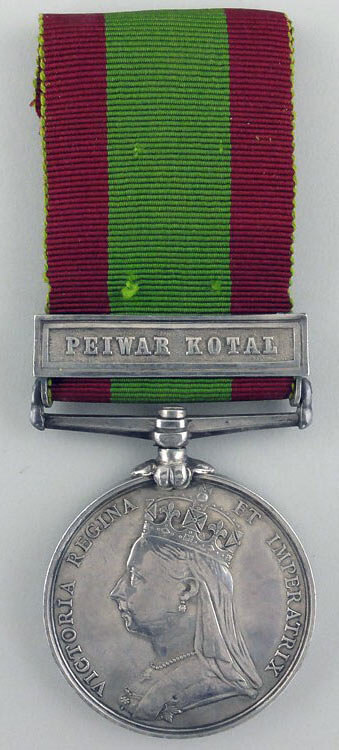
Second Afghan War medal with clasp for the Battle of Peiwar Kotal on 2nd December 1878 in the Second Afghan War
In southern Afghanistan, the British Force advanced over the border via the Khojak and Bolan passes and occupied Quetta and then Kandahar, harassed by the mountain tribes, but without serious resistance from the Afghan regular forces.
Shere Ali, the Ameer, died on 21st February 1879, at Mazar i Sherif, on his way to seek help from General Kauffman, the Russian commander in Tashkent and was succeeded as Ameer by his son, Yakoub Khan. Yakoub did not feel the same constraints from dealing with the British as his father and opened negotiations for peace at Gandamak. The negotiations ended in the signing of the Treaty of Gandamak, one of the important provisions being permission for the British Mission, now under Sir Louis Cavagnari to take up post in Kabul.
Cavagnari arrived in Kabul with his staff and escort on 24th June 1879 and took up residence in a section of the Bala Hissar, the Ameer’s Royal Palace.
Anecdotes and traditions from the Battle of Peiwar Kotal:
- After the Battle of Peiwar Kotal, the 72nd Highlanders buried their two officer casualties, Major Anderson and Captain Kelso, in unmarked graves, to the sound of the pipes.
- The two sepoys of the 29th Punjab Infantry, who fired during the advance and a party of the regiment who turned back and returned to camp were tried by court martial and one man executed.
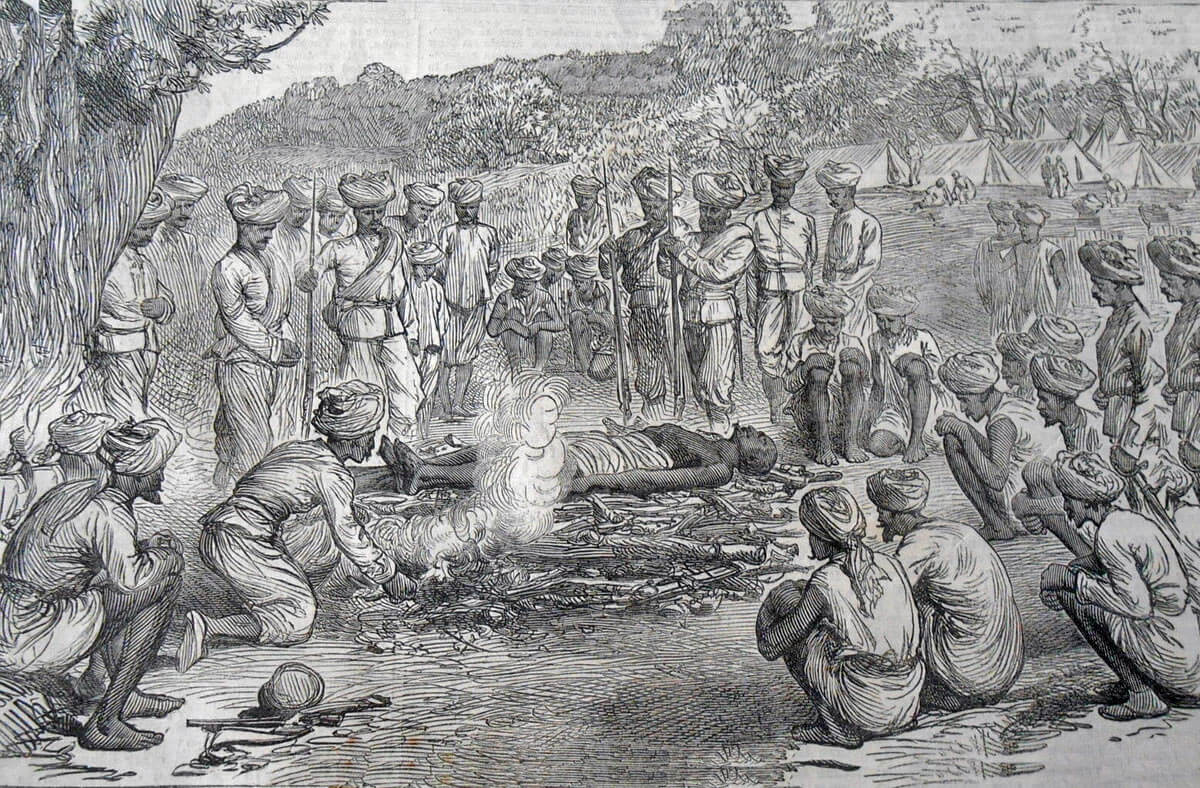
Hindu troops burning their dead after the Battle of Peiwar Kotal on 2nd December 1878 in the Second Afghan War
References for the Battle of PeiwarKotal:
The Road to Kabul; the Second Afghan War 1878 to 1881 by Brian Robson.
The Afghan Wars by Archibald Forbes
The previous battle of the Second Afghan War is the Battle of Ali Masjid
The next battle of the Second Afghan War is the Battle of Futtehabad
To the Second Afghan War index